

Whether an outdoor LED display runs reliably for years often has less to do with the LED modules themselves and more to do with whether the site conditions were genuinely accounted for during installation.
When a LED display develops a fault in the field, engineering teams often look first at modules, power supplies, or the control system. But from an engineering perspective, many problems originate earlier in the process:
- A steel structure that did not fully account for wind load;
- Cabinets that were not kept flush after splicing;
- Insufficient power circuit capacity;
- Drainage paths that were overlooked;
- Maintenance access that turned out to be inadequate only.
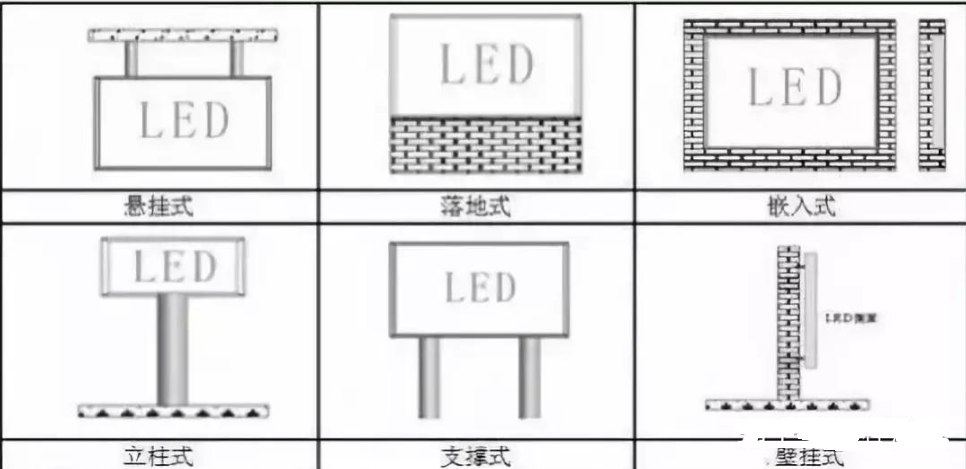
Structural Design That Ignores Wind Load
Wind load is one of the factors in large outdoor LED projects that cannot be reliably estimated from experience alone.
The larger the display area, the more significant the wind forces acting on it. Freestanding billboard structures, rooftop installations, and high-rise building facades are particularly exposed and the screen itself adds a substantial wind-catching surface to whatever is already there. What needs to be calculated is not just the total weight of the LED cabinets. It includes the steel structure, connection hardware, and the wind load conditions specific to the installation position.
When this is not handled properly, the cabinets may look fine immediately after installation. Over time, localized deformation appears, connection hardware loosens, or the surface flatness of the screen gradually deteriorates.
NOTE: Outdoor LED display installation should incorporate structural design before construction begins based on several aspects (including local building codes, installation height, building position, screen dimensions, and local climate conditions).
Waterproofing Treated as an IP Rating Problem
Many procurement documents simply specify IP65, IP66, or IP68. But in practice, water ingress problems in the field are rarely just a matter of the IP rating being insufficient.
An IP rating describes the ability of an equipment enclosure to resist solid particle and water ingress under specific test conditions. It does not replace a complete on-site waterproofing design.
Cabinet-to-cabinet joints, panel sealing, cable entry points, the top structure, and drainage paths all affect the outcome. In heavy rain, if water can accumulate behind or below the screen body, long-term problems can develop even if the product itself has a high protection rating.
NOTE: A more mature approach treats “waterproofing” and “drainage” as two separate requirements to address during installation. The goal is not only to prevent water from entering — it is also to ensure that any small amount of moisture that does enter the structure can drain away quickly. Thus, outdoor LED projects should check cable entry points, cabinet seams, and the base of the structure for potential water accumulation points.
Power Distribution Planned Too Late
Flickering, unexpected restarts, and localized blackouts after an LED screen is powered up do not necessarily point to the control system.
Large outdoor LED displays have significant instantaneous power demand. If the electrical design was not based on the actual number of cabinets, peak load, and cable run distances from the start, making corrections later becomes difficult and costly.
Common problems include poorly distributed circuits, undersized cable specifications, significant voltage drop along the run, and incomplete protective device configuration.
NOTE: A more reliable approach is to plan the power system based on actual peak load from the beginning — distributing circuits appropriately across zones while leaving capacity for maintenance and future expansion. Outdoor projects should also address earthing and surge protection in line with local electrical codes. Installation guidance across the industry consistently identifies stable power supply, correct earthing, and surge protection as fundamental requirements for outdoor LED systems.
Heat Dissipation Overlooked After Installation
Under strong summer sunlight, internal cabinet temperatures can climb well above the ambient air temperature. If the space behind the screen is too enclosed, or if the structural design restricts airflow, heat builds up inside the cabinet continuously.
Thermal problems rarely show up immediately after installation. They tend to appear as gradual brightness decline, reduced power supply lifespan, or lower electronic component stability over extended operation.
NOTE: When installing an outdoor LED display, the plan should include consideration of rear clearance, natural ventilation conditions, and any thermal management measures required by the installation environment.
Maintenance Access Missing From the Installation Plan
A large LED screen mounted flush against a building facade, for example — if the product requires rear maintenance and there is no clearance behind it, replacing a power supply or addressing a receiving card fault may require removing a large number of cabinets. Work that would otherwise take a few minutes becomes an additional elevated-access operation.
NOTE: The maintenance approach — Front Maintenance, Rear Maintenance, or dual-access — should be determined during the design phase, and the necessary operating clearance built into the installation structure accordingly. The structure needs to be not just installable, but serviceable for the life of the system.
Installation Quality Often Determines Long-Term Reliability
The real challenge in Outdoor LED Display installation is not getting the screen into position. It is making the structure, electrical system, waterproofing, thermal management, and maintenance access all work together at the same time.
Two projects can use identical LED cabinets and end up with very different long-term performance — simply because of differences in installation environment, structural design, and construction quality.
For contractors, the most effective approach is not to diagnose problems after they appear, but to work through a set of key questions before construction begins:
- Has the structure been evaluated against the actual site conditions?
- Does the waterproofing design include drainage as well as sealing?
- Has the power system been planned based on peak load?
- Is there adequate space for heat dissipation?
- Is there a viable maintenance path if a fault occurs?