

When buying LED displays, most people see parameters like P1.25, P2.5, and P4, but they don’t know how to choose. Some may find that a smaller pixel pitch is a plus, while others may be more concerned with price. Of course, neither approach is entirely accurate.
Pixel pitch not only affects the display effect, but it also affects the project budget and user experience. Choosing the right pixel pitch is more important than pursing the minimum number. This article will explain the differences between the various pixel pitch and help you quickly find the solution that best suits your project.
What Is the Pixel Pitch of an LED Display?
Pixel pitch refers to the distance between the centers of two adjacent LED pixels, measured in millimeters (mm). For example:
- · P1.25 indicates a pixel pitch of 1.25 mm
- · P2.5 indicates a pixel pitch of 2.5 mm
- · P4 indicates a pixel pitch of 4 mm
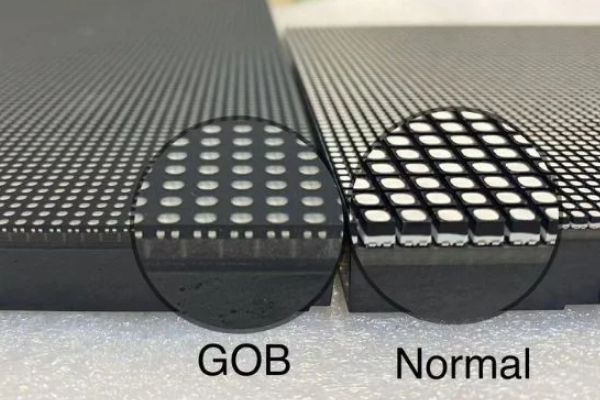
A smaller number indicates a denser pixel arrangement, meaning more pixels per unit area. It will have a more detailed and clearer image and better viewing at close range. However, this also increases manufacturing costs. In actual projects, viewing distance, installation environment, and budget should be considered comprehensively, rather than simply choosing the smallest pixel pitch.
What Are the Respective Advantages of P1.25, P2.5, and P4?
P1.25: Pursuing Ultimate Image Quality
P1.25 is a micro-pitch LED display with an extremely high pixel density.It can clearly show text, charts, and high-definition images. Even when viewers are only 1 to 2 meters away from the screen, they can barely see any screen grain. Therefore, it is ideal for scenarios that demand high display precision, such as:
- Command centers
- Monitoring centers
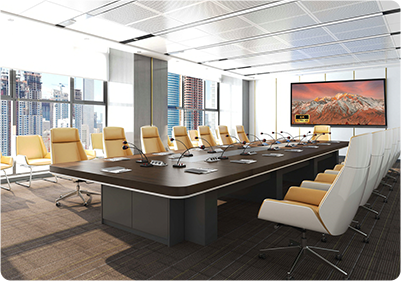
- Corporate conference rooms
- High-end exhibition halls
- Broadcast and television studios
For situations requiring prolonged viewing of data or detailed images, P1.25 provides a more comfortable visual experience.
P2.5: A Better Balance Between Image Quality and Cost
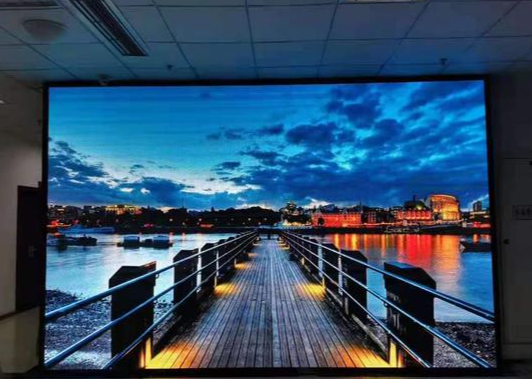
P2.5 is a widely used specification in commercial displays. Compared to P1.25, it offers a lower price while still delivering good display quality. For viewing distances greater than 2.5 meters, most viewers will find it difficult to distinguish individual pixels.
Common applications include:
- Shopping mall advertising screens
- Corporate showrooms
- Hotel lobbies
- Churches
- Educational and training centers
- Small to medium-sized conference rooms
If you have a limited budget but still want good image quality, P2.5 is usually the ideal choice.
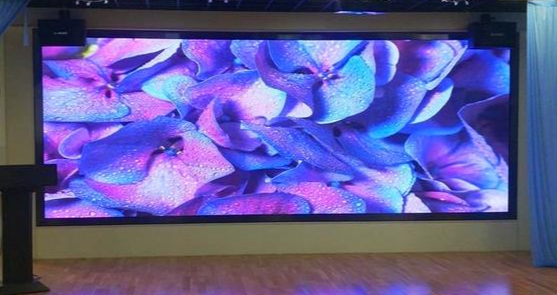
P4: Large Screens Suitable for Viewing from a Distance
P4 features a larger pixel pitch, making it more cost-effective and ideal for large-area LED displays.
Although some screen grain may be visible when viewed up close, the image remains clear and natural when viewed from a distance of 4 meters or more. As a result, it is widely used in:
- Stage backdrops
- Commercial events
- Outdoor advertising screens
- Sports venues
- Large conference centers
For large-scale display projects, P4 effectively controls overall costs while meeting the requirements for viewing from a distance.
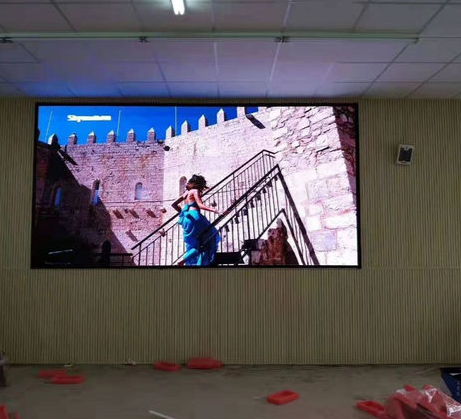
How to choose the appropriate Pixel Pitch?
The table below can help you quickly understand the differences between the three specifications:
| Pixel Pitch | Recommended Viewing Distance | Display Effect | Applicable Scenarios |
| P1.25 | 1.2 meters and above | Highest detail, highest definition | Command center, conference room, exhibition hall |
| P2.5 | 2.5 meters and above | Clear and cost-effective | Shopping mall, hotel, corporate display |
| P4 | 4 meters and above | Excellent long-distance effect | Stage, stadium, outdoor advertising |
There is no absolute better or worse among P1.25, P2.5, and P4. The key lies in whether they are suitable for your specific application.
Before purchasing an LED display, we recommend first determining the viewing distance, installation, and cost, and adjusting the system according to the recommendations of professional manufacturers. This approach not only ensures the quality of the presentation, but also controls the overall cost of the project. MileStrong appreciates your questions.