

Confused by LED display specs? This plain-English guide explains every key term — pixel pitch, resolution, refresh rate, grayscale, scan mode, and more — so you can use LED screens with confidence.
Choosing the appropriate LED displays means running into a wall of technical jargon: pixel pitch, grayscale, refresh rate, scan mode and so on. If you’re not an industry insider, these terms can feel overwhelming. This guide walks through every essential LED concept, paired with the features of MileStrong displays for your reference.
Pixel & Pixel Diameter
A pixel is the smallest individually controllable light-emitting unit on an LED display — essentially one dot on the screen.
Pixel diameter (∮) is the physical size of that dot, measured in millimeters. As a rule: the smaller the pixel diameter, the finer and sharper the image.
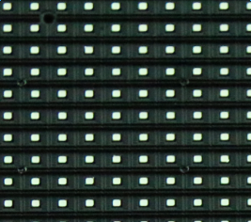
Note: MileStrong adopts high-quality LED lamp beads with diversified specifications. We match lamp beads of different sizes for indoor, outdoor, interactive and creative display products to balance visual performance and long-term durability.
Pixel Pitch
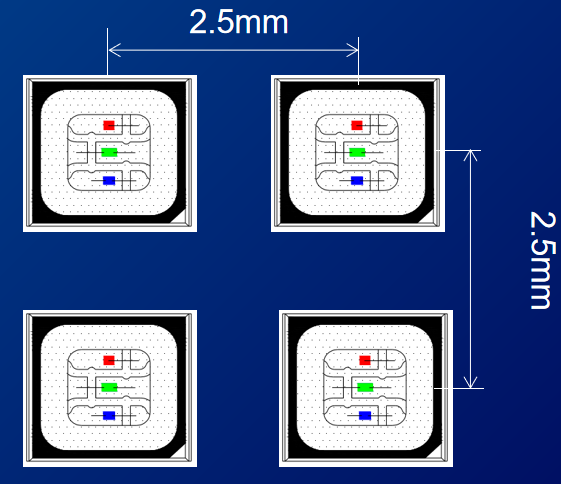
Pixel pitch (also called dot pitch) is the center-to-center distance between two adjacent pixels, measured in millimeters.
- Smaller pitch = more pixels per square meter = sharper image = higher cost
- Indoor fine-pitch displays typically range from P1.2 to P1.5
- Outdoor large-format displays commonly use P5 to P8
Pixel pitch is one of the most important specs when matching a display to its viewing distance.
MileStrong’s product line includes LED floor tiles, transparent LED displays, COB displays, rental LED displays, creative irregular screens and more. We provide targeted pitch options for sports venues, shopping malls, scenic Ferris wheels, exhibition halls and other diverse application scenarios.
Resolution
Resolution is the total number of pixels across the width and height of a display. It determines how much content the screen can show and how detailed the image looks.
Resolution is measured at three levels:
- Module resolution — pixels per individual LED module
- Cabinet resolution — pixels per assembled cabinet panel
- Full-screen resolution — total pixel count across the entire display
Higher resolution means more content capacity and a crisper image.
MileStrong’s LED displays can customize full-screen resolution freely to meet projects from small single screens to super-large video walls.
Viewing Angle
The viewing angle is the total angle — measured horizontally or vertically — across which the display maintains at least 50% of its peak brightness.
A wider viewing angle means more people can see the screen clearly from off-center positions, making it critical for displays in wide or open spaces.
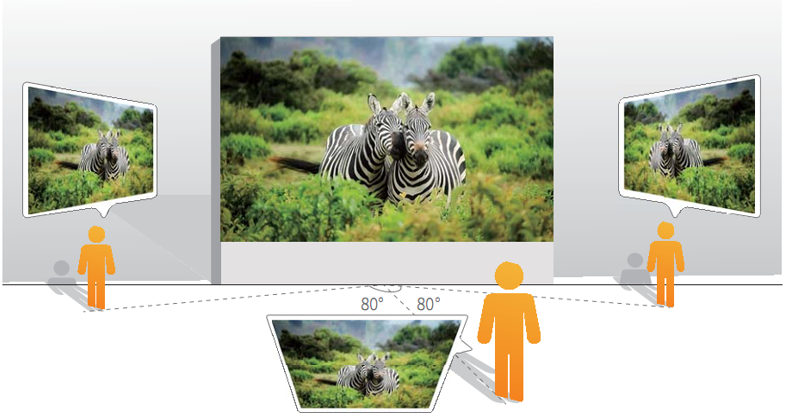
Most MileStrong products feature a wide viewing angle of 140°/140° to 170°/170°.
Viewing Distance
There are three viewing distance thresholds to know:
- Minimum viewing distance — the closest point where individual pixels are no longer visible to the naked eye
- Optimal viewing distance — the sweet spot for the best image quality
- Maximum viewing distance — the farthest point where content remains legible
Each pixel pitch corresponds to different recommended distances. Matching pitch to viewing distance is key to getting the most out of your display.
MileStrong provides professional viewing distance suggestions for each model, helping you pick the right product according to your on-site space.
Brightness
Brightness measures the luminous intensity per unit area in a given direction, expressed in cd/m².
Recommended brightness levels normally:
- Indoor displays: 800–1,200 cd/m²
- Outdoor displays: 5,000–6,000 cd/m²
Outdoor displays require significantly higher brightness to remain visible under direct sunlight.
MileStrong precisely configures brightness for different scenarios.
Refresh Rate
Refresh rate is how many times per second the display redraws the image, measured in Hz (hertz).
A higher refresh rate means a more stable image with no visible flicker. Premium LED displays reach 3,840 Hz — compared to standard film at just 24 fps. That means each film frame is redrawn 160 times on screen, making flicker completely imperceptible to the human eye.
Important distinction: Refresh rate is a hardware spec describing how fast the screen redraws. Frame rate (see below) describes the video signal itself.
Frame Rate
Frame rate is the number of video frames per second in the source content — commonly 24 Hz, 30 Hz, or 60 Hz.
The human eye perceives motion as smooth and continuous when the frame rate is high enough, thanks to persistence of vision. Frame rate is a property of the video content; refresh rate is a property of the display.
All MileStrong displays are fully compatible with mainstream 24/30/60fps video signals.
Moiré Pattern
A moiré pattern is a wavy interference pattern that appears when a camera sensor’s pixel grid interacts with the repeating pixel structure of an LED display.
This is commonly encountered when photographing or filming LED screens. It can be reduced by adjusting the shooting angle or lens focal length.
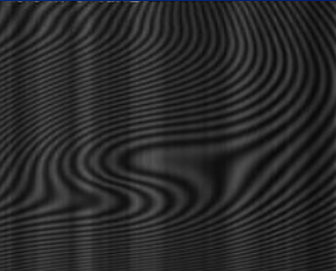
With optimized lamp arrangement and ultra-high refresh rate, MileStrong displays effectively suppress moiré patterns, performing excellently for live events, sports games and online live broadcasts.
Grayscale
Grayscale refers to the number of distinct brightness levels a display can produce between its darkest and brightest states.
Higher grayscale = richer color depth and smoother image gradients
This is especially noticeable in subtle tones — shadows, skin tones, and complex textures all benefit from high grayscale.
MileStrong mainstream products adopt 16-bit grayscale, while our high-end COB and XR series upgrade to 22-bit grayscale.
Contrast Ratio
Contrast ratio is the ratio of the brightest white to the darkest black a display can produce.
A higher contrast ratio means stronger separation between light and dark areas, resulting in images that look punchy and dimensional rather than flat.
A high contrast ratio (up to 10,000:1) delivers pure black and vivid highlights for MileStrong displays.
Color Temperature
Color temperature describes the warmth or coolness of a light source, measured in Kelvin (K).
- Warm white — lower K value (yellower light)
- Neutral white — approximately 6,500 K
- Cool white — higher K value (bluer light)
Higher K = cooler, bluer light. Lower K = warmer, more amber light.
All MileStrong displays support wide-range color temperature adjustment (3,000K–10,000K).
Scan Mode
Static scan: Each driver IC controls one pixel directly (1:1 mapping). Precise and stable, but more expensive due to higher component count.
Dynamic scan: Driver ICs address pixels in columns, cycling through them at high speed. Lower cost, though brightness can be slightly reduced compared to static scan.
MileStrong equips static scan for high-end transparent LED screens, COB displays and interactive LED floor tiles to ensure ultra-stable images. Cost-effective dynamic scan is applied to standard outdoor and commercial screens, balancing performance and budget.
SMT & SMD
SMT (Surface Mount Technology) is the manufacturing process used to attach electronic components to a PCB.
SMD (Surface Mount Device) refers to components packaged using SMT. The vast majority of modern LED display lamp beads use SMD packaging.
MileStrong fully adopts mature SMT & SMD technology for lamp beads and electronic parts, ensuring stable quality, good heat dissipation and long service life.
Three-in-One (RGB in One Package)
A three-in-one LED packages red, green, and blue chips inside a single SMD lamp bead.
- Advantages: Better color mixing, smoother and more refined image quality
- Disadvantages: More complex manufacturing, harder to repair, higher unit cost
This design is the industry standard for full-color indoor displays.
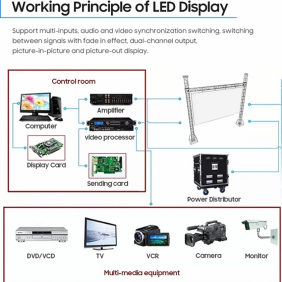
Synchronous vs. Asynchronous Control
Synchronous Control
The LED display mirrors the computer screen in real time.
Best for live events, meetings, and any application requiring instant content updates.
Asynchronous Control
Content is uploaded to a receiver card with onboard storage and played back on loop.
Best for advertising displays, information boards, and standalone installations.
MileStrong supports synchronous control system and asynchronous control system.
All in all, LED displays combine optics, electronics and control systems. Mastering these core terms and understanding MileStrong product strengths will help you select, install, operate and troubleshoot LED screens efficiently for all kinds of projects.