

This guide covers what an LED display is, the different types available, and the range of environments where it can be applied.
What Is an LED Display?
An LED display is a display device that uses light-emitting diodes (LEDs) as its display units. By controlling the brightness and color of individual pixels, it can show text, images, video, and other digital content.
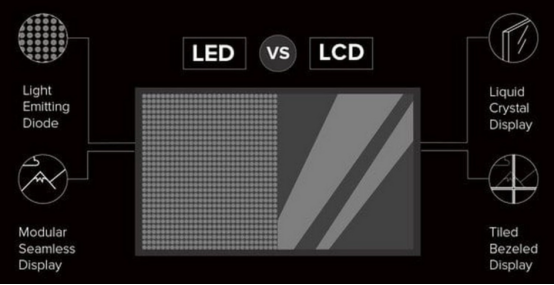
LED Display vs. LCD Display
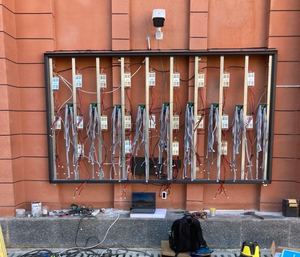
Unlike a conventional LCD screen, an LED display uses a modular structure made up of LED modules, cabinets, power supplies, a control system, and associated connection components. Multiple modules and cabinets can be combined based on project requirements — from smaller indoor LED screens to large-format outdoor LED displays covering entire building facades.
Worth noting: not all LED display products use a traditional cabinet enclosure. Some transparent LED displays do not include a standard cabinet structure.
How an LED Display Works
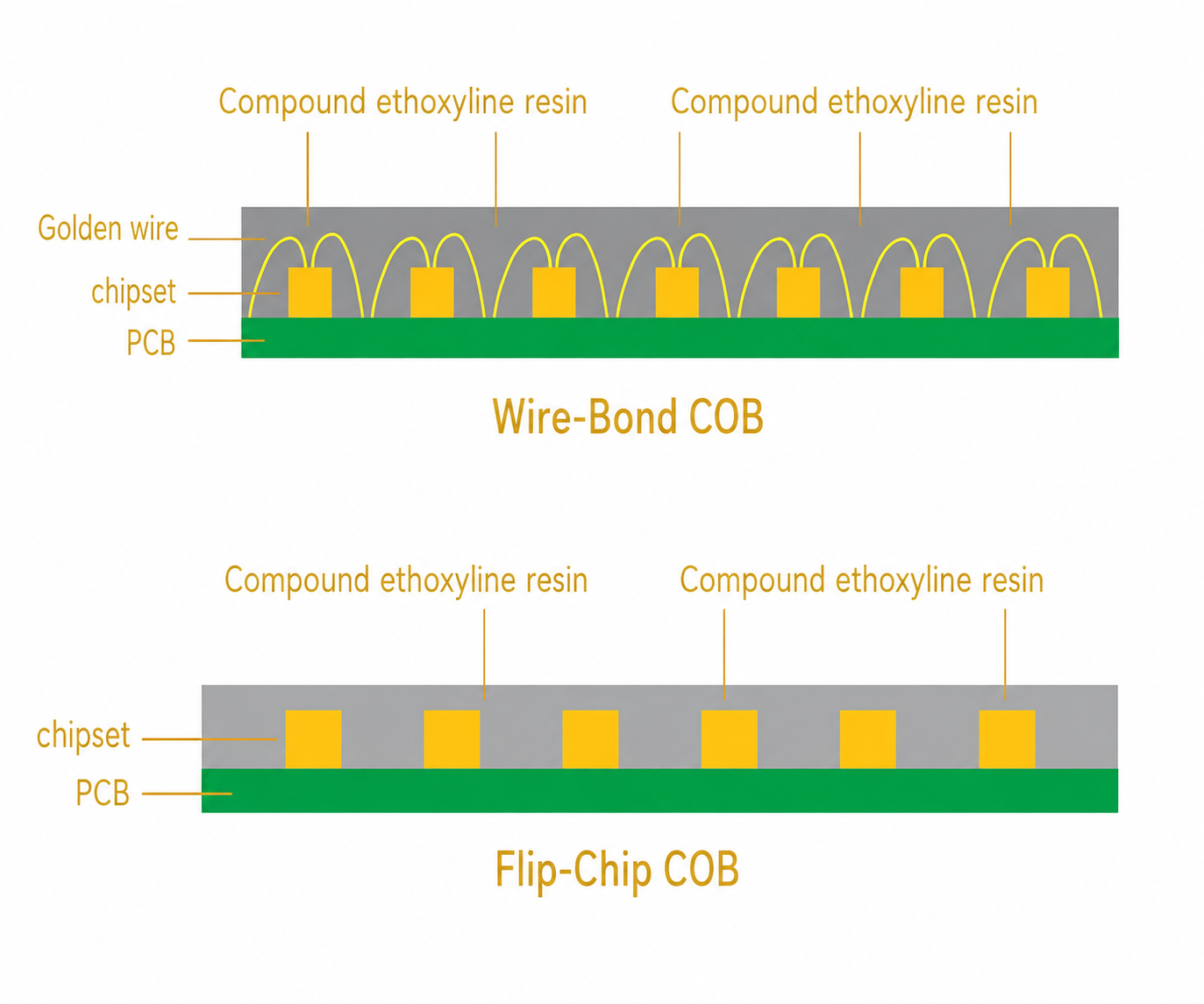
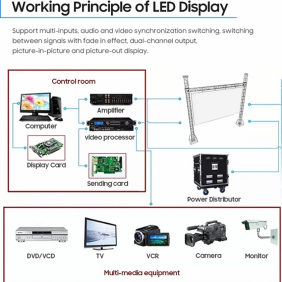
A complete LED display is made up of a large array of LED pixels. In most cases, each pixel consists of red, green, and blue LED chips. The device uses PWM (Pulse Width Modulation) dimming to independently control the brightness of each color, creating different color combinations that together produce full video and image content.
When a playback device outputs a video signal, the sending system transmits the image data to the LED display’s control system. Receiving cards and other components then distribute the data to individual LED modules, controlling the brightness of each pixel point to produce the final image.
What Types of LED Displays Are There?
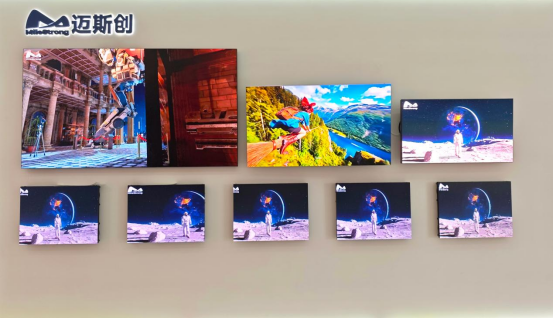
LED display is not a single product category. Based on installation environment and project requirements, the main types include indoor LED displays, outdoor LED displays, rental LED displays, transparent LED displays, and creative LED displays.
Indoor LED Display
Indoor LED displays are used in indoor conditions. Compared to outdoor environments, indoor installations do not face rain or direct sunlight, so high environmental protection ratings are generally not required.
Pixel pitch for indoor LED displays typically ranges from P0.9 to P3.0.
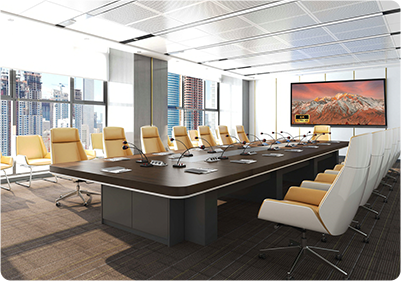
- Close-range viewing environments such as meeting rooms and showrooms may suit P0.9, P1.25, or P1.5.
- Larger commercial spaces can select P1.8, P2.0, P2.5, or P3.0 based on actual viewing distance.
Outdoor LED Display
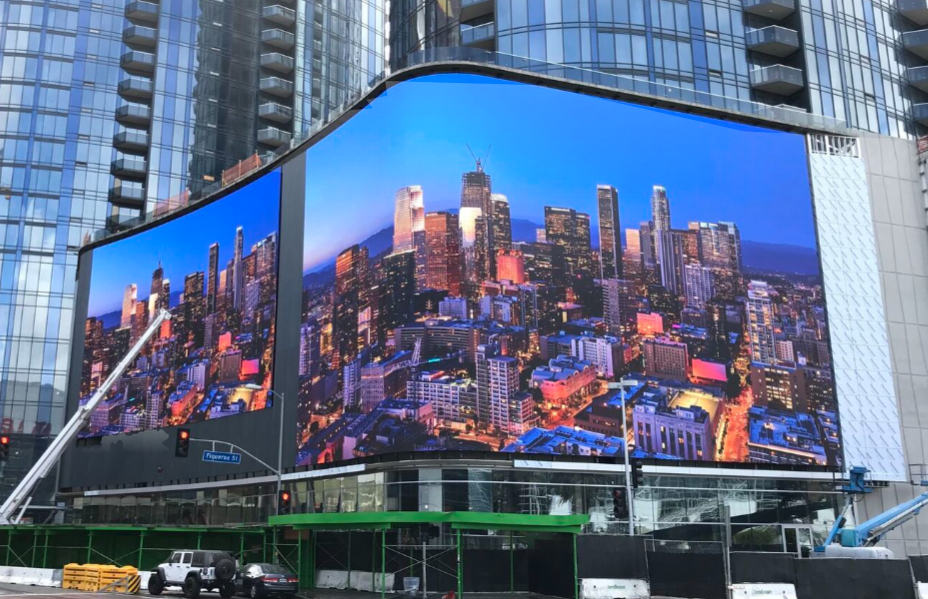
Outdoor LED displays operate in significantly more demanding environments. Higher brightness is required, and waterproofing, dustproofing, heat dissipation, and structural stability all need to be addressed.
Common outdoor pixel pitches include P2.5, P3, P4, P5, P6, P8, and P10. For outdoor projects, a smaller pixel pitch is not automatically better, and the right choice depends on viewing distance, screen size, installation height, content type, and project budget.Note: outdoor LED displays are also available in fine-pitch configurations. The MileStrong SFC Series outdoor LED display includes fine-pitch options.
Rental LED Display
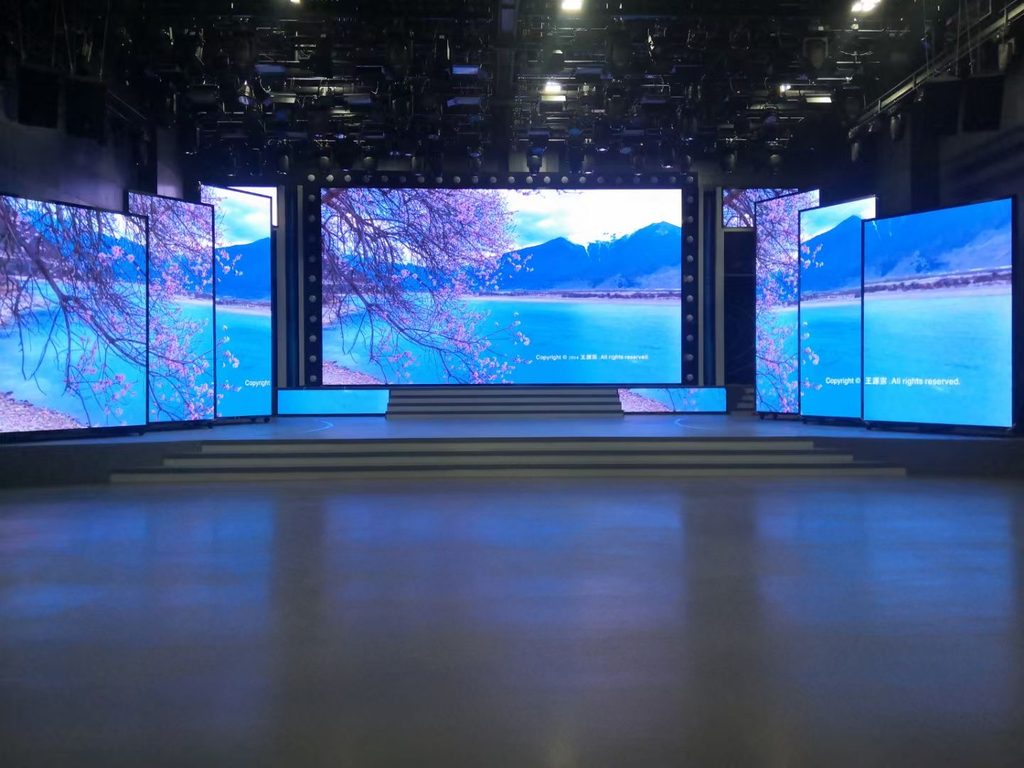
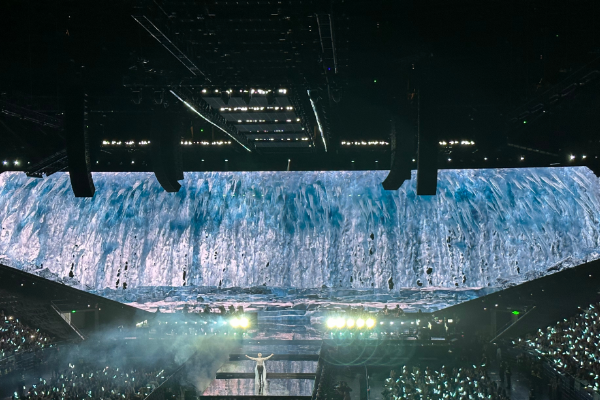
Rental LED displays are designed for temporary event installations and repeated assembly and disassembly, commonly used for concerts, stage productions, and other temporary setups. Compared to fixed-installation displays, rental LED screens prioritize lightweight cabinets, fast splicing, and quick disassembly, and typically come with fast-lock connectors, rigging hardware, and flight cases for transport.
Rental products support flat, curved, and angled configurations to meet the varying design requirements of stage and event environments. Multiple installation methods are also supported.Note: rental LED display refers to a specific type of LED cabinet product designed for repeated deployment and third-party rental use — not a service for renting a screen.
Transparent LED Display
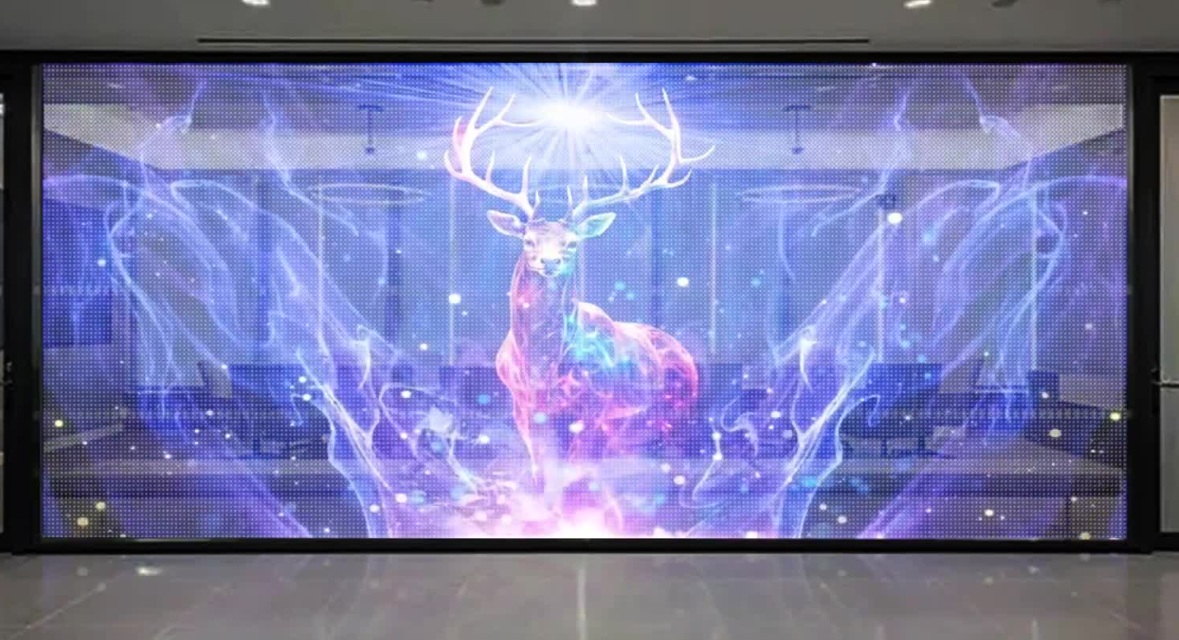
The defining characteristic of transparent LED displays is that they show dynamic content while retaining partial screen transparency. The panel uses an open or transparent structure that allows light to pass partially through the screen.Transparent LED displays are primarily used in glass curtain walls and commercial shopfront windows. Compared to conventional opaque LED displays, they reduce the impact on building daylighting and the original visual character of the space — making them especially suited to premium decorative environments where technological sophistication and brand marketing are both priorities.
Creative LED Display
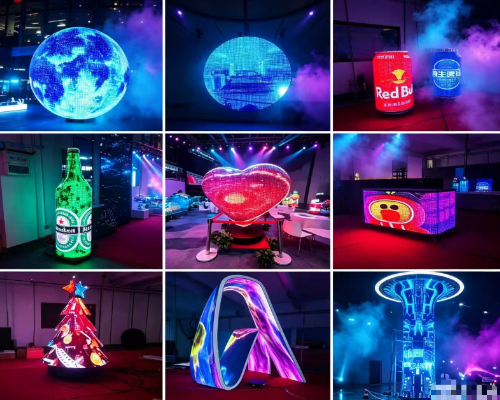
Creative LED displays expand the structural and dimensional flexibility of LED display technology, creating more immersive and spatially integrated visual experiences. Common types include:
- Curved LED displays
- Cylindrical LED displays
- Sphere LED displays
- Magic Cube LED displays
- Dome LED displays
- Flexible LED displays
- 3D LED displays
Where Are LED Displays Used?
LED displays have a broad range of applications. Based on environment and function, the main categories are:
| Application Category | Typical Applications | Main Purposes |
| Commercial Advertising | Outdoor advertising, Digital Out-of-Home (DOOH), shopping centers, brand promotion | Advertising, marketing campaigns, and digital content display |
| Sports Venues | Football stadiums, basketball arenas, and other sports facilities | Video playback, advertising, scoreboard display, and live event content |
| Retail and Commercial Spaces | Shopping centers, brand stores, commercial complexes, and shopfront windows | Product presentation, brand communication, and visual design |
| Transportation and Public Spaces | Airports, railway stations, metro stations, transportation hubs, and urban public areas | Information delivery, advertising, navigation, and public content display |
| Stage and Entertainment | Concerts, stage productions, music festivals, exhibitions, and live events | Stage backgrounds, live visuals, and dynamic content |
| Architecture and Urban Landmarks | Building facades, city landmarks, public buildings, and large-scale spaces | Architectural integration, digital media, and large-format visual display |
| Meetings and Indoor Display | Meeting rooms, corporate showrooms, control rooms, and broadcast spaces | Video conferencing, presentations, information display, and real-time content playback |
Summary
For buyers and project teams, understanding what an LED display is represents the first step. More important is selecting the right product and technical solution based on installation environment, viewing distance, content type, screen size, and how the display will be used.
As LED display technology continues to develop, product forms and application scope will keep expanding. But regardless of how the products evolve, stable display performance, reliable structural design, and a genuine match with the actual operating environment remain the essential criteria for evaluating any LED display system.