

Immersive LED displays are redefining visual experience in virtual production, brand experience centers, and high-end event settings. Unlike traditional LED displays, these products require entirely new design approaches—from pixel pitch to visual perception, from structural design to real-time rendering. The following six questions answer some of the most common questions from designers, LED practitioners and buyers.
What is an Immersive LED Display?
A immersive LED display is multi-surface, high-resolution LED system that surrounds or semi-surrounds the viewer’s field of vision, typically composed of two or more display surfaces (e.g., wall + floor, wall + ceiling, or a three-sided corner structure). Unlike traditional flat displays placed directly in front of the viewer, immersive LED displays place the viewer within the displayed environment.
From a parameter perspective, these products require specific pixel pitch specifications, high refresh rates (≥1920 Hz, 3840 Hz preferred for film and television shooting scenarios), and wide color gamut configurations, tailored to the viewing distance. From a visual experience perspective, seamless visuals across panel joints and curved corners avoid disorientation. From a production perspective, customized structural engineering, multi-output controllers with geometric deformation and edge blending capabilities, and content designed for non-flat surfaces.
Common product forms include:
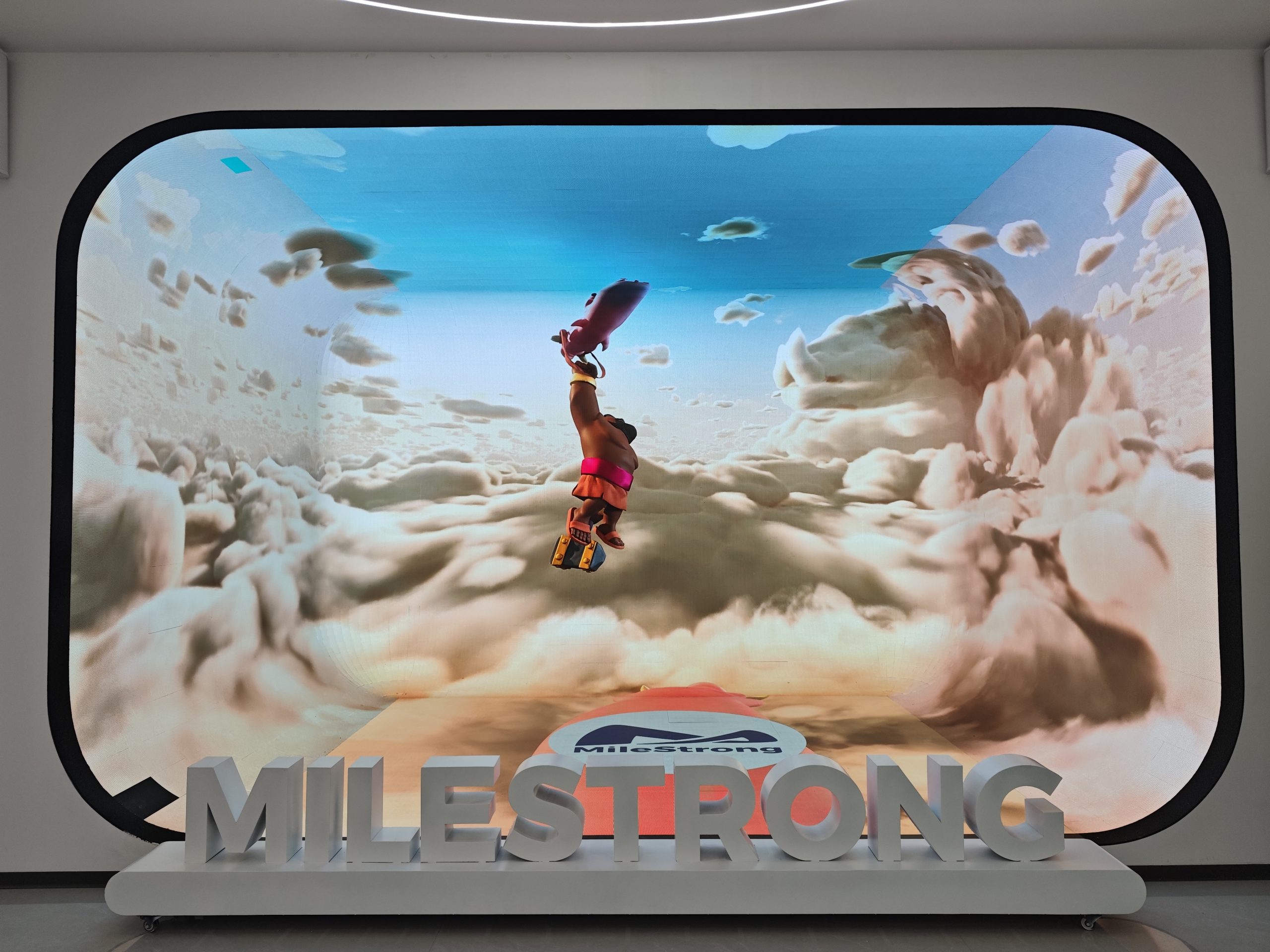
- LED cubic screen (three walls + floor)
- Concave curved wall
- 360°LED tunnels or domes
- L-shaped wall configurations for virtual production (XR stages)
What is the Difference Between Immersive LED Displays and Traditional LED Displays?
At its core, the difference is one of purpose and architecture.
| Aspect | Traditional LED Display | Immersive LED Display |
| Geometry | Flat, single plane structure | Curved, L-shaped, cube, dome, or custom shapes |
| Viewing experience | Audience stands in front of the screen | Audience stands inside the environment |
| Content format | Standard video | Multi-surface, perspective-corrected, real-time rendered |
| Installation complexity | Low to moderate | High — requires custom structural engineering |
| Control system | Single video processor | Multi-output processor supporting warping, blending and synchronous control |
| Cost structure | Hardware-driven | Experience-driven (hardware + engineering + content) |
| Audience experience | Passive viewing experience | Interactive and immersive engagement experience |
What are the Main Applications of Immersive LED Displays?
Immersive LED displays have applications spanning a wide range of fields, encompassing everything from Hollywood studios to retail stores, from museum domes to concert hall ceilings. Below are the main application categories, each with its unique configuration and content requirements because the right configuration always aligns with the experience you want to create.
| Application | Typical Configuration | Key Priority |
| Virtual production (XR) | L-shaped, U-shaped | Low latency, camera-ready |
| Brand retail / showrooms | Inward-curving wall or cube | Seamlessness, color accuracy |
| Museums & exhibitions | Dome, tunnel, full wrap | Wide viewing angle, durability |
| Live events & concerts | Canopy, floor, tunnel | High brightness, quick assembly |
| LBE / theme parks | Cube, dome, interactive floor | Reliability, interactivity |
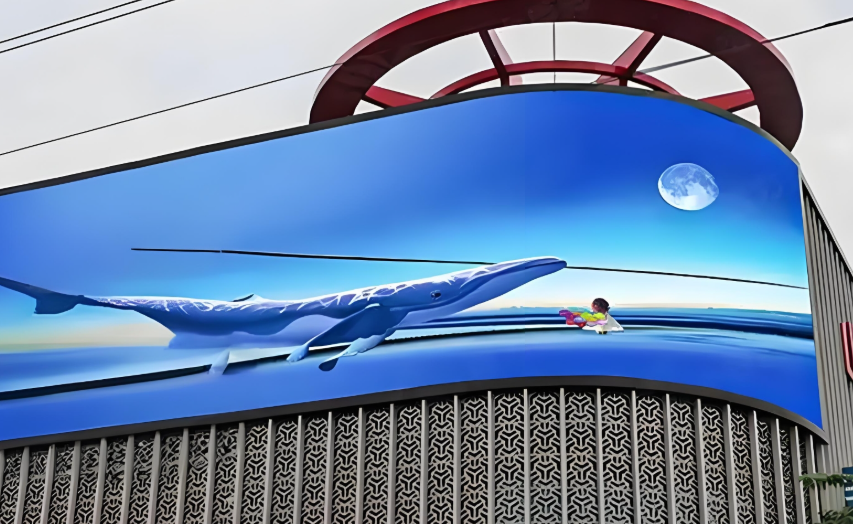
| Public art / architecture | Custom freeform | Weatherproofing, remote management |
Do Immersive LED Displays Support 3D and XR Effects?
Yes —but not automatically. Support depends on specific hardware specifications and the content pipeline. A standard immersive LED display (curved wall or cube) will not magically produce 3D or XR effects without deliberate configuration.
3D Effects
Requires refresh rate of at least 3840Hz and proper sync. Three types exist:
- Passive 3D (polarized glasses) — requires polarizer film on LED panels
- Active 3D (shutter glasses) — needs 3840Hz + infrared sync emitter
- Glasses-free 3D — rare, expensive, narrow viewing angle
XR Effects (Virtual Production)
Requires a complete ecosystem: high-refresh LED (3840Hz minimum); low latency (≤1 frame); camera tracking; real-time rendering engine (Unreal Engine, etc.). A standard immersive LED wall alone is not XR-ready.
How to Choose a Suitable Immersive LED Display?
- Five quick rules help buyers choose a right immersive LED display.
- Match pixel pitch to viewing distance. Closer viewing = smaller pitch (P1.2–P1.9).
- Match configuration to goal — L-shaped floor+wall for XR and cube for full immersion.
- Don’t ignore the controller — Welcome to inquire.
- Budget for content — Don’t spend everything on panels.
- Ask for a live demo — If they can’t show a similar project working, assume they can’t deliver.
Bottom line: Specs alone don’t create immersion. The right pitch + right controller + right content = success.
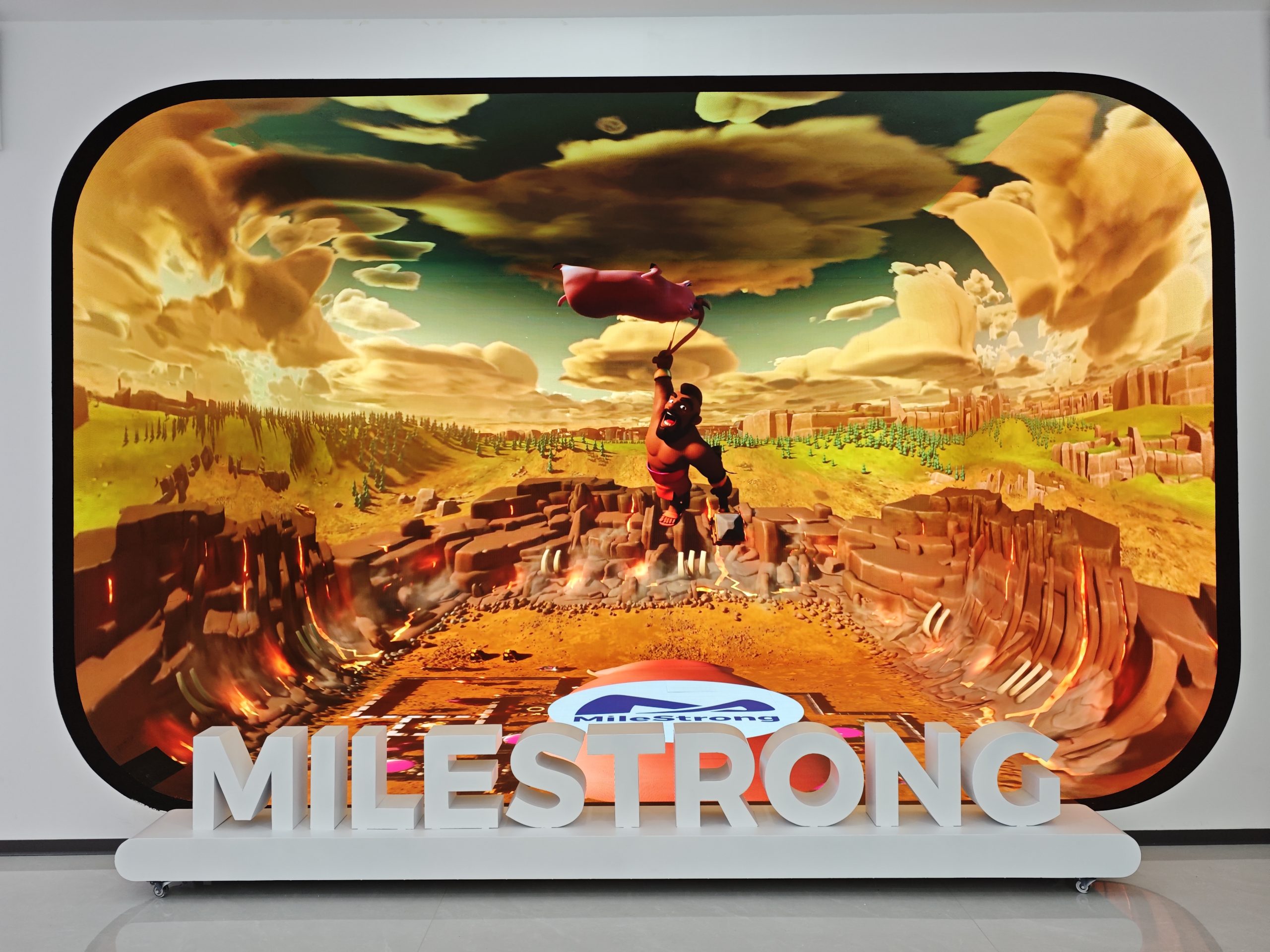
Immersive LED display demands more than a spec sheet — it demands a partner who can show you what works. At Milestrong, our showroom has a fully operational immersive LED configuration: three walls plus floor — a true LED cube environment. We don’t just talk about parameters, perception, and production, but we demonstrate them live.