

When purchasing LED displays, people often focus on factors such as pixel pitch, brightness, and refresh rate. In fact, the display control technology of LED displays is also a key factor affecting image quality. In this article, I’ll introduce you to individual pixel control technology.
What is the Individual Pixel Control Technology?
An LED display consists of many LED, with each LED representing a single pixel. Individual pixel control means that each LED has its own controller, allowing for independent control of on/off status, brightness, and color.
The STH series of MileStrong transparent LED displays are equipped with single-point, single-control technology, which offers the following advantages.
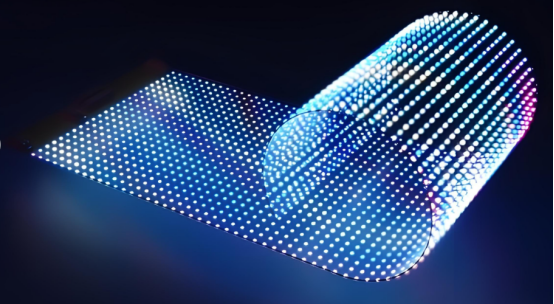
Core Advantages
- Uniform display: The brightness and color of each LED are calibrated individually, effectively eliminating issues such as uneven brightness and color discrepancies.
- Color reproduction: By adjusting the RGB color pixels, color consistency and accuracy are ensured, resulting in true-to-life images.
- Single-point failure detection support; the system can monitor the operational status of each pixel in real time to quickly identify dead, dim, or malfunctioning LED.
- Low maintenance costs: we can accurately pinpoint faulty LED, improve repair efficiency, and shorten troubleshooting time. Faulty LED can be replaced directly, reducing maintenance costs
Currently, individual pixel control technology is widely used in high-end applications such as commercial advertising displays, transparent displays, and creative stage displays. It not only meets daily display needs, but also supports personalized creative designs. We hope this article has helped you learn a little more about LED displays.