

In LED display projects, one component tends to get overlooked: the cabinet. That is worth correcting. The cabinet directly affects long-term operational stability, installation ease, and ongoing maintenance costs. Getting it wrong has real consequences.
Different projects have different requirements. Rental applications need fast assembly. Outdoor LED display needs durability and weather resistance. High-end commercial installations prioritize precision and finished appearance. So which cabinet type is right — die-cast aluminum, steel, or aluminum profile? There is no single answer. It depends on the project.
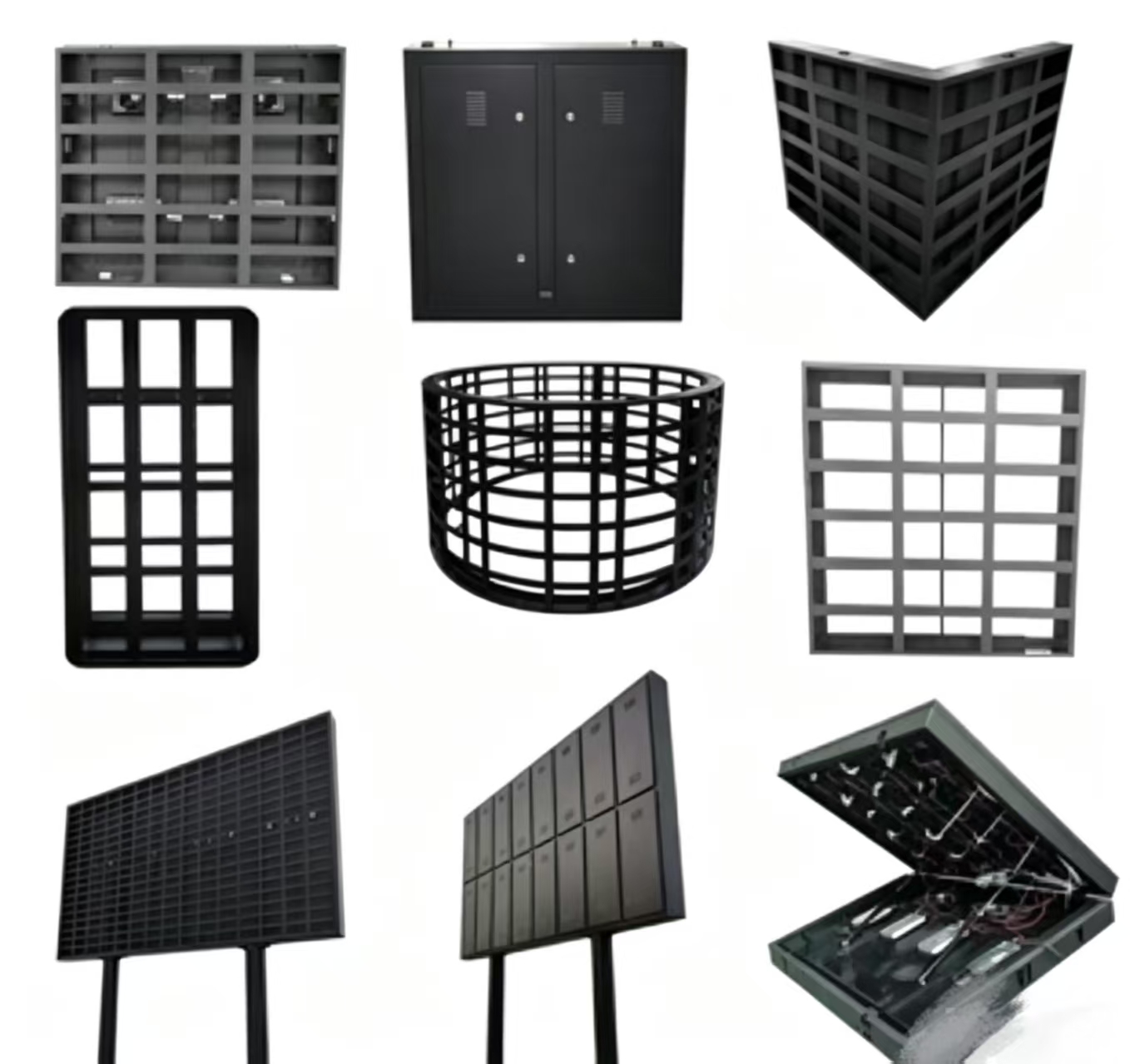
Why Cabinet Material Is Getting More Attention
The reason is straightforward. An LED display might run for five years or more. If the cabinet has poor heat dissipation, structural deformation, or installation tolerances that are too loose, maintenance costs accumulate steadily over time.
Consider an outdoor billboard project. The initial price difference between cabinet options might be modest. But if the structure requires frequent repairs or component replacements a few years in, the real cost can far exceed the original budget gap.
The cabinet is not just a shell. It is the structural foundation that keeps the entire display system running reliably. Across the industry, lightweight construction, high precision, and easy maintenance are becoming the defining direction for LED cabinet development — which is why die-cast aluminum is increasingly common in high-end projects.
Die-Cast Aluminum: The Standard for High-Performance Applications
Die-cast aluminum cabinets are produced through a single-mold process, which delivers high structural precision and consistent dimensional accuracy.
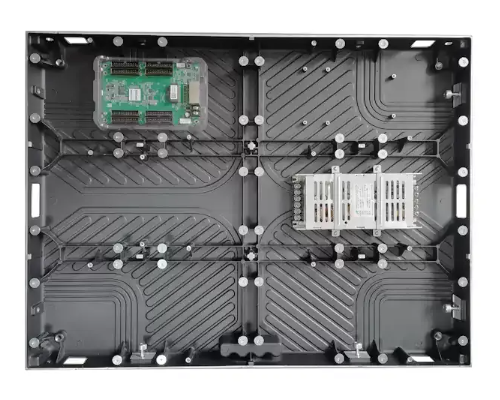
The biggest advantage is stability. Compared to steel cabinets, die-cast aluminum is lighter and more consistent — which matters a great deal for rental LED displays that are assembled and disassembled repeatedly.
At concerts, trade shows, and sporting events, installation time is limited. If cabinets have significant dimensional variation, splicing produces visible gaps and height differences that affect the overall image. Die-cast aluminum reduces these problems.
Aluminum also has good thermal conductivity. For displays running continuously over long periods, heat dissipation directly affects the lifespan of electronic components.
The trade-off is cost. Die-cast aluminum cabinets require significant tooling investment and carry a higher unit price. For budget-constrained projects or straightforward fixed installations, they may not be necessary. For rental applications, high-end commercial installations, and fine-pitch LED displays, the investment is usually worthwhile.
Steel Cabinets: The Practical Choice for Cost-Sensitive Projects
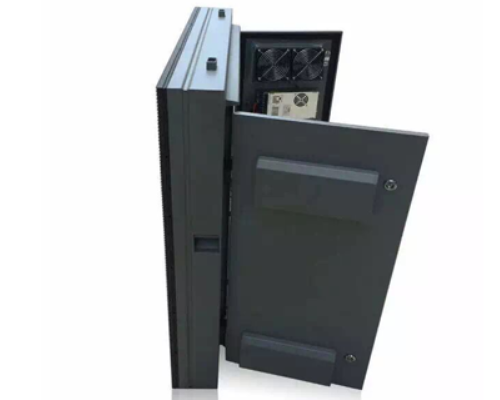
Steel cabinets were once the most common option in the LED display market. They still account for a large share of installations — primarily because of cost.
Steel cabinet manufacturing is a mature process with lower production costs. For large outdoor advertising screens and standard information display installations, steel remains a competitive option.
Typical applications include:
- Highway billboards
- Factory information displays
- Standard fixed outdoor installations
These projects have less demanding requirements for cabinet weight and precision, and prioritize overall budget efficiency.
The limitations are also clear. Steel cabinets are heavier. In outdoor environments over the long term, they are more susceptible to corrosion if surface treatment is inadequate — particularly in humid conditions. Dimensional accuracy is also generally lower than die-cast aluminum. In fine-pitch LED applications, this matters more: the denser the pixel arrangement, the more visible any splicing inconsistency becomes.
Aluminum Profile Cabinets: Built for Flexibility and Custom Geometry
Aluminum profile cabinets are assembled from cut and joined aluminum extrusions rather than cast as a single unit. This makes them inherently more adaptable. They are particularly well suited to non-standard dimensions and creative configurations. Typical applications include:
- Creative LED displays
- Irregular-shaped LED screens
- Custom indoor installations
In some commercial spaces, designers want the LED display to integrate with the architecture rather than simply being a rectangular screen mounted on a wall. Aluminum profile cabinets can be fabricated to follow those requirements.
The limitation is that structural rigidity and precision depend heavily on manufacturing quality. Because the cabinet is assembled from multiple pieces rather than cast as one, inconsistent production control can lead to structural stability issues over time. When evaluating aluminum profile cabinets, the manufacturing capability of the supplier matters significantly — quality variation between manufacturers can be substantial.
Choosing the Right Cabinet: A Simple Reference
| Cabinet Type | Key Strengths | Best Suited For |
| Die-cast aluminum | High precision, lightweight, good heat dissipation | Rental LED Displays, High-end commercial LED Displays, fine-pitch LED Displays |
| Steel | Low cost, mature manufacturing | Standard outdoor advertising, large fixed installations |
| Aluminum profile | Flexible, customized geometry | Creative LED Displays, irregular shapes, custom indoor projects |
In practice, material alone should not drive the decision. Additional factors to consider:
- Installation environment
- Maintenance access requirements
- Transportation frequency
- Screen dimensions
- Budget range
A common mistake is assuming that higher cost automatically means better. The right choice is the one that fits the project — not the most expensive option available.