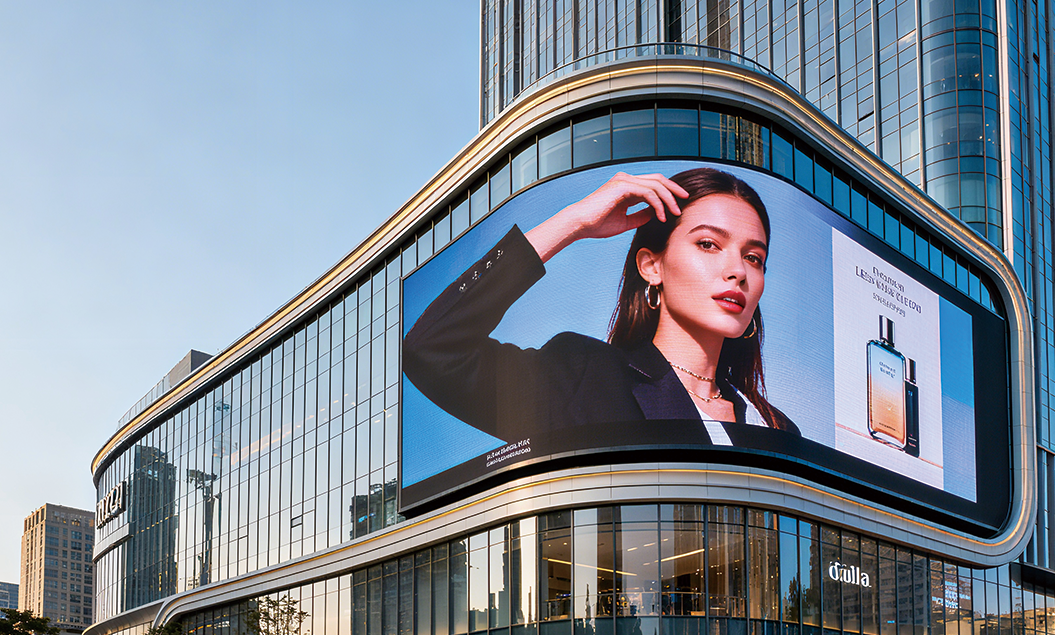


While browsing videos recently, I came across a highly innovative LED display capable of producing a very striking 3D visual effect. Like most internet users, my first reaction was: how on earth do these large outdoor LED screens achieve this? Is it simply a matter of installing two large LED screens at the corner of a building?
With this question in mind, I looked into some similar outdoor naked-eye 3D projects and relevant technical documentation. I discovered that, whilst many projects do indeed utilize a corner-mounted structure, the 3D effect is not simply achieved by joining two large LED screens together. Rather, the overall structure of the screen, the customization of the LED modules or cabinets, the production of the 3D content, and the viewer’s vantage point all directly influence the final visual effect.
So, next, I will explain in detail—based on my research—how this effect, which appears as though the images are “popping out of the screen”, is actually achieved.
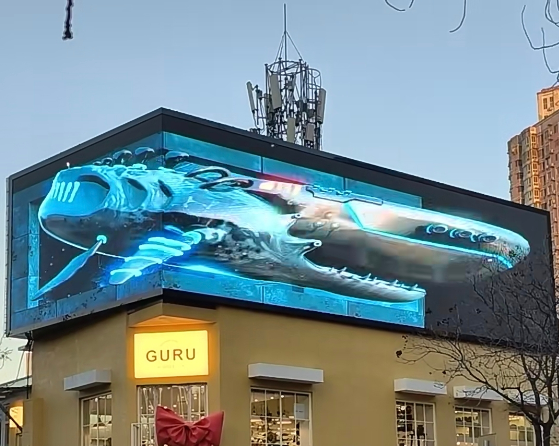
1. Is It Just a Regular LED Screen?
Let me first address the first question posed by netizens: “Is It Just a Regular LED Screen?”
From what I understand, whilst many projects do follow this approach, it is not simply a matter of joining two large screens together.
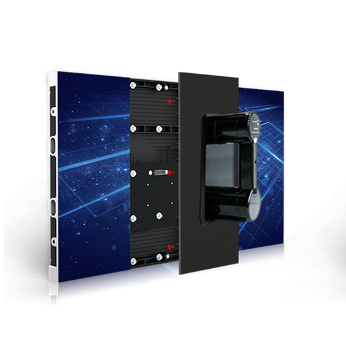
This type of corner-based naked-eye 3D typically utilizes two display surfaces to form an L-shaped structure, commonly at an angle close to 90°. The two LED screens can be installed on opposite facades of a building, with the content specifically designed to suit this corner configuration. If the building’s structure is particularly unusual, standard cabinets cannot be used directly. Instead, customized LED cabinets or modules must be manufactured to suit the dimensions, angles and edge profiles.
There will inevitably be a physical seam at the corner, though engineers will do their utmost to minimize its impact on the image.
2. Where Does the 3D Effect Actually Come From?
How exactly is the 3D effect produced? It is not simply a matter of playing a standard video on an LED screen and having it automatically become 3D – this is the crux of the matter.
In fact, the LED screen itself still displays a two-dimensional image. The key to creating a true sense of depth lies in anamorphic content.
This means that when the content is produced, perspective calculations are performed based on the screen’s actual dimensions, the corner structure, and the primary viewing position. Specifically, objects in the image are deliberately stretched and distorted, utilizing foreground, background, shadows and perspective relationships to enable the human visual system to interpret the two display surfaces as a single scene with spatial depth.
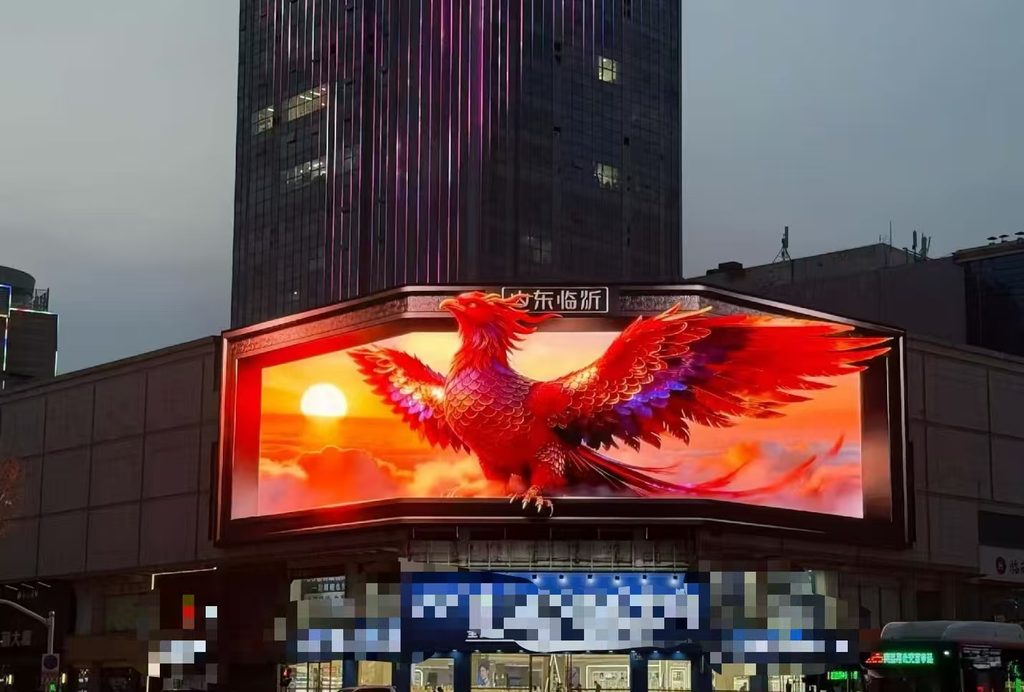
3. Why Does It Look Better From Some Angles?
This is a question that intrigues many people. This effect is usually designed with a primary viewing zone in mind. When standing near this zone, the perspective is most accurate and the 3D effect is most pronounced; as viewers move significantly away from this zone, the perspective of the image gradually diminishes.
Therefore, whilst the comment made by netizens that “it only works from that one POV” is somewhat absolute, it highlights a genuine issue: the naked-eye 3D effect is indeed closely linked to the viewing position.
4. The Key to Outdoor 3D LED Displays
Consequently, the core of outdoor 3D LED technology does not lie in “the screen itself displaying a true three-dimensional image”. To be precise, the LED screen is responsible for displaying the image; the screen’s structure provides the spatial conditions; the content, which has undergone perspective processing, is responsible for creating the visual sense of depth. It is only through the coordination of these three elements that the effect of “objects leaping out of the screen” is achieved.
For practical projects, these elements must be considered together from the initial planning stage, rather than simply producing a so-called “3D video” after the LED screen has been installed.