

A lot of purchasers encounter the following scenario: two LED screens both of which have similar pixel pitch, brightness and refresh rate, but the cost of one is 20% to 30% more than the other. The solution to the above concern is normally found behind the screens.
LED modules, power supplies, driver ICs, control systems, cabinet structures, and thermal management — these components may not be visible in the finished product, but they directly determine image quality, reliability, maintenance efficiency, and lifespan. For buyers, understanding the components of an LED display is more useful than comparing spec sheets alone. Below is a full breakdown, starting with the LED module.
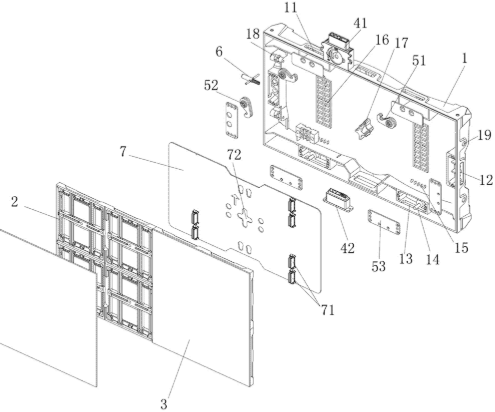
LED Modules: Where Image Quality Is Decided
The LED module is the core building block of any LED display — the unit responsible for actually producing images and video. A standard module consists of LED chips, a PCB, driver ICs, and connection interfaces. Multiple modules assemble into a cabinet, and multiple cabinets make up the complete display.
Module quality directly affects:
- Color consistency
- Uniformity throughout the display
- Grayscale
- Contrast ratio
- Refresh rate
- Operational lifespan
Applications like sports events, concerts and XR studios need high refresh rates. They stop scan lines from appearing on camera footage. So professional LED modules now commonly reach 3840Hz or above.
LED Cabinets: Structure, Installation, and Stability
The cabinet is the frame that holds everything together. It carries the modules, handles transportation, supports installation, manages heat, and provides access for maintenance.
Common cabinet types include:
- Die-cast aluminum
- Sheet metal
- Aluminum profile
- Carbon fiber lightweight
Die-cast aluminum has become the preferred choice for fine-pitch LED displays and rental LED displays because of its low weight, high manufacturing precision, and flat splicing surfaces. For outdoor advertising installations, cabinets also need to withstand mechanical stress and resist corrosion over years of outdoor operation. MileStrong SFC outdoor LED displays adopt high-precision die-cast aluminum. They support front and rear maintenance. Thus, the structure is stable and cuts long-term service costs.
Power Supply: The Foundation of Stable Operation
LED displays often run for hours, even around the clock. The power system converts AC mains power into the low-voltage DC that LED modules require, and needs to maintain stable output continuously. Poor power quality leads to brightness fluctuation, blackouts, or localized component damage.
Energy consumption is also becoming a bigger factor. According to TrendForce’s LED industry analysis, energy-efficient LED display products are seeing increasing demand — particularly in Europe and the Middle East, where electricity costs make operating expenses a real part of the purchasing decision. Common Cathode drive technology is now being applied to high-brightness outdoor LED displays, reducing power losses and improving overall energy efficiency.
Control Systems: The Brain of the Display
The control system is what makes the display work as a system. It receives video signals from computers, media players, or servers, and distributes that data accurately to every LED module.
A complete control system typically includes:
- Sending cards
- Receiving cards
- Video processors
- Control software
NovaStar, Colorlight, and Brompton are widely used across advertising, live events, XR virtual production, and broadcast applications. The right choice depends on the project whether it needs synchronous or asynchronous control, color calibration, or remote management capability.
PCB and Driver ICs: The Hidden Critical Components
PCB and driver ICs don’t change screen appearance, but ensure long-term stable operation. PCB links all electronic parts while driver ICs control each LED chip separately.
High-quality PCBs offer better thermal conductivity and lower failure rates. Stable constant-current driver ICs improve grayscale performance, increase refresh rates, and reduce flickering. For broadcast, command center, and virtual production applications where these details are not optional, component quality at this level matters significantly.
Connection Hardware: What Drives Installation Efficiency
A large LED display can involve dozens or even hundreds of cabinets. The hardware that connects them is easy to overlook but has a direct impact on how quickly the system goes up and how easy it is to service.
This includes:
- Power cables
- Signal cables
- HUB boards
- Fast-lock connectors
- Alignment pins
- Aviation plugs
The MileStrong Rolling Rental Screen, for instance, uses a fast-lock structure and rolling design that significantly reduces on-site setup time, making it a practical choice for concerts, exhibitions, and other high-frequency event deployments.
Thermal Management and Weather Protection: Built for the Long Run
For outdoor LED displays, thermal and protective design are part of the core specification. Heat, rain, UV exposure, and dust all degrade electronic components over time. Outdoor products need to address all of these:
- Efficient heat dissipation structures
- Waterproof sealing
- Anti-corrosion treatment
- IP65 or IP68 protection ratings
Under the IP rating standards defined by the International Electrotechnical Commission (IEC), IP65 and above has become a standard reference point for most outdoor LED display projects.
What to Focus on When Buying an LED Display
Faced with different brands and price points, these are the questions worth asking:
- What LED packaging technology does the module use?
- Are the driver ICs and PCBs sourced from reliable suppliers?
- Does the power supply deliver stable output with energy efficiency?
- What material is the cabinet made from? Does it support front maintenance?
- What applications is the control system compatible with?
- Does the outdoor product meet IP65 or higher?
These questions will tell you more about product quality than brightness or refresh rate alone.
An LED display is not a single component. It is an integrated system combining display, power, control, thermal management, and structural design. From LED modules to control systems, every component affects image performance, operational reliability, and maintenance costs. For buyers, understanding what goes into an LED display helps identify the right product for the project and find the right balance between budget, installation requirements, and long-term operating costs.