

Once an LED display is put into operation, maintenance is crucial for its long-term, stable performance. During the planning stage, many clients face a dilemma: should they choose a front-maintenance or rear-maintenance LED display? The fundamental difference between the two lies not in display quality, but in cabinet structure and maintenance procedures; furthermore, each method is suited to completely different installation scenarios.
Introduction
Rear-Maintenance LED Display
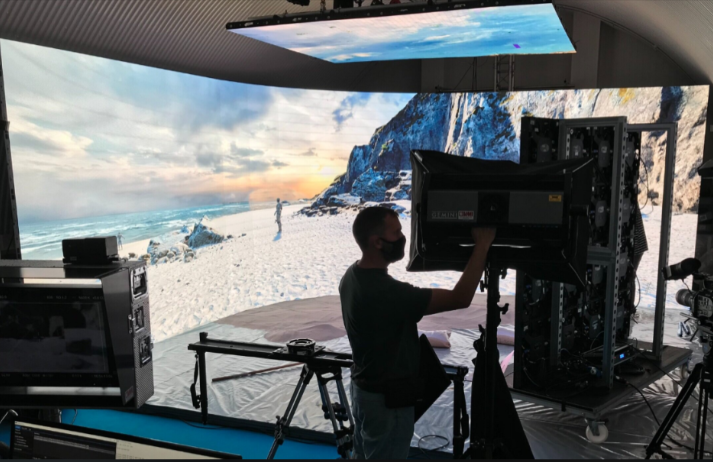
Rear maintenance is a traditional structural design. A maintenance access channel is provided on the rear of the cabinet, allowing modules, power supplies, and receiver cards to be installed, removed, and replaced entirely from the rear of the screen.
The cabinet’s back-plate features a maintenance opening, and internal components are mounted on the back of the modules. Maintenance personnel must access the rear of the display and open the back-plate to perform operations.
- Structural Features: The cabinet fabrication process is simple, the module mounting method is conventional, and the front of the screen cannot be removed.
- Limitations: A maintenance space of at least 600 mm must be reserved behind the screen; maintenance is impossible without this access space.
Front-Maintenance LED Display
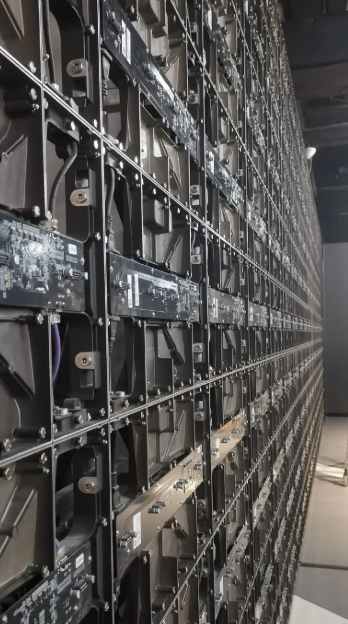
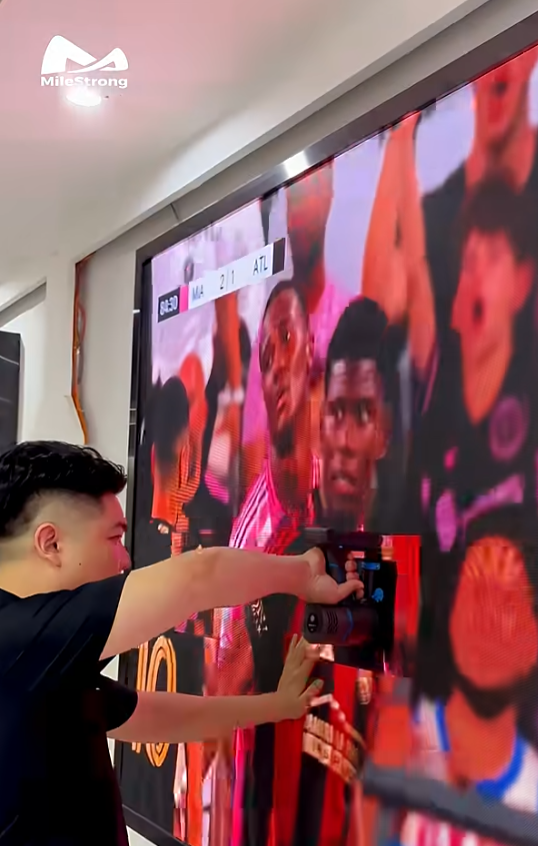
Taking the magnetic module design as an example, modules are attached to the cabinet frame via strong magnets, and power supplies and signal cards can be removed from the front of the screen. There is no need to open the rear of the cabinet. Instead, use a specialized suction cup to lift the modules directly from the front to replace lamp boards, power supplies, and cards.
Structural Features: The cabinet frame is thickened and reinforced; the magnetic attachment structure increases manufacturing costs.
No maintenance access is required behind the screen, allowing for installation flush against the wall.
Comparison In Different Aspects
Installation Space
- Rear Maintenance: A maintenance aisle must be left at the rear; suitable for freestanding walls and indoor large-screen equipment rooms.
- Front Maintenance: Installed flush against the wall with zero clearance; suitable for columns, glass curtain walls, and narrow wall surfaces.
Maintenance Operations
- Rear maintenance: Repairs are performed from the rear of the display, leaving the front screen untouched; suitable for large, fixed displays.
- Front maintenance: Modules are installed and removed via suction cups from the front, making maintenance more convenient in space-constrained environments. However, due to frequent installation and removal, the surface of the module requires a protective structure.
Cost
- Rear-access maintenance: The cabinet structure is simple, resulting in lower production costs and lighter overall weight.
- Front-access maintenance: Features a magnetic attachment structure and reinforced frame, resulting in higher procurement costs.
Application Scenarios
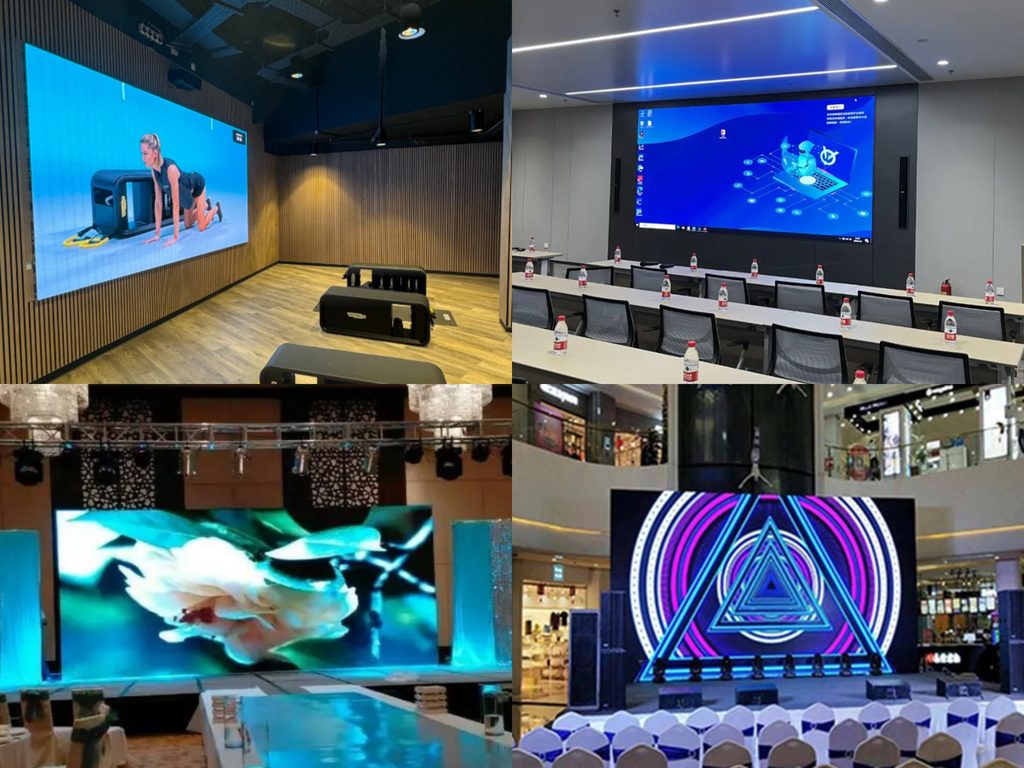
- Rear-Maintenance: Command centers, indoor large screens, outdoor large screens, and projects with ample space behind the screen.
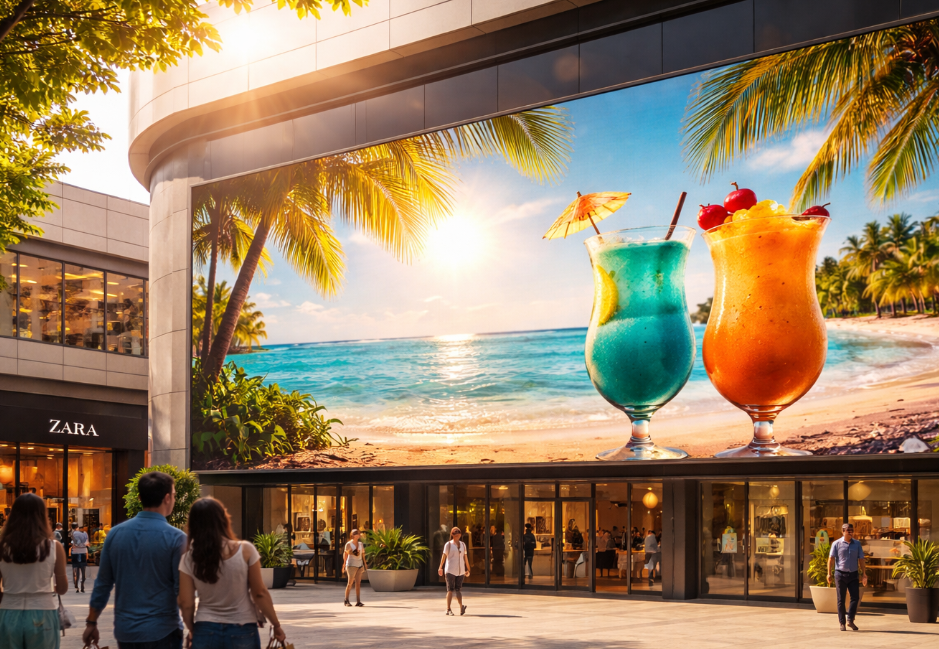
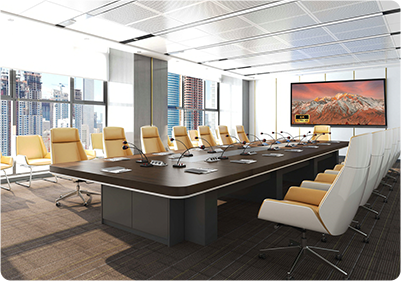
- Front-Maintenance: Shopping mall display windows, elevator screens, narrow walls in conference rooms, transparent screens, and outdoor wall-mounted screens.
How to Select the Right Maintenance Method for Your Project?
Prioritize rear-maintenance LED Displays: Choose this option when
- there is ample space behind the screen,
- the budget is limited,
- the screen area is large.
This ensures a comfortable environment for future maintenance and keeps overall project costs under control.
Prioritize front-maintenance LED Displays: Choose this option when
- there is no maintenance space behind the screen,
- the screen is mounted flush against a wall,
- it is installed on a curtain wall or columns.
Even if a single module fails later on, there is no need to dismantle the entire screen—it can be quickly replaced from the front.
FAQ
1. Is the magnetic module the only option for front maintenance?
No. While magnetic attachment is the most common solution for indoor front maintenance, other structural designs exist, such as latch-based systems, hybrid magnetic-latch systems, and cabinets with front-opening doors.
2. Can front maintenance and rear maintenance coexist on a single module?
Yes. Modules that support both maintenance methods are currently available. Products such as MileStrong’s outdoor LED Display SL series and rental LED Display FR series support both front and rear maintenance.
3. How do front and rear maintenance differ in their impact on LED display upkeep?
The appropriate maintenance method should be selected based on the specific application scenario—for instance, whether there is available space behind the screen. Choosing the right method for the project reduces maintenance difficulty and costs.
4. Are outdoor screens with front maintenance prone to water leakage?
No. Professional outdoor front-maintenance modules feature waterproof designs—such as sealed latches and waterproof gaskets—making them suitable for outdoor environments exposed to wind and rain.
5. Is the lifespan of a front-maintenance LED display shorter than that of a rear-maintenance one?
No. A screen’s lifespan depends more on components like LED beads, power supplies, and driver chips than on the maintenance structure.
Conclusion
There is no inherent superiority or inferiority between front-maintenance and rear-maintenance LED screens, they simply represent two different cabinet design approaches. The primary factor in selecting the right type is whether the installation site allows for rear access space for maintenance. Other considerations—such as budget, screen size, and the operating environment—should also be evaluated.
Determining the maintenance method during the design phase helps avoid costly retrofitting or rework later on and reduces long-term operation and maintenance costs.