

When people select an LED display, they typically focus on LED chips, modules, and pixel pitch. But there is another component that determines whether the screen actually performs well — and it tends to get overlooked. That’s the control system.
An LED display is a complex information terminal. The LED modules handle the image. The power supply handles the electricity. The control system handles everything in between — getting content to every pixel accurately and efficiently. If the control system is not the right fit, even high-quality LED modules can produce stuttering, color drift, or unstable signal output. So what is the real difference between NovaStar, Colorlight, and Brompton? Which one is better?
What Does an LED Display Control System Actually Include?
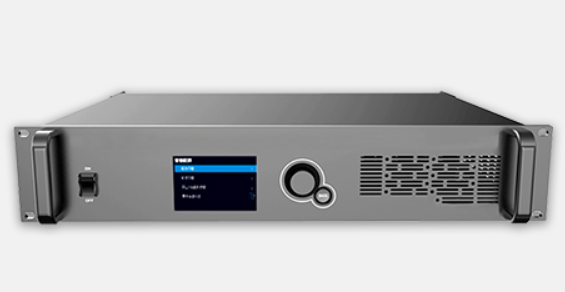
A complete LED Display Control System typically consists of three main components.
- The sending card transmits the video signal to the LED display.
- The receiving card is installed inside the LED cabinet and controls how the LED modules display content.
- The video processor handles more complex tasks — managing multiple signal inputs, switching between sources, and scaling.
For a basic digital signage installation, an entry-level control system is sufficient. For large commercial displays, rental staging, sports events, or XR virtual production, the control system becomes significantly more important.
NovaStar: The Widely Used Choice for Commercial Projects
NovaStar has one of the highest market coverage rates in the LED display industry — particularly in commercia LEDl displays, outdoor advertising, meeting rooms, and fine-pitch LED applications.
Its main strength is maturity. NovaStar consistently delivers stable operation, straightforward maintenance, and a well-established supply chain. NovaStar also covers a broad product range, from basic control hardware to high-end video processing systems. For most fixed installation LED projects, NovaStar is a reliable default choice. That said, it is not the only answer for every application — particularly at the high-performance end of the market.
Colorlight: Value and Flexibility for a Wide Range of Projects
Colorlight is another major name in LED display control systems. Compared to some higher-priced alternatives, it offers a cost advantage that makes it a practical choice for many project types.
A common scenario in real projects: the client needs stable display performance, but the budget is constrained. Colorlight frequently provides a well-balanced solution in this situation. That said, price should not be the only consideration. Different projects have different requirements for color management, signal processing, and handling complex display configurations. If the application demands a high-precision environment, a more thorough evaluation is worth doing.
Brompton: The Professional Choice for High-End LED Applications
If NovaStar and Colorlight cover most standard LED projects, Brompton operates at a different level — appearing most often in demanding, high-end applications:
- XR virtual production
- Film and television production
- Large-scale concerts
- International sporting events
These projects place extreme demands on the LED display system. It is not enough to show a picture. Precise control is essential. The reason: when a camera captures an LED background, any minor inconsistency — color variation, insufficient grayscale depth, refresh synchronization issues — is amplified in the final image.
NovaStar, Colorlight, or Brompton — A Quick Reference
| Application | Recommended Direction |
| Shopping malls, meeting rooms, corporate showrooms | NovaStar, Colorlight |
| Outdoor advertising LED displays | NovaStar, Colorlight |
| Rental staging LED displays | NovaStar, Brompton (high-end projects) |
| XR virtual production | Brompton |
| High-end film and television production | Brompton |
One important point: do not evaluate the control system in isolation. It needs to be matched to the full LED display system — including LED module performance, refresh rate, grayscale capability, receiving card configuration, and video processing requirements. Many projects run into problems not because any single component is poor, but because the system as a whole was not properly matched.
AI and XR Are Raising the Bar for LED Control Systems
One of the most significant changes in the LED industry over recent years is that application environments have become more complex. XR virtual production is growing rapidly. Large-scale staging projects keep scaling up. Commercial spaces are increasingly pursuing immersive experiences. All of these trends place higher demands on the control system. Future LED control systems will not simply transmit images. They will need to handle larger data volumes, support more sophisticated content management, and integrate with AI and real-time rendering technologies.
This is why high-end projects are placing more weight on the control system than ever before. Display performance is no longer determined by the screen alone.