

Lightweight design, IP66 full protection, 10,000 nits peak brightness, 25% energy savings through common cathode technology, front and rear maintenance, flexible splicing — here is how the SFC Series systematically addresses the three core challenges of outdoor LED installation, maintenance, and display performance.
Three Problems Every Outdoor LED Project Faces: How the SFC Series Solves Them
Deploying an outdoor LED display is never as simple as mounting a screen on a wall. In practice, project teams encounter the same categories of problems, again and again.
- In terms of installation, traditional steel-frame cabinets are heavy and expensive to transport and rig. Heavier cabinets place greater structural loads on the building facade. For occupied buildings, that often means commissioning additional steel reinforcement before installation can begin, which adds additional cost to the schedule before a single panel is powered on.
- In terms of maintenance, flush-wall and embedded installations rarely leave room for rear access. When a module fails, the response typically involves scaffolding, extended downtime, and service costs that compound quickly over the life of a project.
- In terms of displayed image, washed-out images in direct midday sun and poor visibility in rain or fog are not problems that higher brightness alone can fix. Addressing them requires optical engineering, thermal management, and weatherproofing to work as an integrated system — not a brighter backlight.
The SFC Series was built to address all three.
Lightweight Aluminum Profile Design: Lowering the Bar for Installation
The SFC Series adopted a full aluminum profile design. The standard SFC cabinet (960×960mm) weighs approximately 24.5kg per unit. In the SFCS small-pitch series, the 500×500×83mm cabinet weighs a mere 8.5kg, making it exceptionally easy to handle.
The benefits go beyond just easier handling. In operational commercial buildings, lighter cabinets reduce the structural load on existing surfaces.
The all-aluminum module design also provides a built-in advantage: inherent fire resistance and flame retardancy. For large commercial complexes, transportation hubs, and other facilities with strict fire safety requirements, this offers a significant compliance edge without the need for additional retrofits.
IP66 Dual-Side Protection : Designed for the Real World
The SFC series modules achieve an IP68 protection rating at the component level. However, when installed within a cabinet, the system-level protection rating is IP66 due to factors such as panel joints, cable entries and structural joints.
This distinction is more significant than it may appear at first glance. Some outdoor LED products on the market advertise only the IP rating at the module level, rather than the protection rating of the fully assembled system. The SFC Series’ IP66 rating reflects the actual environmental conditions that determine the condition of the screen after installation—that is, its performance during long-term outdoor installation.
The cabinet is sealed at both the front and rear, with precision aluminium profiles ensuring robust weather resistance. An integrated breather valve equalises internal and external air pressure during sudden temperature changes, preventing the deterioration of seals—which can easily lead to water ingress within just two to three years.
10,000 Nits and Optical Engineering: Legible When It Counts
With a pixel pitch of 4.44 mm, the SFC series achieves a maximum brightness of 10,000 nits. Across the extensive SFC range, most configurations deliver a brightness of 6,500 nits or higher. The colour temperature is adjustable between 6,500K and 9,000K, allowing the display to be fine-tuned to suit the ambient lighting conditions at each installation site.
Two key optical design features further enhance outdoor visibility.
- 14–16-bit greyscale ensures smooth tonal gradation even at high brightness levels, rendering gradients, skies and skin tones significantly more naturally and in greater detail compared to the 8–10-bit output typical of lower-priced outdoor displays.
- The high contrast ratio of 15,000:1 deepens black levels and reduces the reflection of ambient light around each LED, allowing shadow detail to be maintained without overexposing highlights, even in direct sunlight.
Common Cathode Technology: Less Energy, Less Heat, Longer Life
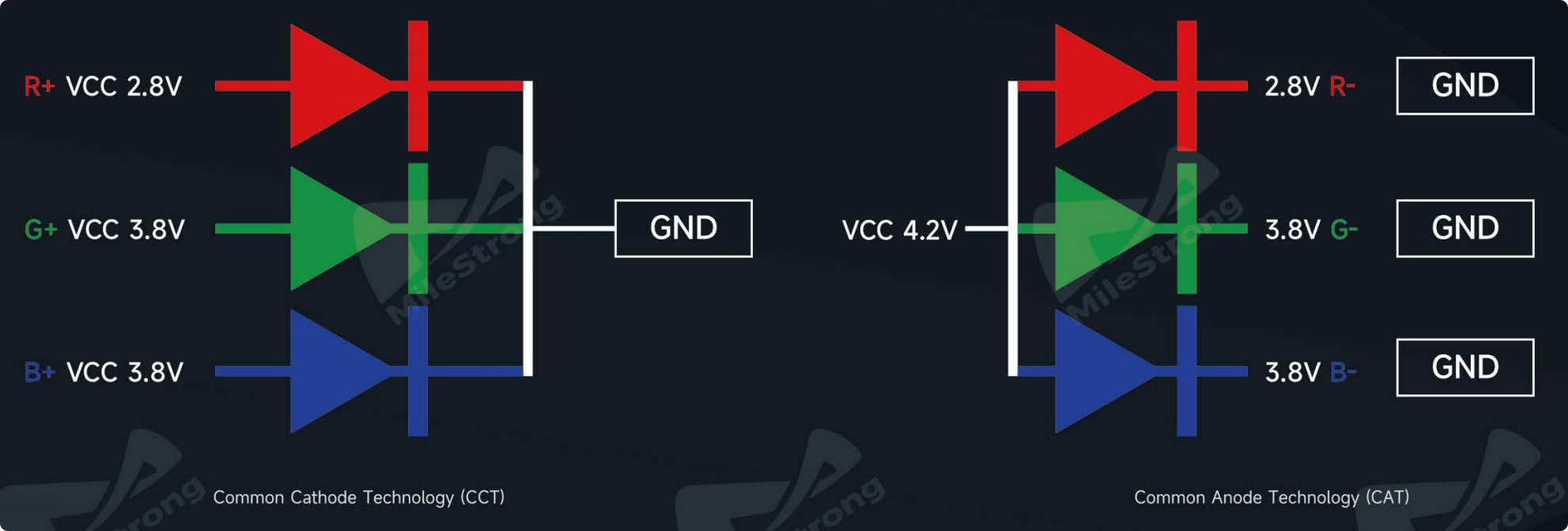
The SFC series uses Common Cathode Technology (CCT), reducing power consumption by approximately 25% compared to conventional Common Anode Technology (CAT) products.
The principle is simple. Red, green and blue LEDs each have different forward voltages: red is approximately 2.8V, whilst green and blue are approximately 3.8V. In a common anode design, a single supply voltage is applied to all channels to meet the highest requirement (approximately 4.5V), but the excess voltage applied to channels with lower demand is dissipated as heat. In contrast, the common cathode design supplies the optimal voltage to each colour channel, thereby eliminating this energy loss.
In terms of operation, the reduced thermal load extends the lifespan of the LED chips. For large-scale installation systems operating continuously, the cumulative reduction in power consumption over several years results in a significant difference in total operating costs.
Front and Rear Maintenance and Fast-Lock System: Owner-Friendly Design
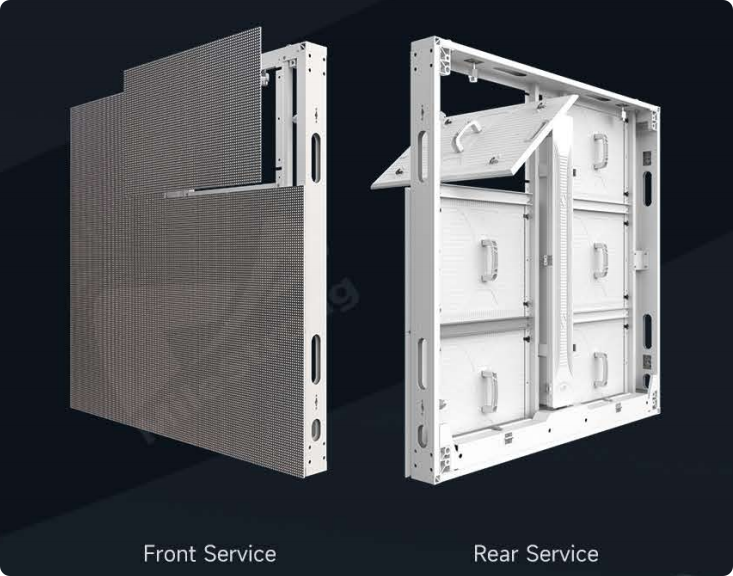
This series supports maintenance from both the front and rear. The modules feature a fast-lock mechanism and are equipped with safety retention lines to prevent accidental dropping during maintenance.
Front-access maintenance is an essential feature for wall-recessed, recessed and column-mounted installations where access to the rear is not possible. Individual modules can be removed or replaced from the front of the display without affecting the surrounding panels.
This reduces maintenance time in facilities operating 24 hours a day, such as transport hubs, large commercial premises and sports facilities.
Flexible Splicing: Designed for Architecturally Complex Facades
The SFC Series supports 90-degree right-angle splicing and curved splicing configurations, enabling installation on corner facades, curved curtain walls, and non-planar architectural surfaces.
Across the three sub-series — SFC, SFCH, and SFCS — pixel pitches range from 1.3mm to 10.42mm. That range allows the appropriate model to be selected based on the minimum viewing distance of a specific installation, without overspending on resolution that won’t be perceptible at the distances involved, or accepting lower image quality to hit a budget target.
Every technical decision in the SFC Series — cabinet weight, protection rating, energy architecture, maintenance access, optical design — points toward the same outcome: a display that creates as few operational problems as possible over its working life. That is the standard MileStrong applies to outdoor LED display engineering, and the lens through which the SFC Series should be evaluated.