Common Cathode vs Common Anode LED Displays: Differences, Advantages, and How to Choose
As energy efficiency and long-term operating costs become increasingly important, LED display buyers are paying closer attention to the technologies behind the screen.
Among them, Common Cathode and Common Anode are two widely used driving architectures that significantly influence power consumption, thermal performance, and overall system reliability.
In this guide, MileStrong explores the key differences between Common Cathode and Common Anode LED displays to help you make a more informed decision.
What Is a Common Cathode LED Display?
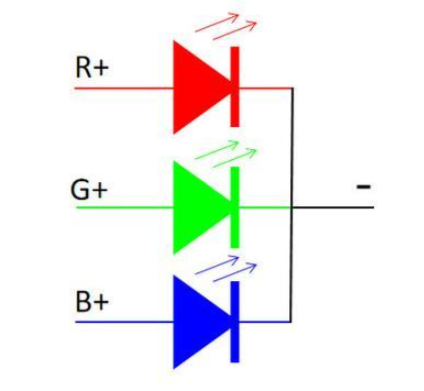
A Common Cathode LED display uses a shared negative terminal (cathode) while supplying independent positive voltages to the red, green, and blue LEDs. Since each color LED has different electrical characteristics, the system can provide optimized voltages to each color separately.
For example:
- Red LEDs: approximately 2.8V
- Green LEDs: approximately 3.8V
- Blue LEDs: approximately 3.8V
This precise power management significantly improves energy efficiency and reduces heat generation.
What Is a Common Anode LED Display?
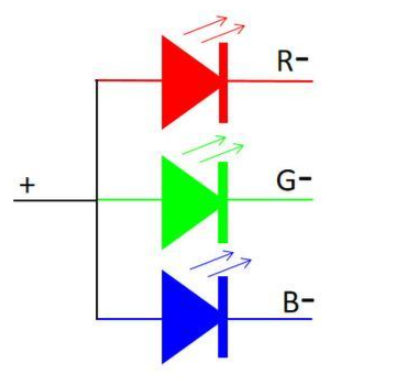
A Common Anode LED display uses a shared positive power supply (anode) for all RGB LEDs. The red, green, and blue LEDs are powered by the same voltage source, typically 5V.
For example:
- Red LEDs: 5V
- Green LEDs: 5V
- Blue LEDs: 5V
In this architecture, the driving circuit controls each LED through its negative terminal. Since all RGB LEDs share the same supply voltage despite having different optimal operating voltages, the excess electrical energy must be dissipated by the driving circuitry. As a result, power consumption and heat generation are generally higher compared with Common Cathode designs.
Each RGB LED receives optimized voltage according to its actual operating requirements, which can reduce energy waste.
All RGB LEDs share the same power supply voltage, resulting in higher power consumption.
Overall, Common Cathode LED displays can typically achieve power savings of 20% compared with conventional Common Anode designs.
Heat Dissipation
Lower operating voltage means less power loss and reduced heat generation.
Higher power consumption generates more heat, especially in high-brightness applications.
Overall, Common Cathode technology helps improve display stability and reduces cooling requirements by generating less heat during operation.
Brightness Performance
Accurate voltage control allows LEDs to operate more efficiently and consistently.
Brightness performance is reliable, but efficiency is relatively lower due to excess voltage loss.
Overall, the primary difference is not brightness itself, but efficiency. Common Cathode technology can achieve comparable brightness while consuming less power and generating less heat.
Lifespan
Lower temperature operation reduces LED degradation and improves system reliability.
Higher operating temperatures may accelerate component aging over time.
Overall, compared with Common Anode designs, Common Cathode technology contributes to a longer overall display lifespan.
Initial Cost
Requires customized power supplies, driver ICs, and PCB designs, resulting in higher manufacturing costs.
Benefits from a mature supply chain and standardized production process.
Overall, Common Anode technology provides a lower upfront cost than Common Cathode designs.
Advantages of Common Cathode LED Displays
- Lower power consumption
- Reduced heat generation
- Better thermal management
- Improved display stability
- Extended product lifespan
- Lower long-term operating costs
Common Cathode technology is particularly suitable for fine-pitch and micro LED displays, especially P1.2, P1.0, and below.
Advantages of Common Anode LED Displays
- Mature technology
- Lower manufacturing cost
- Stable and reliable performance
- Extensive industry support
- Easier maintenance and replacement
Common Anode remains a practical choice for many standard indoor and outdoor LED display applications, particularly for projects with tighter budgets.
Which LED Display Technology Should You Choose?
Choosing between Common Cathode and Common Anode LED displays depends on your project requirements, operating environment, energy-saving goals, and budget. While both technologies can deliver excellent visual performance, each offers unique advantages for different applications.
When to Choose a Common Cathode LED Display
For most modern LED display projects, Common Cathode technology is becoming the preferred choice due to its superior energy efficiency, lower operating temperatures, and longer service life. It is particularly suitable for users who value long-term performance.
Recommended for:
- Energy efficiency is a priority
- Long-term operating costs matter
- The display operates for extended periods
- Lower heat generation is preferred
- Higher system reliability is required
- Long product lifespan is important
When to Choose a Common Anode LED Display
Common Anode technology remains a practical option for projects where minimizing initial investment is the primary concern.
Recommended for:
- Initial budget is the primary concern
- Energy consumption is less critical
- Operating hours are relatively limited
- Indoor applications with moderate efficiency requirements
- Is Common Cathode better than Common Anode?
Not necessarily. Common Cathode offers better energy efficiency, lower heat generation, and longer lifespan, while Common Anode provides lower initial costs and remains suitable for many conventional LED display applications. The best choice ultimately depends on factors such as project requirements, operating environment, energy-saving goals, and budget.
- How much energy can a Common Cathode LED display save?
Depending on the display design and operating conditions, Common Cathode technology can theoretically reduce power consumption by approximately 15%–25% compared with conventional Common Anode displays.
- Does Common Cathode provide higher brightness?
Not necessarily. Both technologies can achieve similar brightness levels. The primary advantage of Common Cathode lies in achieving comparable brightness with lower power consumption and less heat generation.
- Why is Common Cathode more expensive?
Common Cathode LED displays require more sophisticated power management, customized driver ICs, and optimized PCB designs, resulting in higher manufacturing costs.
- How can we tell if an LED display is Common Anode or Common Cathode?
Check the product specifications or ask the manufacturer. Common Cathode LED displays use separate voltage supplies for RGB LEDs, while Common Anode LED displays use a shared voltage supply.
Conclusion
As energy efficiency and sustainability become increasingly important, Common Cathode technology is gaining wider adoption across the LED display industry. By delivering lower power consumption, reduced heat generation, and improved long-term reliability, it provides a compelling solution for modern display applications. MileStrong remains committed to delivering innovative Common Cathode LED display solutions that help customers build more efficient and reliable visual experiences.