

Traditional LED displays are primarily used to play videos and images, and viewers typically just watch. Interactive LED floor tile screens are different. They can change the content on the screen in real time based on a person’s position, movements, and even stepping behavior.
This interactive approach transforms the ground from a mere walking area into a digital experience center within the space. So, what interactive features can LED floor tile screens actually provide? And what application scenarios are they suitable for?
Interactive Approaches of LED Floor Tiles
Footstep Interaction: The Image Changes Wherever You Walk
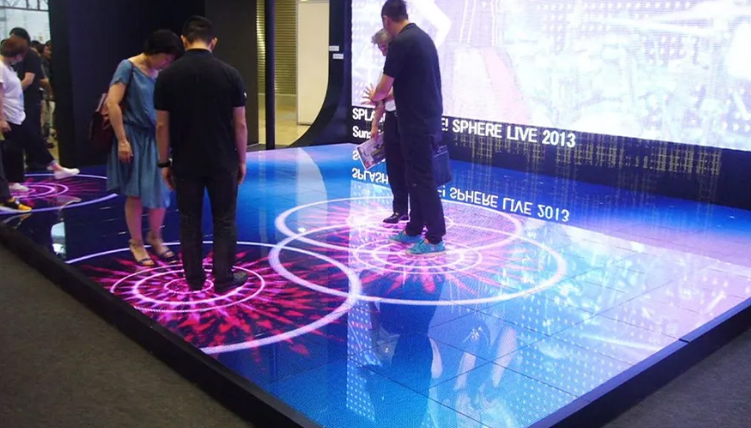
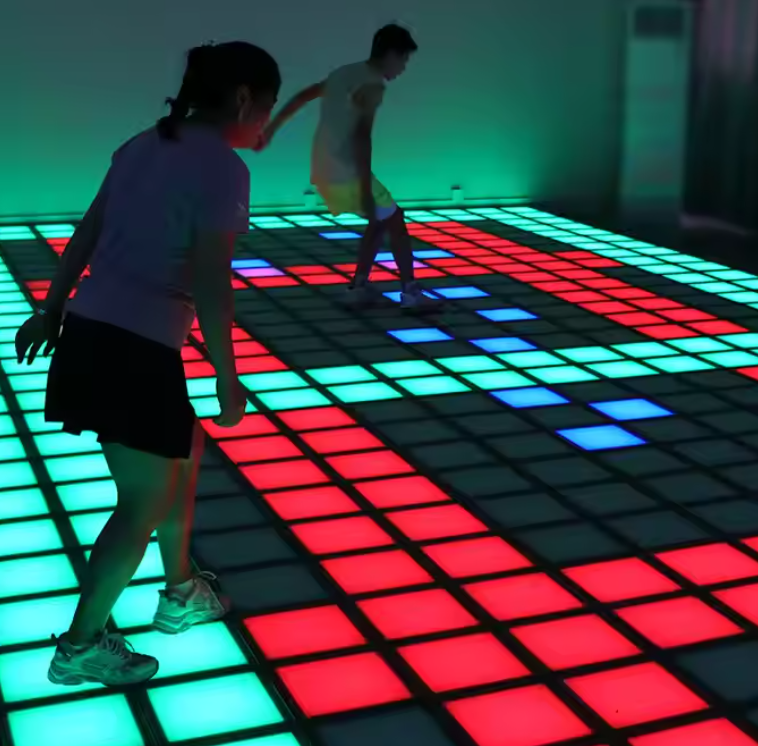
Footstep interaction is a common application of LED floor tile screens. When a person walks on the screen, the system can recognize their location. The image beneath their feet changes accordingly. For example, the area they step on can display water ripples, halos, flowers, or particle effects. As the person moves forward, the dynamic effects move with them.
This interactive method is simple to operate. Users do not need to learn something. Therefore, it is particularly suitable for shopping malls, exhibition halls, museums, and entertainment spaces.
Step Interaction: One Step Triggers One Effect
LED floor tile screens can also trigger interaction through designated areas.
For example, when a user steps on a certain spot, the screen can play an animation, or display product information, brand logos, or game content.
This method combines the displayed content with user behavior. For commercial spaces, interaction is not just for aesthetics; it can also increase communication between the brand and users. With user participation, the content is more easily remembered.
Multi-Person Interaction: Enabling Simultaneous Participation
Large LED floor tile screens can support simultaneous interaction by multiple people. For example,
In an exhibition hall, after multiple visitors enter the interactive area, each person’s position can produce different visual effects.
Multi-person interactive games can also be designed in children’s playgrounds. Different positions correspond to different tasks. This application can increase on-site participation and reduce the problem of traditional displays only allowing viewing without interaction.
Motion Interaction: Making the Image Follow People’s Movement
Besides footsteps, some interactive systems can also recognize the direction and actions of people’s movement.
For example, when a user moves to the left, the elements in the image spread to the left; when the user stops, the animation on the screen can also pause.
When combined with cameras, radar, and other equipment, even more complex interactive effects can be achieved.
This type of approach is commonly used in immersive exhibitions, digital art spaces, and brand experience centers.
Linked with Other LED Screens
The LED floor tile screen can also be used in conjunction with other LED displays.
For example, an interactive LED floor tile screen is installed on the ground, while an LED display is installed on the wall. When a user steps on a certain area of the ground, the display image on the wall will change synchronously.
If transparent LED displays are also used in the space, it can further enhance the layering effect of the space. The display on the ground, wall and space can form a unified interactive experience. This is a common design concept in immersive projects.
What Are the Application Advantages of LED Floor Tiles?
Increased User Engagement
Traditional LED screens primarily rely on visual appeal to attract users.
Interactive floor tile screens allow for direct user participation. Viewers can influence the screen by walking and stepping on it, making the experience more intuitive.
Enhanced Spatial Appeal
Dynamic content combined with real-time interaction can quickly capture attention on-site.
Especially in shopping malls, exhibition halls, and themed entertainment venues, interactive effects can make the space more vibrant.
More Flexible Display Methods
Interactive content can be designed according to the project. Businesses can display brand information, or create games, artistic animations, and product introductions. Content can be changed, and the space can be continuously updated.
Creating Immersive Experiences
One of the biggest advantages of LED floor tile screens is their ability to integrate users into the digital space. When users stand on the screen, the image changes with their movements. Combined with wall-mounted LED displays, transparent LED displays, and other products, a more complete immersive space can be created.
Wide Range of Applications
Different interactive content is suitable for different scenarios. Interactive LED floor tile screens can be applied to shopping malls, exhibition halls, museums, science and technology museums, theme parks, hotels, stages, brand experience stores, and immersive spaces.
Conclusion
The interactive forms of LED floor tile screens are not limited to one method. From simple footstep interactions and step-triggered movements, to multi-person interactions and motion recognition, and even interconnection with wall-mounted LED displays and transparent LED displays, each can be designed according to project needs.It’s not just an LED display screen installed on the ground, but a digital display solution that allows users to participate.
For projects looking to enhance the spatial experience and increase user engagement, interactive LED floor tile screens are a display product worth considering.