

Micro LED is no longer an unfamiliar display technology. Its high brightness, high contrast, fast response times, long lifespan and modular design have long positioned it as a key direction for next-generation high-end displays.
However, what many people really want to know at present is: is Micro LED actually worth buying?
Judging by user discussions on Micro LED, people are concerned about more than just picture quality. Price, screen burn-in, lifespan, modular structure, and exactly how much of a gap there is between it and OLED are the key factors determining a purchase.
Micro LED Prices Are Falling, But Is It Really Affordable?
Micro LED prices have dropped significantly, which is good news. However, for the average consumer, the problem remains: even after the price drop, it is still too expensive.
That said, there are valid reasons for the high price. The manufacture of Micro LED involves multiple stages, including micro-LED chips, precision packaging, mass transfer, pixel uniformity, and the assembly of display modules. Large-sized Micro LED displays, in particular, place high demands on production precision and yield rates.
For consumers, however, these issues are not the primary concern; what matters to them is when manufacturing costs will be reduced to a level acceptable to the public. At present, some are even speculating: ‘Perhaps in five years’ While there is no clear basis for this timeframe, consumers are willing to wait.
Is Micro LED Really Free from Burn-In?
When discussing the differences between Micro LED and OLED, “screen burn-in” is almost an unavoidable topic.
- OLED utilizes organic light-emitting materials; when displaying static content for extended periods, different pixels may age at varying rates, leading to screen burn-in or image retention issues.
- Micro LED utilizes inorganic LEDs and therefore has a clear technical advantage over traditional OLEDs in terms of burn-in issues.
However, this does not mean that Micro LED pixels will never degrade. Some have raised a simple question: LEDs are also subject to brightness decay over prolonged use. Furthermore, “no OLED-style burn-in” does not equate to “pixels that will never degrade”.
For consumers, the key question is whether Micro LED can maintain stable brightness, colour, and pixel uniformity over the long term in real-world usage conditions.
Why Are Micro LED Displays Designed to Be Modular?
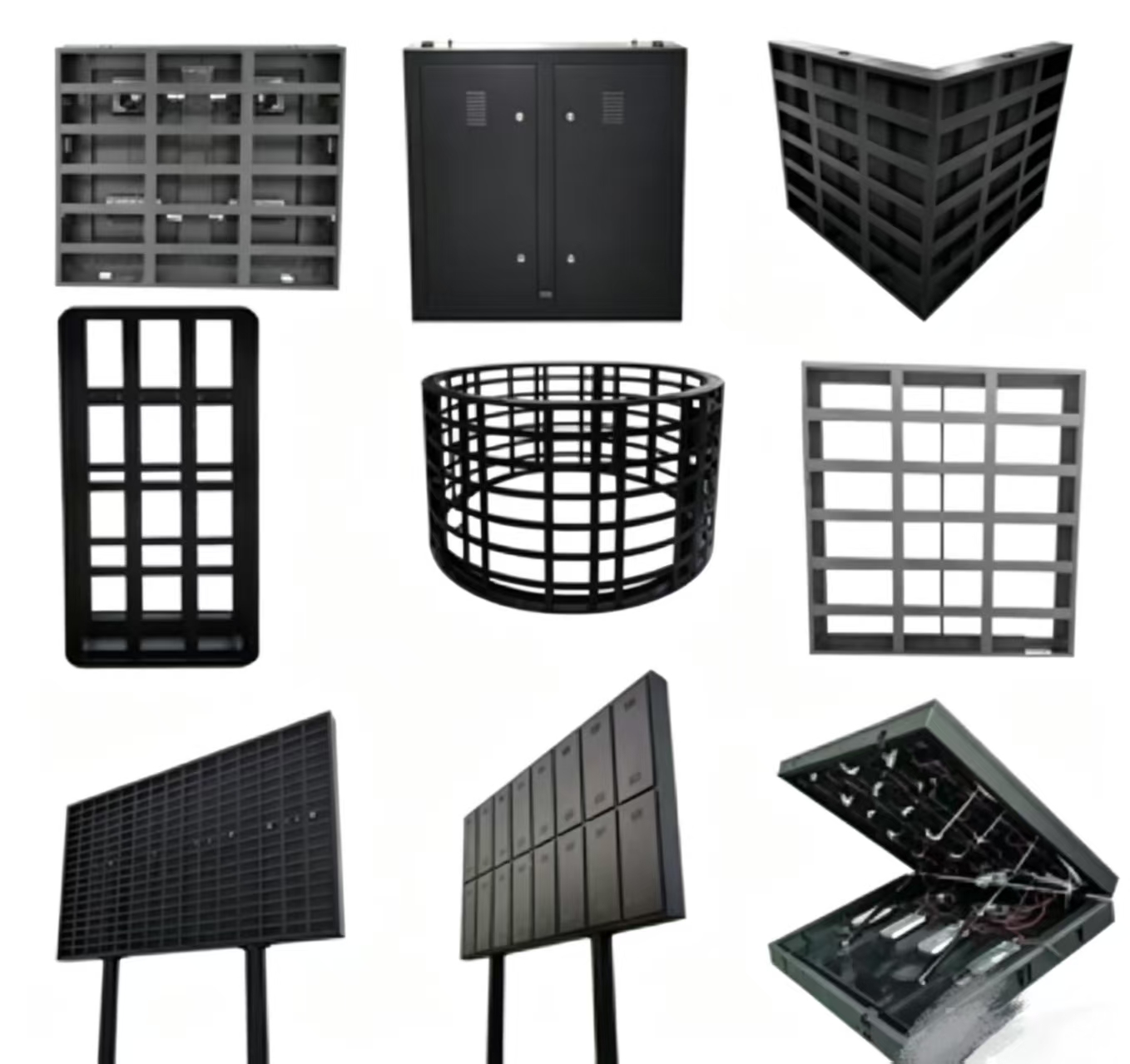
An examination of Micro LED products reveals that modular displays are a popular design trend. Users can construct larger screens by combining multiple small display modules.
This design is highly practical, as it facilitates easier transport and offers greater flexibility during installation. Should a particular module malfunction, it can be replaced individually without the need to replace the entire display. Furthermore, the modular structure allows for greater flexibility in screen size. In theory, provided the structure and control system permit it, the display can be scaled to suit the available space.
However, this raises a question: is it truly possible to achieve perfect, pixel-level alignment between modules?
Through high-precision module manufacturing and installation calibration, Micro LED ensures that different modules maintain consistent pixel alignment and flatness, thereby achieving a splicing effect that is close to pixel-level precision. The term ‘seamless’ refers to the fact that, when multiple modules are combined, the image remains continuous, with no obvious splicing boundaries visible to the naked eye.
What Makes Micro LED Better Than OLED?
Excellent black levels, high contrast, fast response times and a mature consumer market all make OLED a very strong competitor to Micro LED. So why would consumers still need Micro LED? This is actually summed up by a typical comment from internet users: ‘What’s the point’
Translated into a purchasing decision, this becomes: if OLED is already so good, why should I spend more money on Micro LED?
The advantages of Micro LED are mainly concentrated in several areas.
- Firstly, brightness. Micro LED offers high brightness potential while enabling pixel-level control, which is valuable for large displays, bright environments, and commercial display applications.
- Secondly, response speed and long-term stability.
- Furthermore, Micro LED’s modular structure allows for product designs that OLED struggles to replicate fully.
Conclusion: Is Micro LED Really Worth the Price?
The biggest challenge facing Micro LED today may no longer lie in the technology itself. If a Micro LED television is significantly more expensive than an OLED model, yet the average user struggles to perceive a noticeable difference during everyday viewing, the case for purchasing it becomes rather weak. Conversely, if Micro LED prices continue to fall in the future while establishing clear advantages in brightness, lifespan, large screen sizes, and modularity, its market potential will grow ever greater.
Judging by the current level of discussion, it is not that people lack interest in Micro LED. On the contrary, many recognize its technical potential. However, what consumers are truly concerned about are several very practical issues: whether the price is low enough, whether there will be any degradation over the long term, whether the modules can truly be seamless, and just how much better it is compared to OLED.