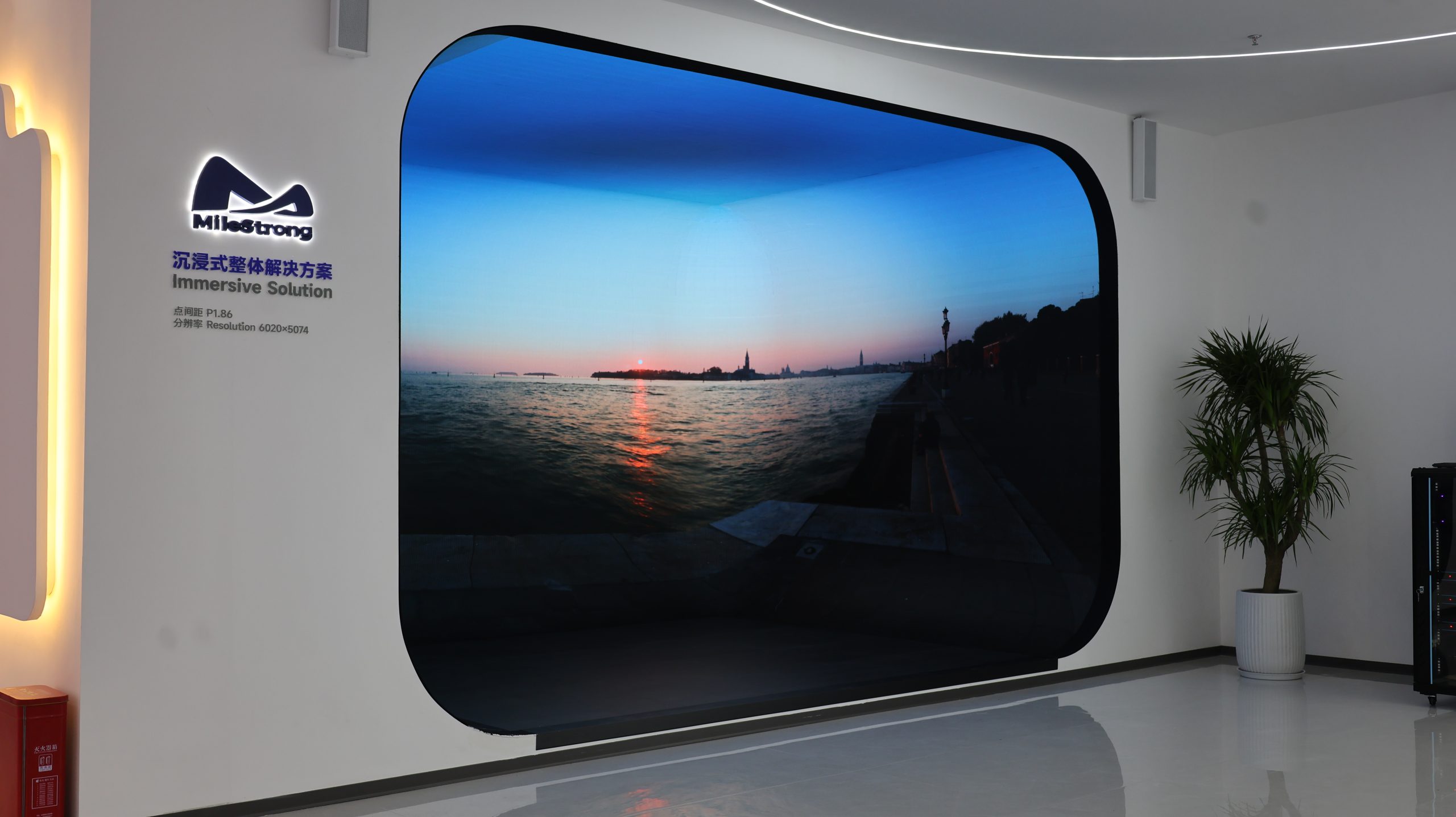


A CAVE immersive LED space uses multiple fine-pitch LED screens to create an enclosed, immersive environment. Visitor capacity needs to consider several factors, including visual experience, equipment safety, space conditions, and interactive activities.
Too many visitors in the space may block the LED display, affect the viewing experience, cause accidental contact with equipment, or reduce ventilation. For this reason, operators should calculate both the maximum occupancy at one time and the daily visitor capacity.
Key Visitor Capacity Indicators for CAVE Spaces
Visitor capacity in a CAVE space can be divided into two main indicators:
- Maximum occupancy: The maximum number of visitors who can be inside the space at the same time.
- Daily visitor capacity: The estimated maximum number of visitors that can be accommodated in one day based on the experience time and interval between sessions.
The first step is to determine the effective experience area (S). However, areas occupied by LED displays, equipment cabinets, passageways, blind spots, safety barriers, and other non-accessible areas should be excluded from the calculation.
The recommended effective space per visitor can vary by application:
1. Premium Immersive Experiences
For professional exhibition halls, art exhibitions, and high-end cultural tourism projects: ≥ 6 m² per person
This provides a more comfortable viewing experience, wider horizons, and enough space for interactive activities.
2. Standard Public Experiences
For science museums, educational exhibitions, and general commercial installations: ≥ 4 m² per person
This provides a balance between visitor comfort and operating efficiency.
3. Minimum Safety Threshold
For emergency crowd control or peak-period capacity management: ≥ 3 m² per person
This level is intended only for basic safety control and is not recommended for normal daily operation.
CAVE Visitor Capacity Calculation Formulas
1. Maximum Occupancy at One Time
P = S ÷ S₀
- P = maximum number of visitors inside the space at one time
- S = effective experience area
- S₀ = recommended effective space per person
The result should be rounded down to the nearest whole number.
2. Maximum Daily Visitor Capacity
P(total) = P × [T(total) ÷ (T + t)]
- P(total) = maximum daily visitor capacity
- P = actual occupancy per session
- T(total) = effective operating time per day
- T = duration of each experience session
- t = interval between sessions
For a typical CAVE immersive experience, a single session usually lasts 10–20 minutes.
The interval between sessions is generally 3–5 minutes. This time allows for equipment reset, visitor exit and entry, and environmental adjustments.
Calculating Visitor Capacity for a Real CAVE Space
Take a standard three-sided CAVE immersive LED space in a science and technology exhibition hall as an example.
Basic Parameters:
- Effective experience area: S = 60 m²
- Space volume: V = 180 m³
- Application: Premium immersive experience
- Recommended space per person: S₀ = 6 m²/person
- Daily operating time: T(total) = 480 minutes
- Experience time per session: T = 15 minutes
- Session interval: t = 5 minutes
Step 1: Calculate Basic Maximum Occupancy
P₀ = 60 ÷ 6 = 10
The basic maximum occupancy is therefore 10 people at a time.
Step 2: Consider Operating Conditions
In actual projects, several factors may affect the recommended capacity.
For example:
- Good ventilation: K₁ = 0.95
- Interactive equipment is used: K₂ = 0.85
- Premium immersive experience: K₃ = 0.75
- Two unobstructed emergency exits: K₄ = 0.95
These factors can be used as reference values when evaluating the actual operating conditions of the space.
However, capacity should not be increased simply by applying correction factors. The final occupancy limit should also comply with the project’s fire safety requirements, building regulations, emergency evacuation conditions, equipment protection requirements, and local regulations.
Based on the example above, the recommended operating occupancy remains:
P = 60 ÷ 6 = 10
Step 3: Calculate Daily Visitor Capacity
Using the daily operating time, session duration, and session interval:
P(total) = 10 × [480 ÷ (15 + 5)]
P(total) = 240
Therefore, the recommended operating limit for this example is:
- Maximum occupancy: 10 people per session
- Maximum daily visitor capacity: 240 people/day
This provides a reference point for balancing immersive experience quality, equipment safety, visitor flow, and daily operating efficiency.
Crowd Control and Operation Recommendations for CAVE Spaces
Visitor capacity should be adjusted according to the specific application and operating conditions.
- For immersive performances, art exhibitions, and premium experiences, operators should consider reducing the number of visitors per session to provide better viewing quality and more comfortable movement.
- For daily science education and public exhibitions, capacity can be increased when the space, ventilation, evacuation routes, and equipment conditions allow it.
Operators should also pay attention to visitor density and ventilation. Sufficient time should be reserved between sessions for equipment reset, visitor entry and exit, and environmental adjustments.
During holidays and peak visitor periods, operators can reduce the number of visitors per session and use timed entry or reservations to control traffic.