


Four-layer PCB design, it is a feature many LED display products highlight. And many buyers have come to assume it means higher quality. The fact is not like this. The PCB is a core component of the LED module. It connects electronic components, carries power and control signals, and plays a role in heat dissipation and overall stability. Different PCB layer counts reflect different design approaches, and not every LED display actually needs a four-layer board.
So, what are the differences between two-layer and four-layer PCBs? What projects are they suitable for? And what key indicators should be considered when purchasing them?
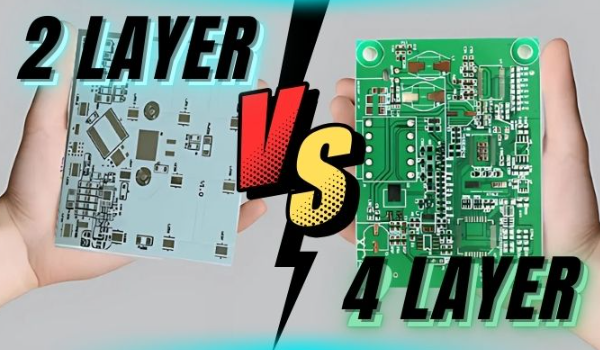
What Is a PCB in an LED Display?
PCB stands for Printed Circuit Board. Inside an LED module, it is the base platform that mounts and connects all the electronic components — LED chips, driver ICs, resistors, capacitors, and connectors. Thus, It’s well known that the PCB handles power delivery, signal transmission, component support, and heat conduction.
It sits behind the LED chips, invisible in the finished product. But it directly affects display stability and lifespan. For high refresh rate, fine-pitch, and continuous long-term operation applications, the PCB matters more than most buyers realize.
Two-Layer vs. Four-Layer PCBs: What the Difference Is
PCB layer count refers to the number of internal copper conductor layers, not the physical thickness of the board. The two most common types in the LED display industry are two-layer and four-layer PCBs.
- A two-layer PCB adds a top copper layer and a bottom copper layer. This type is well established, and costs are lower. It is widely used across standard LED display products.
- A four-layer PCB adds two internal layers, that’s typically dedicated power and ground planes. This makes power distribution more stable, allows more complex routing layouts, and reduces interference between high-speed signals.
In a short, two-layer PCBs prioritize cost-efficiency, while four-layer PCBs prioritize electrical performance and long-term stability.
Two-Layer PCBs: Strengths and Weaknesses
Two-layer PCBs are among the most widely used solutions in the LED display industry.
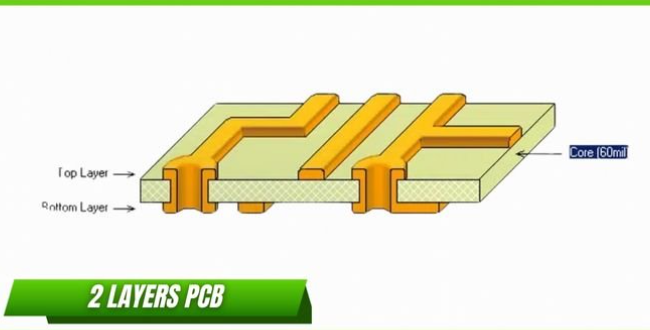
Strengths:
- Costs less to manufacture
- Shorter production time
- Simple maintenance and repair
- Sufficient performance for most standard display applications
They will adequately support the outdoor LED screens of P4, P5, and P6 pixel pitches, and they will be used by a majority of commercial advertising display installations.
Weaknesses:
As pixel pitch gets smaller, the density of traces on the PCB increases. A two-layer design faces greater challenges in maintaining signal integrity and electromagnetic interference resistance. Compared to the four-layer design, heat dissipation and electrical performance of the two-layer PCBs also have inherent limits.
Four-Layer PCBs: Strengths and Weaknesses
A four-layer PCB builds on the standard two-layer structure by adding dedicated power and ground planes, enabling more complex and better-organized routing.
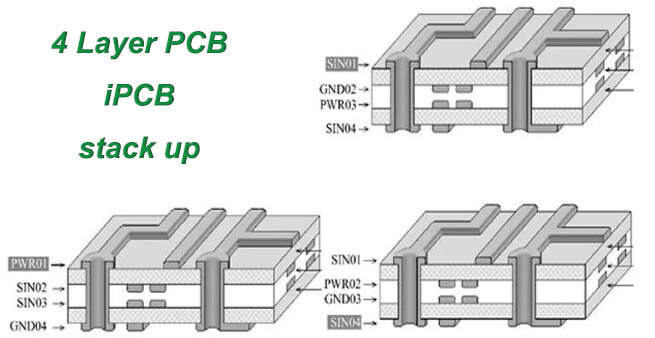
Strengths:
- More stability of signals
- Better anti-EMI capability
- More uniform power distribution
- Improved heat dissipation
- Better suited to high refresh rate requirements
For fine-pitch LED displays below P2.5, four-layer PCBs generally provide better display stability and long-term reliability. Currently, four-layer designs have become more common in fine-pitch displays, COB displays, and high-end applications like XR virtual production.
Weaknesses:
Four-layer PCBs cost more to manufacture. The production process is more complex, and the design and fabrication requirements are higher.
What PCB specifications should be considered When Buying
PCB layer count is one data point. Overall design quality is what really matters.
Ask your supplier these questions:
- Is the PCB a two-layer or four-layer design?
- Is it made of standard FR-4 or high-TG board material?
- What is the copper thickness?
- Is the driver IC layout reasonable?
- Has it undergone high and low temperature aging testing?
- Has EMC or reliability testing been performed?
For buyers, four-layer design does not mean better, and two-layer is not an outdated choice. What matters is whether the PCB design is matched to the application, and whether the full LED display system has been properly validated.