

If you’ve been focusing on the commercial display industry lately, you’ll find something interesting — OLED and LED are no longer developing as two completely separate technology tracks. Especially in jewelry stores, luxury boutiques, and high-end commercial fields, OLED and LED technologies are increasingly combined together. The pace of this trend has surprised even us.
At MileStrong, we’ve seen more and more clients in recent years who are no longer just focused on technical specs like brightness or pixel pitch. Instead, they’re asking: Can we increase how long customers stay in the store? Can the brand’s premium feel be conveyed visually? To put it more directly, high-end retail today is no longer just about selling products—it’s about selling experiences.
That shift matters a great deal to us. Because it means “should I choose OLED or LED?” is no longer a binary question with a clean answer.
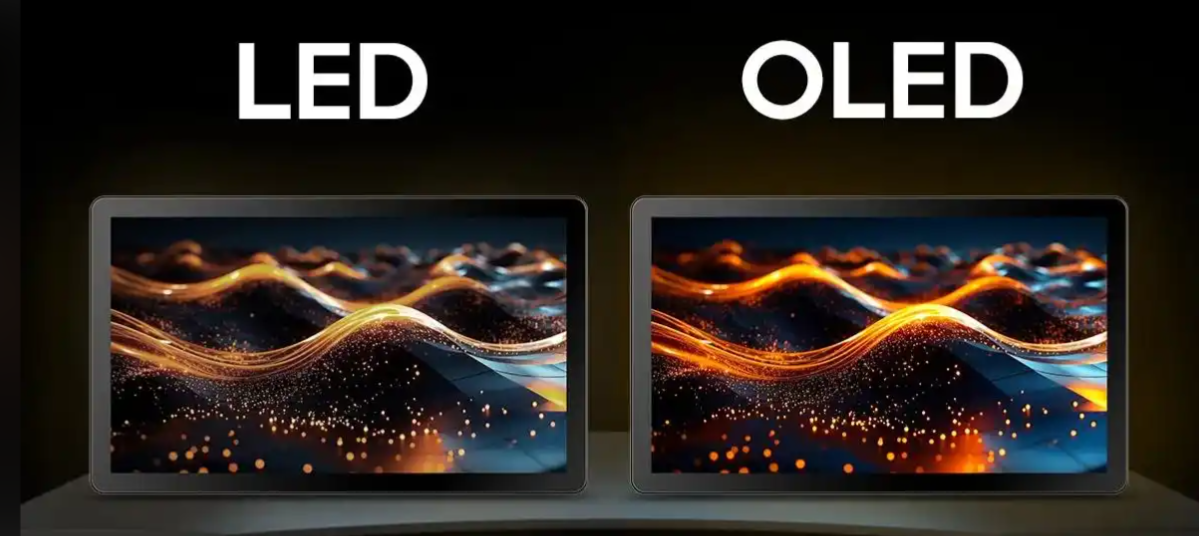
What’s the Real Difference Between OLED technology and LED technology?
The core difference comes down to how they emit light.
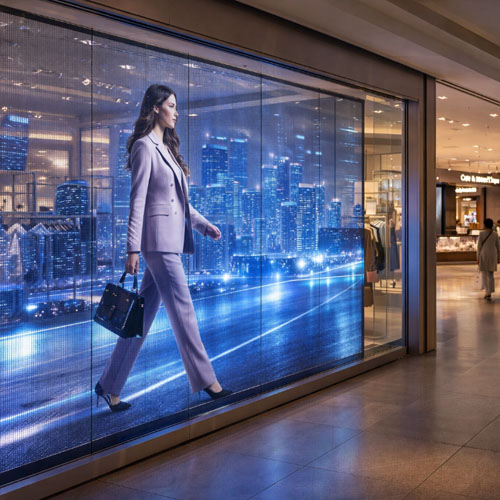
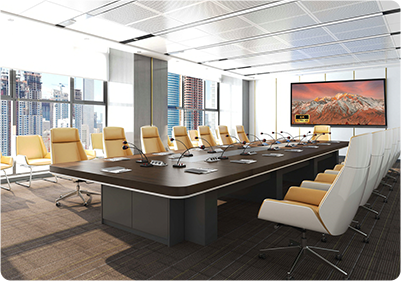
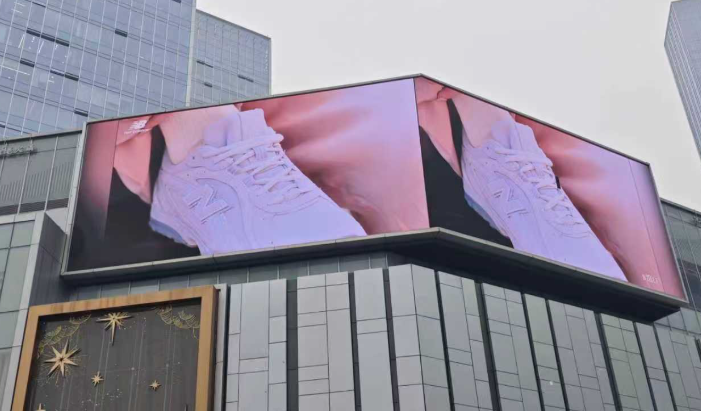
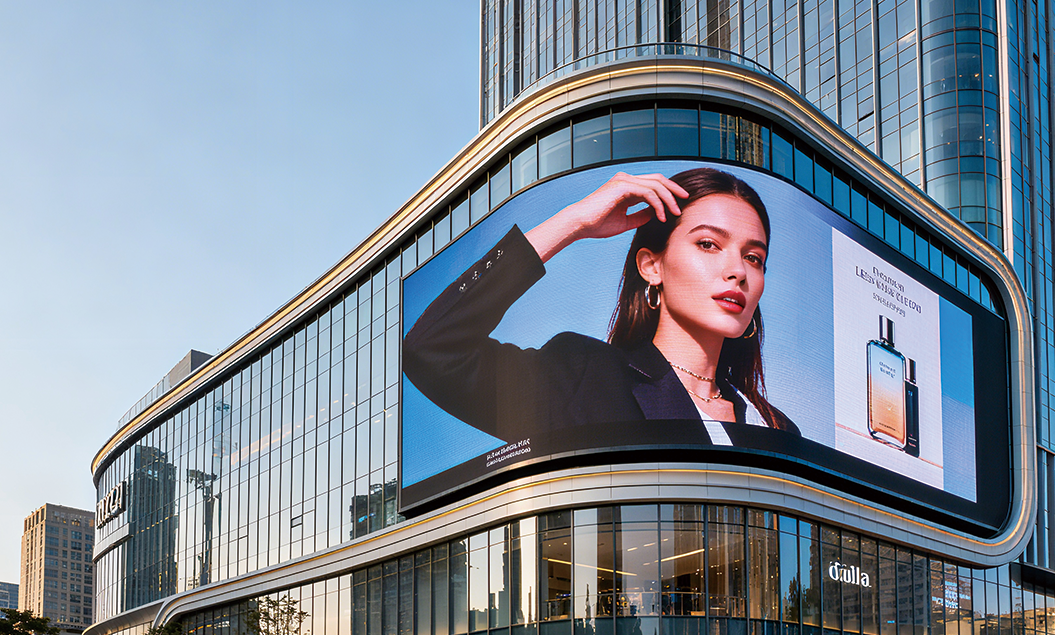
LED displays depend on LED beads to emit light—they offer high brightness, strong stability, and excellent joint, ideal for large-scale commercial display scenarios like storefront window screens, immersive background walls, and large digital billboards.
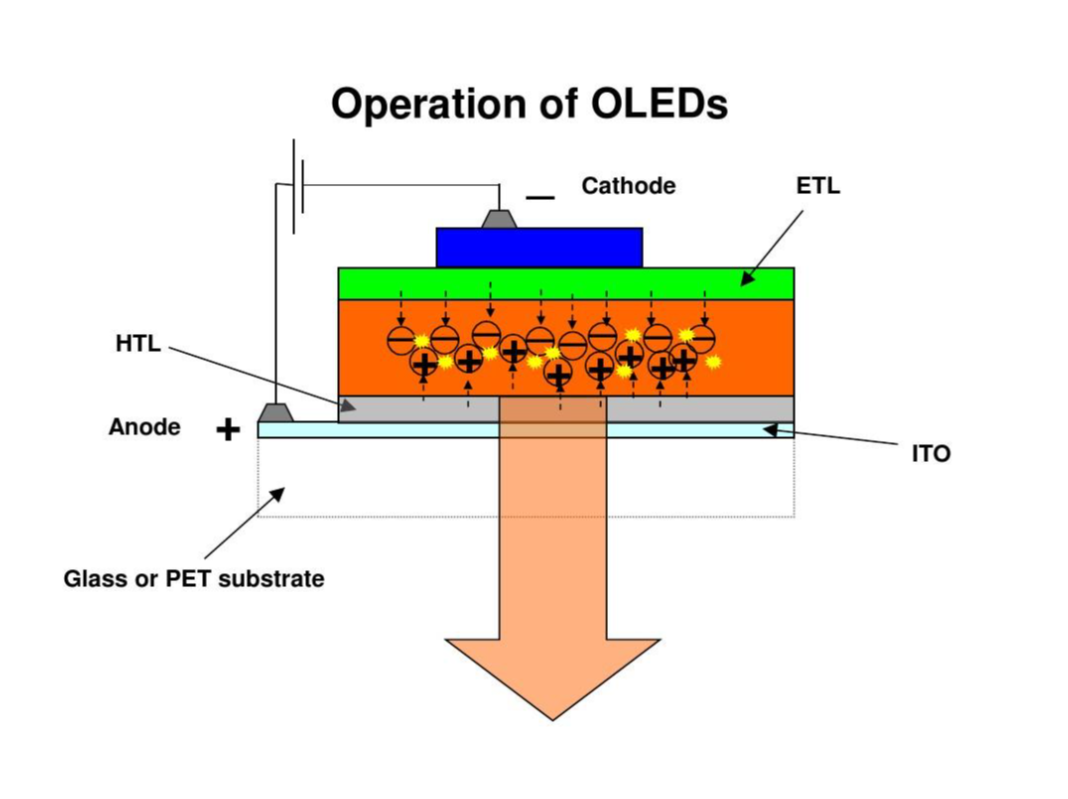
OLED, on the other hand, uses pixel self-emissive technology. It doesn’t require a backlight layer. This gives OLED purer black, higher contrast ratio, a thinner and lighter structure, and a more transparent appearance. As a result, OLED is prefect for AI digital human reception, transparent floating visuals, and close-up, high-precision displays.
Core Specs Comparison
| Specification | LED | OLED |
| Light Source | LED beads (backlight/direct display) | Self-emissive pixels, no backlight |
| Optimal Viewing Distance | Mid-to-far range (≥3 m) | Close range (<2 m) for best effect |
| Cost | Lower — mature supply chain | Significantly higher |
| Best Fit | Storefronts, background walls, ceiling screens | Digital concierge, transparent interaction screens |
Is OLED Always Better Than LED?
No. And honestly, that’s probably the single most common misconception we run into.In my view, OLED isn’t a more advanced version of LED—they meet entirely different commercial display needs. It really depends on the specific case. Imagine installing a large OLED screen in a jewelry store window—what would the result be? Images will be invisible in direct sunlight.
Why Is OLED More Expensive?
This is a major concern for most people. The main reason is that OLED manufacturing is more complex. Because OLED panels require a more precise self-emissive structure, their production costs and manufacturing difficulty for large sizes are higher than their production costs and manufacturing difficulty for traditional LED displays.
Every OLED pixel requires its own organic light-emitting material working in sync with a precision thin-film structure. The production environment is demanding — organic materials are acutely sensitive to water and temperature, requiring higher-grade environment and encapsulation processes. One problematic pixel can compromise the yield of an entire panel.
Traditional LED displays, instead, depend on well-established chip packaging and modular assembly techniques. The supply chain is mature. Large-format production and cost control are areas where LED holds advantages OLED hasn’t yet been able to close.
So if a client asks me “we’re working with a limited budget, so what should we do?” — I’d say without hesitation: get your LED foundation first, then use OLED to add the finishing touches.
How Can a Modern Jewelry Store Actually Combine Them?
To be honest, a truly outstanding retail space often uses both OLED and LED. This isn’t because of an unlimited budget—it’s because each has irreplaceable strengths.
When MileStrong was designing a solution for a high-end jewelry store, the basic logic was: LED creates the spatial atmosphere, while OLED delivers high-end immersive experience. They aren’t substitutes for each other.
| A Modern Jewelry Flagship: OLED + LED Deployment Framework | |
| LED | OLED |
| Ultra-thin storefront window display | AI digital concierge screen |
| In-store LED background video wall | Transparent floating display in VIP lounges |
| Ceiling ultra-HD ceiling screen | Close-proximity showcase product information screen |
Worth noting: this framework isn’t a fixed formula — Each scenario requires its own tailored solution.
All in all, that’s what’s really worth paying attention to beneath this whole OLED vs LED conversation — the advantage of display technology is quietly shifting from specs to experience. Brighter, thinner, and higher-definition are very important. But what matters more is whether this technology can truly help a brand create a memorable spatial experience and bring a great experience to customers. And that’s exactly what MileStrong has been committed to all along.