搜索

Synchronous vs Asynchronous LED Display Control: What are the Differences?

LED display performance depends on more than pixel pitch, brightness, or cabinet design. The control system also plays an important role. It determines how content reaches the LED screen and how the screen responds to a video source or a playback program.

For LED display projects, two common control methods are synchronous control and asynchronous control. They can both drive LED displays, but they work in different ways. Understanding the difference can help buyers and contractors select a control solution that fits the project.

Table of Contents

What Is an LED Display Control System?

An LED display control system connects the content source with the LED display. It manages image transmission, playback and other display functions.

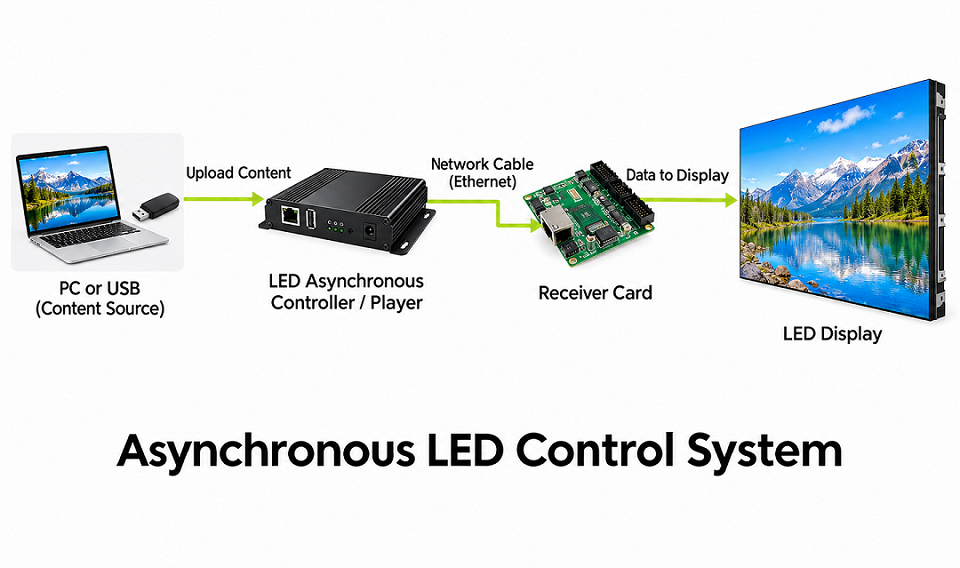
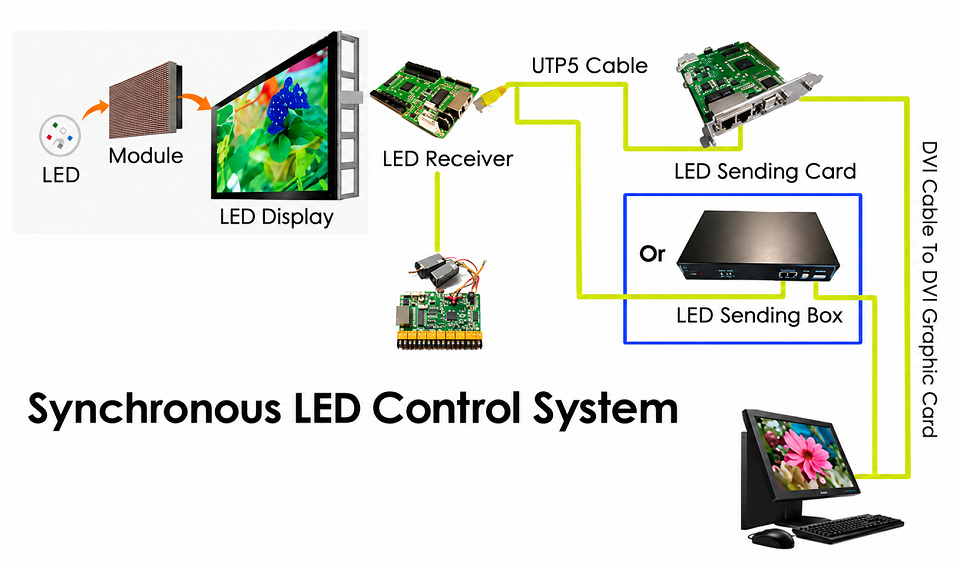
A system may include a computer or media source, controller or sending device, receiving cards, and LED cabinets. The exact hardware structure depends on the display size, content requirements, and control method.

The key difference is how the content is processed and played. A synchronous system follows an external video source in real time. An asynchronous system stores content on a local playback device and plays it according to a preset program or schedule.

This difference affects how the LED screen is used in real projects.

What Is Synchronous LED Display Control?

A synchronous LED display control system displays content in real time according to an external video source.

For example, a computer sends a video signal to the LED screen. When the content on the computer changes, the LED display changes at the same time. A camera or other live video source can also be used when the control system supports the required input and processing functions.

In simple terms, the LED screen follows the source.

This makes synchronous control suitable for applications where the displayed content needs to change immediately. Live events, presentations, sports venues, broadcasting, and large video walls are common examples.

Main Advantages of Synchronous Control

  1. Real-time display

The most important advantage is real-time content transmission. The LED screen can follow the video source without first storing the entire program on the display device.

This is useful when content changes frequently or when the display needs to follow a live source.

  1. Suitable for live content

Synchronous control works well for live events. A camera can capture an event, while the LED display shows the corresponding image to the audience.

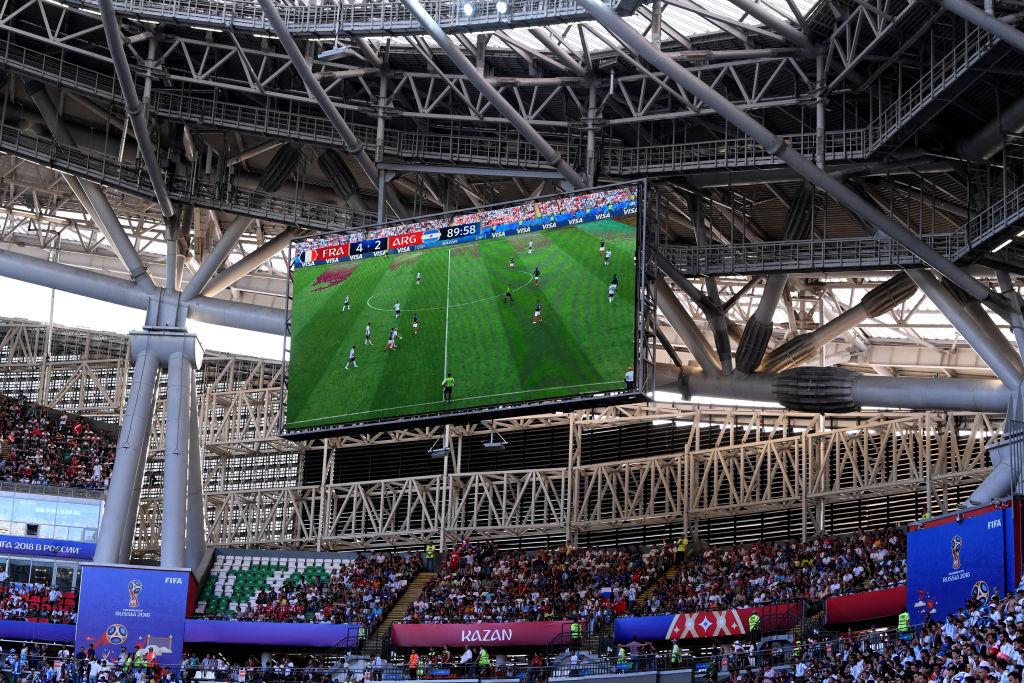
For example, a large LED screen at a stadium can display live game footage, close-up shots, scores, or other live visual content.

  1. Flexible content operation

Operators can change the content directly from the source computer or video system. This provides greater flexibility for presentations, conferences, exhibitions, and live productions.

For a conference, the operator can switch between presentation slides, videos, speaker images, and other content during the event.

  1. Suitable for complex video systems

Large LED displays may need to work with multiple video sources or professional video equipment. In these projects, a synchronous control system can be integrated into a larger video processing workflow.

Professional LED video controllers can also provide functions such as multiple inputs, signal processing, screen configuration, and synchronization. The exact functions depend on the controller model and system design.

What Is Asynchronous LED Display Control?

The asynchronous LED display control system works different from synchronous LED display control system.

Instead of continuously relying on a computer or live video source, the content is stored on a local playback device. The device then plays the content according to the configured program or schedule.

This means the LED display can continue playing scheduled content without keeping a main computer connected to the screen at all times.

For commercial advertising and information displays, this can simplify daily operation.

Main Advantages of Asynchronous Control

  1. Standalone playback

After the content has been uploaded to the playback device, the LED display can play the stored program independently.

This is useful for screens installed in locations where a dedicated computer is not needed for continuous operation.

  1. Scheduled content

Asynchronous systems can be useful when different content needs to be played at different times.

For example, a retail store can display a morning promotion, switch to another campaign during the afternoon, and show different information in the evening.

  1. Convenient for distributed displays

Many commercial projects have multiple LED screens installed in different locations.

An asynchronous playback system can simplify content management for these screens. Some modern LED control products also support network or cloud-based management, allowing users to manage multiple displays from a centralized platform.

  1. Less dependence on a local computer

For a simple advertising screen, keeping a full computer connected to the display may not be necessary.

An asynchronous controller or media player can handle content playback locally. This can make the overall system more suitable for simple commercial display applications.

Synchronous vs Asynchronous LED Display Control

Although both methods can control LED displays, their working principles are different.

Comparison Synchronous Control Asynchronous Control
Content source External video source Stored local content
Playback method Real-time Programmed playback
Live video Suitable Generally not the primary use
Scheduled content Less central to the workflow Strong application
Computer connection Usually required for real-time source Can operate independently after content upload
Content changes Real-time operation Based on stored programs or schedules
Typical applications Events, stadiums, conferences, live video Advertising, retail, public information
System requirement More suitable for real-time video workflows More suitable for standalone playback

The table is a general comparison. Actual functions depend on the selected controller, media player, software, and overall LED display architecture.

Some modern control products can support both synchronous and asynchronous modes.

For example, MileStrong offers LED display products with different control options for different application needs. The UCOB Series and Sphere LED Display use synchronous control for applications that require real-time content transmission. For projects that need both real-time playback and scheduled content, the STH-P Series Transparent LED Display , MSC Series LED Poster Display, and KT Series LED Poster Display support both synchronous and asynchronous control modes.

Therefore, the choice is not always a strict either-or decision.

Synchronous and Asynchronous Control in Different Applications

Which Control Method Is Better for a Stadium?

For a stadium, the first question is not simply which controller is more advanced. The more important question is what the screen needs to display.

If the LED screen mainly shows live game footage, camera feeds, event graphics, and other real-time content, synchronous control is a natural choice.

For example, a football stadium may need to show a live camera feed on the main screen. The operator may also need to switch between several video sources during the match.

In this case, real-time signal transmission is critical.

However, if another screen is mainly used for scheduled advertising, asynchronous playback may also be suitable. A stadium project can therefore use different control methods for different screens.

The final design should be based on the content workflow of each display.

Which Control Method Is Better for Retail Stores?

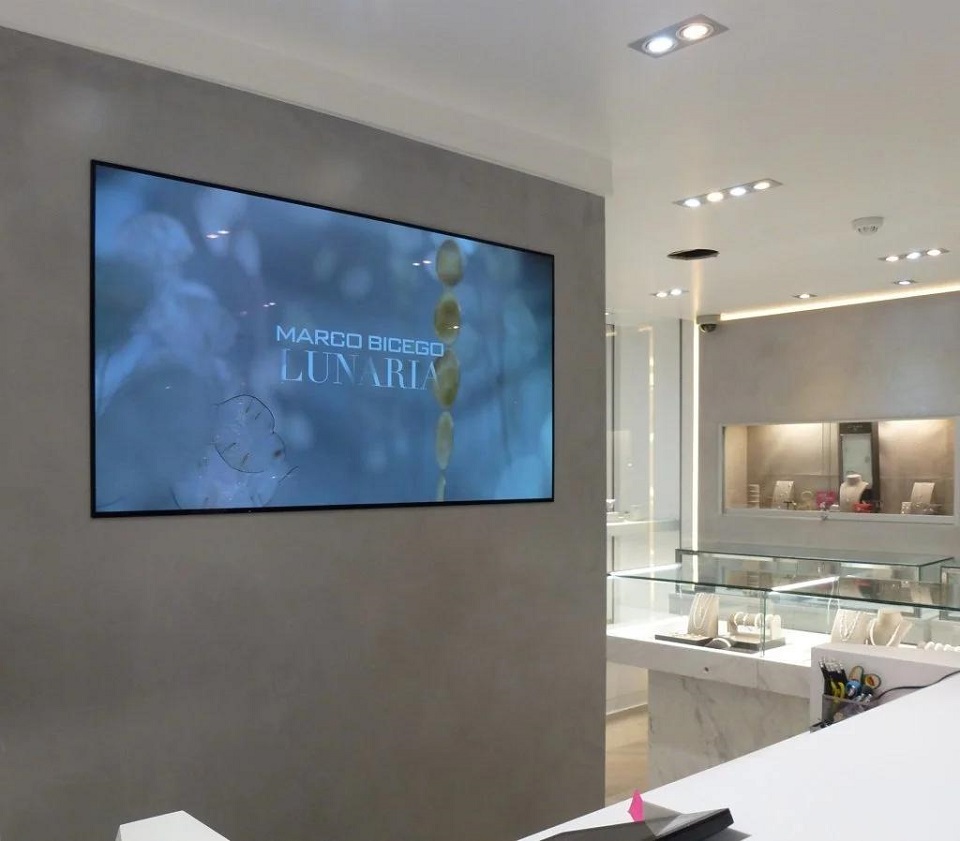
Retail displays often have a different requirement.A store may need to display product videos, promotional graphics, brand messages, and seasonal content. These materials are usually prepared before playback.For this type of application, asynchronous control can provide a practical playback method.

For example, a jewelry store can schedule product videos during business hours. The screen can continue displaying the prepared content without requiring an operator to control every frame in real time.

For a flagship store with a large video wall and complex content production, synchronous control may still be useful.

Therefore, the store environment, content type, screen size, and operating method should all be considered.

Which Control Method Is Better for Shopping Malls?

Shopping malls often have multiple types of LED displays.

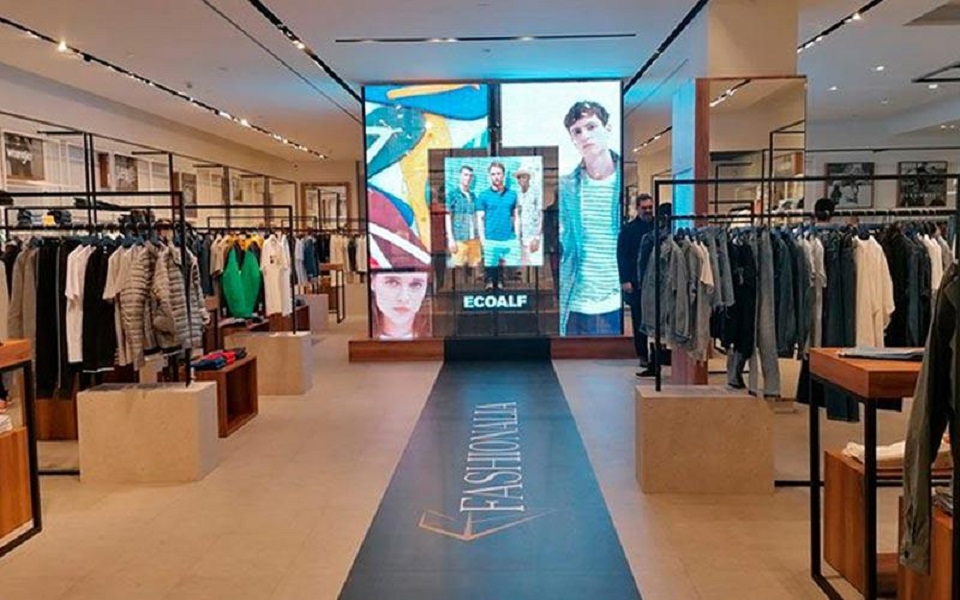
A large screen in an atrium may display promotional videos, event content, or live activities. A smaller advertising screen may simply play scheduled commercial content.These two screens may not need the same control method.

For a large video wall used for events, synchronous control can support real-time content changes.  For advertising screens that mainly play scheduled campaigns, asynchronous control can reduce the need for continuous manual operation.

Modern control systems can also combine synchronous and asynchronous functions. This can give system integrators more flexibility when designing different display zones.

Control System Selection Should Follow the Project

An LED display is not simply a screen.The display, controller, receiving cards, playback device, software, content source, and network structure all work together. A suitable control system should match the actual application instead of being selected only by screen size or pixel pitch.

  • For event applications, real-time video transmission may be the main requirement.
  • For commercial advertising, scheduled playback may be more important.
  • For projects with different display zones, a combination of control methods may provide more flexibility.

Conclusion: Synchronous or Asynchronous LED Display Control?

The difference between synchronous and asynchronous LED display control is mainly about how content is delivered and played.

  • Synchronous control follows an external source in real time. It is suitable for live video, events, conferences, stadiums, and other applications where immediate content changes are important.
  • Asynchronous control stores content locally and plays it according to a program or schedule. It can be useful for advertising screens, retail displays, public information, and other standalone applications.


There is no single control method for every LED project. The right choice depends on the content, application, screen configuration, operating method, and management requirements.For this reason, LED display control should be planned as part of the complete display system rather than treated as a separate hardware decision.

What is the difference between synchronous and asynchronous LED display control?

Synchronous control displays content from an external source in real time. Asynchronous control stores content on a playback device and plays it according to a configured program or schedule.

Yes. Some modern LED control products support both modes and can switch between synchronous and asynchronous playback. The available functions depend on the controller and system configuration

It can be suitable when the display needs to show live game footage, camera feeds, event graphics, or other real-time content. The specific control system should be selected according to the stadium’s video workflow.

Yes. When an advertising display mainly plays pre-produced content, local storage and scheduled playback can provide a practical operating method.

Not necessarily. An asynchronous playback device can store and play content independently after the program has been uploaded. The exact operating method depends on the controller or media player.

Start with the content requirements. Consider whether the screen needs live video, scheduled playback, multiple content sources, remote management, or both synchronous and asynchronous modes. Then select the controller and related hardware according to the complete LED display system.

TOP