
LED displays are widely used in many fields in recent years, so device stability has become a core concern of the industry. Pixel failure is one major issue that damages display quality and shortens screen service life.
Industry specialists state that pixel failures break picture uniformity. They also expose defects in LED chip selection, driver circuit design and environmental resistance. As a result, systematically detecting, analyzing and reducing pixel failure risks has become a key topic for the LED display industry.
MileStrong has rich experience in LED display manufacturing. This article gives a full breakdown of pixel failures and practical maintenance solutions.
Types of Pixel Failures
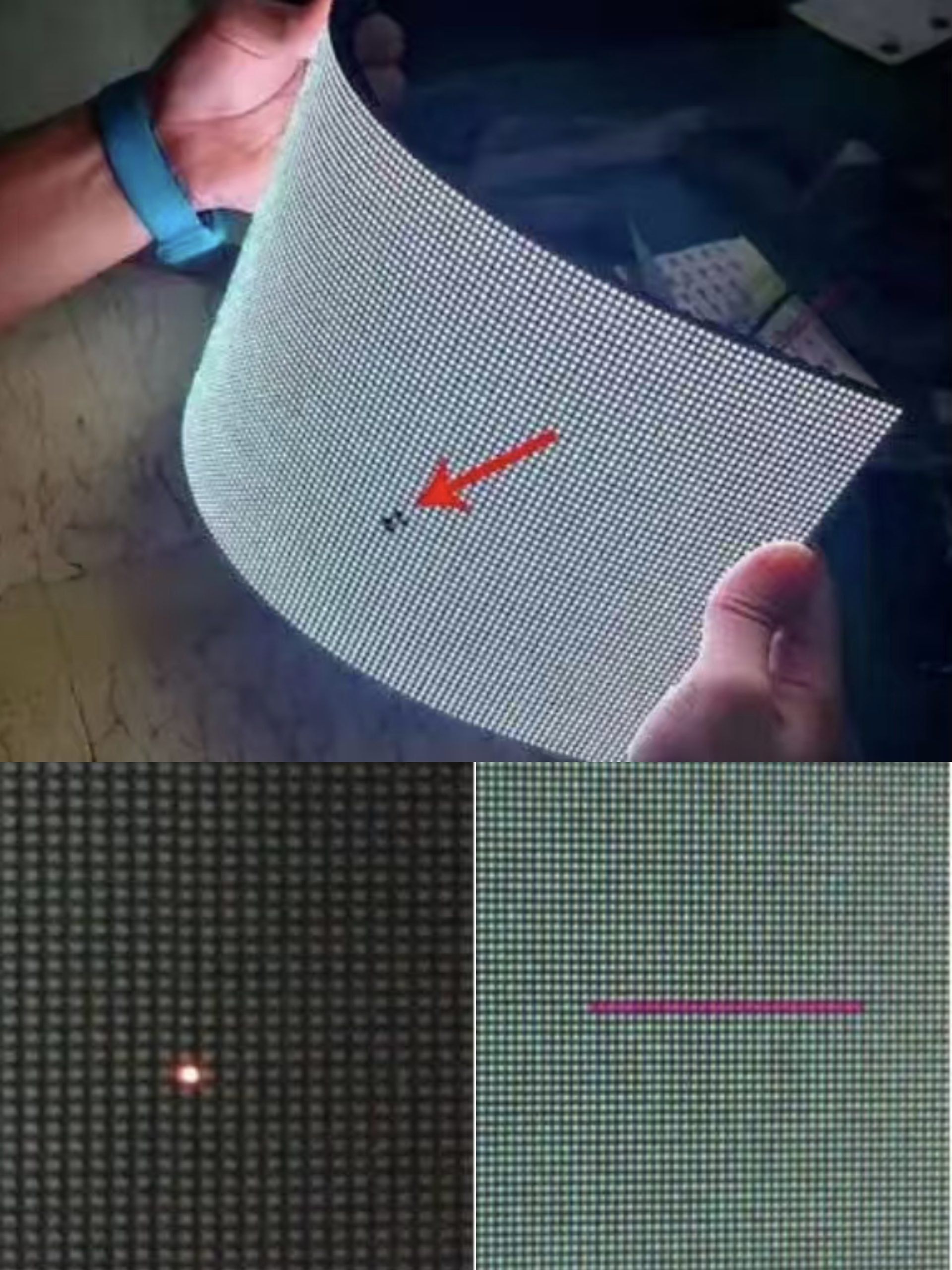
A pixel failure means an abnormal pixel that cannot work normally on an LED screen. There are four main types:
- Dead pixel: The pixel never lights up or fails to receive signals.
- Dark pixel: The pixel stays off all the time.
- Bright pixel: The pixel keeps glowing no matter what image is shown.
- Color shift pixel: The pixel outputs wrong colors outside the standard color range.
Single faulty pixels barely affect viewing, but many of them on large screens create obvious visual distractions and ruin overall picture uniformity. This problem is much easier to notice when viewers stand close to the screen.
Multiple Root Causes of Pixel Failures
Industry research shows pixel failures come from a mix of different factors:
- Long-term exposure to high heat, humidity or strong UV rays speeds up aging of LED components.
- Poor packaging craft of LED chips also leads to component breakdown.
- Unstable current output or signal delay makes pixels run abnormally.
- Impacts during transportation, installation or cleaning can harm LED lamp beads.
Systematic Maintenance Methods
The industry is shifting from after-fix repairs to full management to solve pixel failures:
- Installation stage: Carry out full environmental evaluation. Control temperature and humidity, and stay away from strong electromagnetic interference.
- Operation stage: Avoid long-time full-bright high-load running. Set regular rest cycles to cut continuous heat buildup of LED lamp beads.
- Daily maintenance: Use dry cleaning methods only. Check power and signal cables regularly.
- Local fault repair: Replace single faulty modules instead of taking apart the whole screen to save maintenance time.
Shift from Passive Repair to Active Prevention
Most industry insiders agree that future LED display development will not only focus on higher brightness and smaller pixel pitch, but also higher reliability and fewer equipment faults.