

LED displays have become essential visual presentation devices in commercial spaces, exhibition halls, hotels, and entertainment centers. Besides the common flat LED displays, ring LED displays are also increasingly appearing in more specialized projects.
So, what are the differences between ring LED displays and common flat LED displays? This article will take you to find out.
What Is a Ring LED Display ?
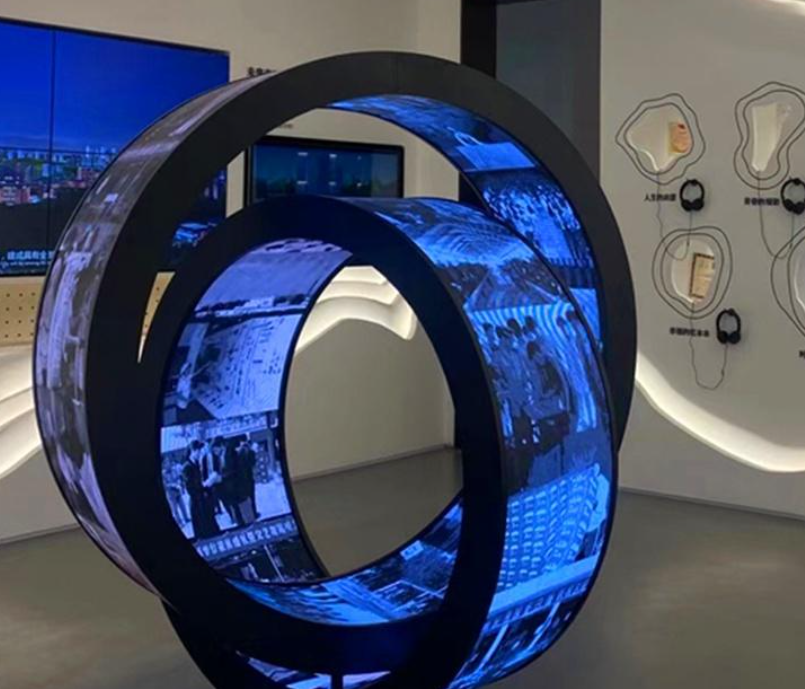
A ring LED display is an LED screen with a ring-shaped structure design. The screen can be installed around a column, ceiling, exhibition stand, or other spatial structure to form a complete circular visual effect.
Compared to common flat led screens, it is no longer limited to a single frontal viewing angle. Viewers can see the content displayed on the screen as they approach from different directions.
Therefore, ring LED displays are generally more suitable for projects that require special visual design.
What Is a Flat LED Display ?
A common flat LED display is currently the most widely used LED display product. It consists of multiple LED cabinets spliced together to form a flat, rectangular screen.
This structure is mature and offers relatively flexible installation options. Depending on the application, indoor small-pitch LED displays or outdoor LED displays can be selected.
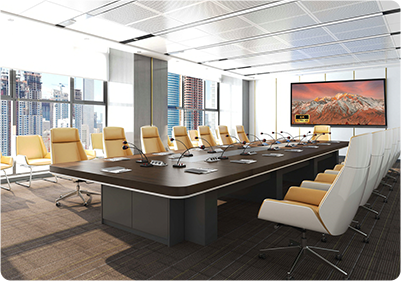
Flat LED displays prioritize clear display, stable operation, and practicality. Therefore, they are widely used in conference rooms, control rooms, hotels, and other similar settings.
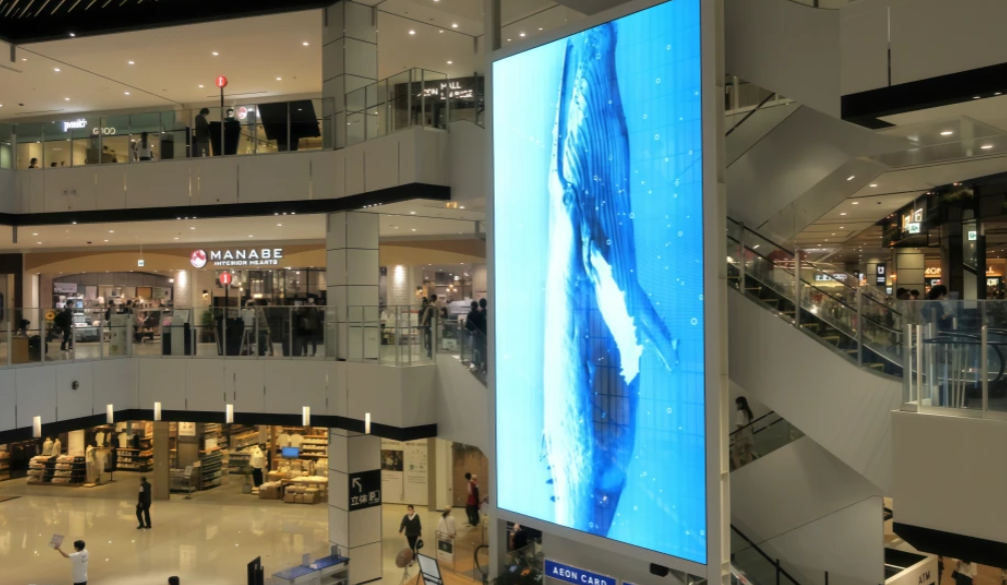
Differences between Ring LED displays and Flat LED Displays
Visual Effects
Visual effects are the most obvious difference between the two products.
Flat LED displays primarily attract viewers with their large screen size. The images are clear, and information is conveyed directly. However ring LED displays can be integrated into architectural spaces. When playing dynamic content, the circular screen creates a stronger visual continuity.
For example, in a shopping mall, a ring LED display suspended in the atrium can attract consumer attention from multiple directions when playing brand advertisements.
Installation Methods
Flat LED displays typically use standard cabinets for splicing. The construction process is relatively simple, and installation and maintenance are also mature. Ring LED displays require design based on their specific diameter, curvature, and installation location. Some projects also require customized structures and control schemes.
Therefore, ring led screen projects usually require the supplier’s involvement in the structural design in advance, resulting in a longer construction period.
Application Scenarios
If the project is primarily for information dissemination or advertising, a flat LED display screen is usually sufficient.For example, flat LED displays can be used in conference rooms, airports, shopping mall and corporate showrooms.
If the project places greater emphasis on spatial design and visual experience, a ring LED display can be considered. It is more suitable for exhibition halls, museums, commercial atrium and entertainment venues.
How to Select the Appropriate LED Display for a Project?
Before choosing LED products, consider these three questions:
- What Visual Effect does the Project Require?
If the main display is text, meeting content, and regular videos, flat LED are generally more practical. If you want the screen to be an integral part of the space design, circular LED are more advantageous.
- Where Will Audiences be Viewing from ?
For fixed, frontal viewing, flat LED displays are preferable. If the audience will be passing by from multiple directions, ring LED displays offer better visual coverage.
- What Are the Project Budget and Installation Requirements?
Flat LED product specifications are mature, and project budgets are easier to control. Ring LED displays require consideration of custom cabinets, structural design and installation. Therefore, a more substantial upfront budget is usually needed.
Summary
Both ring LED displays and common flat LED displays have their own advantages. Flat LED displays are more mature and practical, suitable for most conventional display needs. Ring LED displays break through the traditional flat structure, bringing a stronger visual impact to commercial spaces and creative projects.
Therefore, the choice of which product to use should be based on a comprehensive assessment of the application scenario, viewing direction, spatial structure, display effect, and project budget. For customized projects, professional design in advance is also important.
What Support does MileStrong Offer?
For customized LED projects, the product itself is only one part. MileStrong can provide services such as LED display products, structural design, installation guidance, and content debugging, tailored to the project space.
For ring LED display projects, confirming the screen size, diameter, viewing distance, pixel pitch, and installation method in the early stages is particularly important. A well-designed system can help clients achieve better display effects while reducing the difficulty of later construction and maintenance.