

Five or six years ago, LED display procurement focused on parameters like resolution, refresh rate, brightness and so on. Nowadays, buyers are asking a different question: how durable is it? Especially for fine-pitch LED projects.
Image quality is no longer the only standard. A P1.2 or even P0.9 LED display, once installed, may run continuously for years. Transportation, installation, and day-to-day maintenance each carry their own risks — and that is exactly why GOB LED Display is showing up on more procurement lists.
Is it a genuine technology upgrade, or a new marketing concept?
LED Displays Have Also Become More Fragile As Fine Pitch Becomes More Common
There is an industry shift worth understanding first.
Corporate meeting rooms, control centers, broadcast studios, and digital showrooms are increasingly specifying fine-pitch LED displays below P1.5. Pixel pitches of P1.25, P1.2, and even P0.9 have become standard configurations for many high-end projects.
But a new problem comes with this territory.
The smaller the pixel pitch, the more densely packed the LED chips, and the smaller each individual chip becomes. Impact during shipping, or careless handling during installation, can cause chips to detach or fail. For a display viewed at close range, a single dead pixel is easy to spot.
This is the context in which GOB packaging technology has started receiving more attention.
What Does GOB LED Display Actually Change?
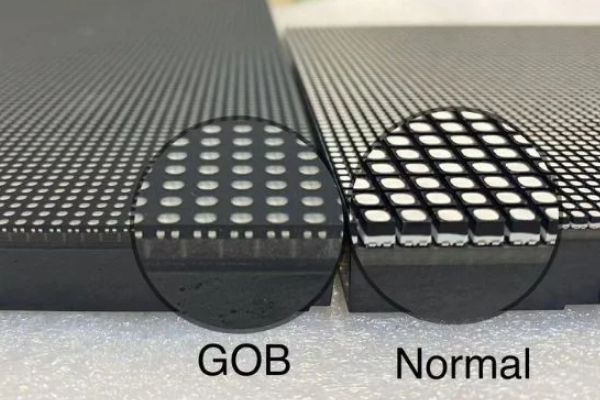
GOB stands for Glue On Board. In practical terms, it means applying a layer of high-transparency protective material over the LED module surface, covering the chips entirely rather than leaving them exposed.
It does not sound complex. What it changes, though, is durability.
The protective layer significantly reduces the chance of LED chips being damaged by physical impact. It also reduces the effect of dust and moisture on the module over time.
Many people encountering GOB for the first time assume it is a new display technology. It is not. GOB changes the packaging method, not the light-emission principle. The factors that determine image quality — chip quality, driver IC, calibration algorithms, and the control system — remain just as important as before.
Why Are More Projects Choosing GOB?
Most people’s first instinct is to think the reason is image quality. It is not. What is actually driving GOB adoption is project reliability.
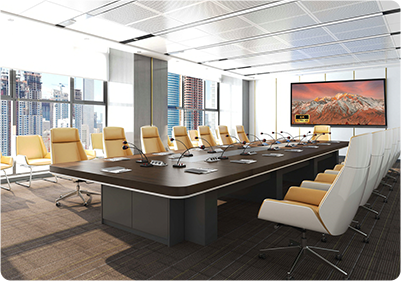
Take a corporate meeting room as an example. The screen is typically two to three meters from the people using the space. After meetings, staff move furniture and adjust equipment and occasional contact with the screen is not uncommon. With a traditional SMD module, that requires extra care. With GOB packaging, the module handles minor impacts better, and the likelihood of needing repair afterward is lower.
The same logic applies to showrooms, educational environments, and control centers.
GOB Is Not the Right Answer for Every Project
It is important to be clear about the limitations too.
- Cost. GOB LED Displays are generally priced higher than standard SMD products because of the additional packaging process involved.
- Maintenance. GOB reduces the chance of chip damage, but if a module does need repair, the process is more demanding. For products where the manufacturing process is not mature, maintenance can actually become more difficult rather than less.
- Quality varies significantly between manufacturers. The adhesive material, curing process, light transmittance, and thermal management design all affect the outcome. Two products both described as GOB LED Display can perform very differently in practice.
This is why the manufacturer’s actual project experience and quality control capability matter more than the product name.
What Should You Focus on When Buying a GOB LED Display?
Many buyers lead with a single question: “Is this GOB?”
The more useful questions are:
- Has the product been through long-term stability testing?
- Does the manufacturer have a track record of completed fine-pitch projects?
- Does the encapsulation material offer high light transmittance and aging resistance?
- Can the module be serviced conveniently when needed?
These questions tell you far more than a price comparison.
GOB LED Displays: Genuine Technical Upgrade or Pure Marketing Hype?
If GOB is treated purely as a marketing concept, it is easy to overstate its value.
For fine-pitch LED applications in meeting rooms, control centers, premium showrooms, and educational spaces, GOB’s value is not simply an added layer of protection. It is about reducing the risks that occur during shipping, installation, and everyday use — improving the overall reliability of the display system.
That said, it is not the standard specification for every project. Choosing GOB LED Display comes down to whether the project genuinely needs that level of protection — not whether the technology is the newest available.
A mature technology is never the right fit for every situation. What matters is whether it solves your actual problem. That is why more fine-pitch LED projects are choosing GOB — not to chase new concepts, but because it addresses a real operational need.