

When it comes to car dealership showrooms, glass curtain walls are basically standard. Natural light not only makes the space more comfortable, but also directly affects how vehicles are displayed. So when someone suggests installing a transparent LED display on the glass window, the first question that usually comes up is: will it block the daylight? Will the showroom look darker? It sounds like a simple question, but the answer really comes down to a few key factors: the screen’s transparency, where it’s installed, and how the visual overlay works.
At first glance, many people think of this type of LED screen as a solid barrier. But a transparent LED display isn’t built like that. It’s more like a combination of thin light bars with gaps in between. Those gaps let light pass through naturally. So the real question isn’t whether the screen blocks light, but it’s how much light can still get through. So, how does a transparent LED display actually affect daylight in a car showroom? There are three main things that matter.
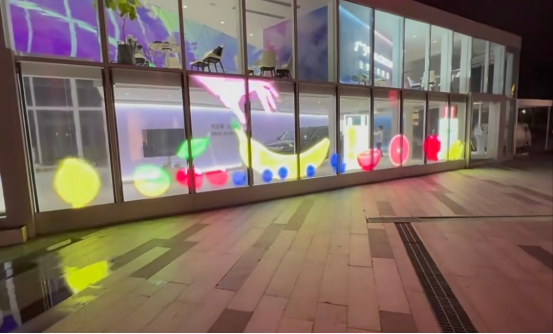
The Impact of Transparent LED Displays on Indoor Lighting in Automotive 4S Showrooms
1. The screen itself is already highly transparent
Most transparent LED products have a transparency rate between 45% and 90%. That means more than half of the natural light can still pass straight through the screen into the room. In other words, it doesn’t block the light, but redistribute it. MileStrong offers options like the STJ series and STH series to suit different needs.
2. Installation position changes how light travels
In most car dealerships, the transparent LED screen is installed on the inside of the glass curtain wall, not the outside. That’s important because it means the light has already entered the showroom before it reaches the screen. So the overall daylight level in the space doesn’t fundamentally change.
3. The content on screen is always changing
Another key point: transparent LED displays aren’t always shining bright. Depending on what’s being shown:
- In standby mode: the screen is nearly invisible
- With low-brightness content: it’s a light visual overlay
- With bright, high-contrast content: it becomes a more visible information layer
So the impact on daylight isn’t fixed, and it changes based on how the screen is being used.
Light Transmission Depends on Transparent LED Screen Application
When does the transparent LED display affect daylight? It depends on how you use it. The screen itself won’t significantly reduce natural light. But in certain cases, you might feel like it does:
- If the screen stays on bright content for long periods, especially when indoor light is low, the contrast can make the space seem darker.
- If the light bars are packed too tightly together, the transparency rate drops.
- If the content uses large dark areas or solid color blocks, it can make the screen feel heavier and reduce the sense of openness.
So the real question isn’t “can it be installed?” , but it’s “how do you use it right?”
How MileStrong Handles Real Automotive 4S Showroom Projects
In projects like car showrooms, MileStrong doesn’t treat the transparent LED as just a display. We treat it as part of the space itself.
Our focus isn’t on pushing for higher brightness. Instead, we control three things:
- Keep the glass clean and clear
The structure shouldn’t feel heavy or distract from the cars.
- Control the content ratio
Digital information should stay as a supporting layer, not dominate the visual experience.
- Ensure long-term consistency
Avoid brightness differences between zones that could break the overall spatial feel.
The core idea here isn’t about showing off the screen. It’s about making sure the space stays intact.
From an engineering perspective: a transparent LED display won’t block your daylight. It changes how the light is organized, not how much light there is. The showroom won’t get darker because of the screen. Instead, it shifts from a purely natural-lit space to a space where natural light and digital content work together.
For car dealerships, the real concern shouldn’t be about blocking light. It’s about whether the screen disrupts the logic of the space. With the right transparency level, proper installation, and well-controlled content, a transparent LED display won’t harm your showroom’s daylight. What’s more, it actually adds a new layer of visual communication that makes the space more expressive. In practice, this is exactly the principle MileStrong stands by: don’t change the space — just add a controllable visual layer to it.