

When buying outdoor LED displays, many assume IP68 is always better than IP65. Is this really true? In fact, these two ratings follow entirely different waterproof design principles.
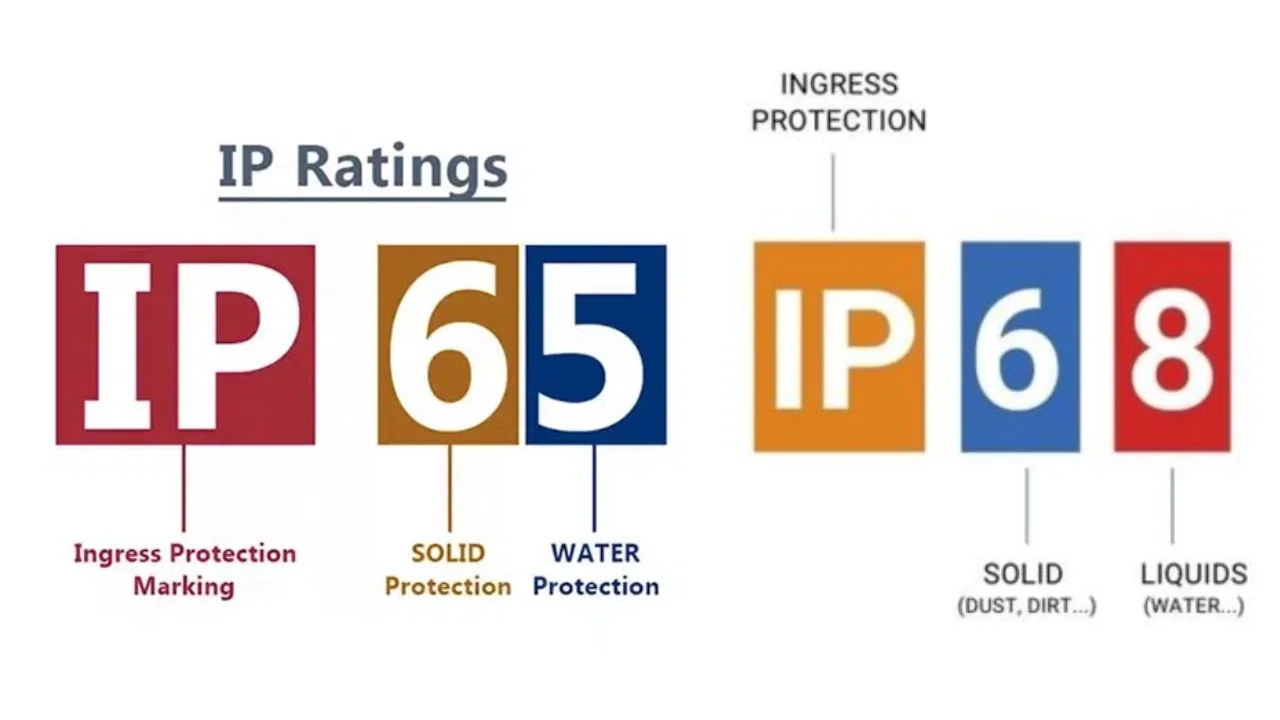
The core difference:water jet resistance vs. water immersion resistance
IP65: Water jet resistance
IP65 can withstand low-pressure water jets from any direction (12.5 liters per minute at a pressure of approximately 30 kPa), but it cannot be immersed in water for a long period.
IP68: water immersion resistance
IP68 is designed for immersion in water—typically over 1 meter deep (specific conditions specified by the manufacturer). But here’s the catch: that doesn’t mean it’s better suited for outdoor use.
Two Common Misconceptions
- Misconception 1: IP68 is fully waterproof, so it’s more reliable outdoors.
The reality: IP68 is built for occasional immersion. By contrast, outdoor displays are exposed to rain, cleaning water jets, and condensation— all of which fall into the category of water jets .In this case, IP65 is better targeted to address these challenges.
- Misconception 2: A higher IP rating means better overall performance.
The reality: To achieve an IP68 rating, devices usually require thicker sealing and more robust enclosures, which can lead to poorer heat dissipation, harder maintenance, and significantly higher costs. Most outdoor screens mounted on poles or walls, where submersion hardly happens, so IP68’s advantages simply don’t apply.
How to Choose the Right Rating for Your Outdoor Displays
- Typical outdoor environments (rain, wind, car-wash-style cleaning): IP65 is more than enough, with good heat dissipation and reasonable cost.
- Locations where immersion is possible (fountains, flood-prone areas, docks, marinas): That’s when you need IP68.
- Note further: Neither IP65 nor IP68 protects against oil, steam, or corrosive liquids.
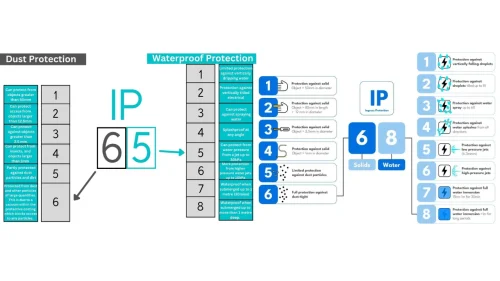
IP68 is technically a stronger rating—but that doesn’t make it a better fit for outdoor displays. Don’t chase the number for the sake of it. Match the rating to the real-world application. For the vast majority of outdoor screens, IP65 is the practical, reliable, and cost-effective choice that actually makes sense.