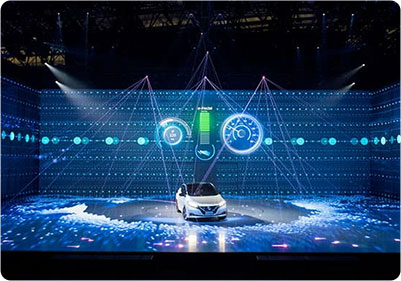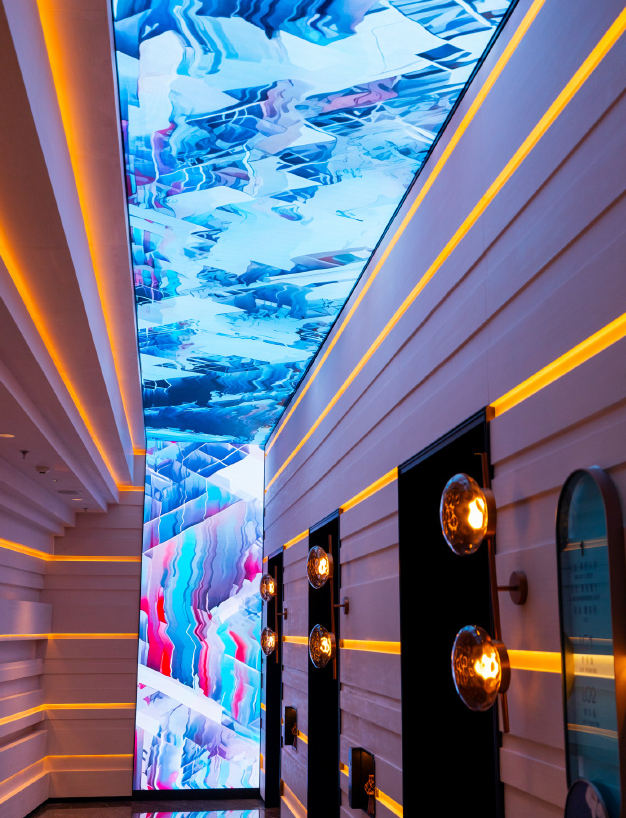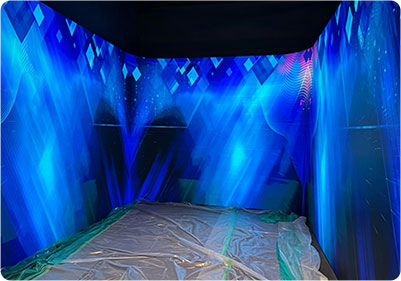


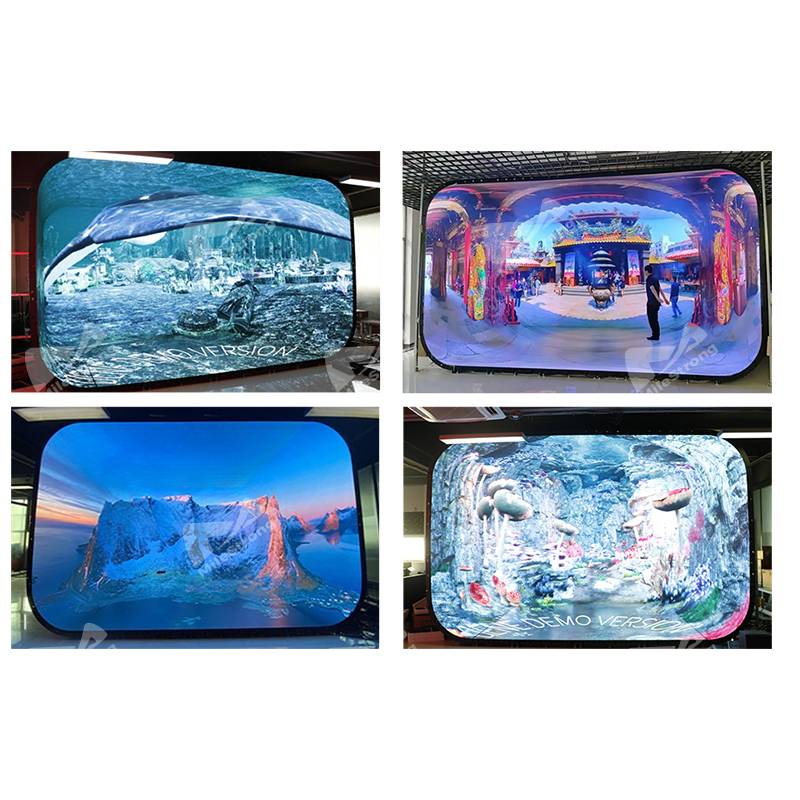
A heavy equipment manufacturer built a new brand achievement showroom to replace flat-screen displays that could no longer effectively present large-scale 3D equipment models or virtual production line simulations. The dedicated enclosed display area totaled 136㎡. The client selected a standardized five-surface enclosed LED immersive CAVE system, creating a space that covers virtual product disassembly, production line simulation, immersive corporate history presentations, and client reception tours.
1. Project Requirements
Space Structure: Five-surface closed-loop immersive system — main front screen, symmetric left and right side walls, interactive LED floor tiles, and ceiling canopy. Designed for 8–15 guests or delegates visiting simultaneously.
Image Quality: No visible pixel structure at close range. Accurate reproduction of metallic surfaces and mechanical component color detail. Compatible with high-precision industrial 3D model playback.
Interactivity: Floor zones switchable by stepping. Gesture control for retrieving equipment specs and disassembling 3D models. Adaptive perspective that responds to visitor position.
Operational Constraints: Limited ceiling height, tight construction schedule, small post-opening maintenance team. Solution needed to balance budget with long-term stable operation.
2. Core Technical Specifications
Total display area: 136㎡. All surfaces use P2.0 black-lamp fine-pitch LED modules.
Spatial Dimensions: Main screen 7.8m × 4.6m. Left and right side walls: depth 5.7m, height 4.6m. Floor and ceiling: 7.8m × 5.7m. Interior clear height: 4.2m. Optimal viewing zone: horizontal field of view 140°, vertical field of view 85°.
Structural Integration: All five-surface corners use 4° custom chamfer transition modules to soften hard-angle seams. Double-layer reinforced floor structure rated at 340kg/m² — sufficient for multiple visitors standing simultaneously. Standard 65cm rear service corridor behind all panels.
Display Performance: Refresh rate: 3,840Hz. Static contrast ratio: 6,000:1. DCI-P3 color gamut coverage: 97%. Color accuracy: ΔE ≤1.9. Dead pixel rate: <0.0001%. Module splice gap: ≤0.4mm.
Supporting Systems: Distributed multi-channel synchronized rendering architecture. Five-screen sync error: <20ms. 5.1 concealed surround audio. Infrared full-zone interactive sensing. Independent UPS uninterruptible power supply.
3. System Architecture and Implementation
Display Hardware
All five surfaces use standard die-cast aluminum modular cabinets with independent front and rear maintenance access.
Wall and ceiling screens operate at 720 cd/m² with matte black-lamp pixel encapsulation — reducing ambient light reflection and minimizing eye fatigue during extended viewing sessions.
Interactive floor tiles feature a custom anti-slip, wear-resistant protective surface. Brightness: 400 cd/m². Each cabinet uses an independent bottom air channel for silent thermal management, with operating noise ≤33dB per cabinet.
Custom chamfer transition modules are installed at all wall-to-floor and wall-to-ceiling junctions for continuous image flow with no black gaps or misalignment.
Control and Rendering System
A multi-channel distributed rendering workstation is configured for the total display area. Each of the five surfaces has its own independent signal output channel. An integrated sync controller handles geometric correction, edge blending, and one-click global color calibration.
Signal inputs are compatible with 4K industrial 3D models, 8K production line footage, and animated corporate history content.
A tablet-based visual control interface allows showroom staff to remotely power equipment on and off, switch display scenes with a single tap, and adjust brightness and color temperature.
Full-space per-pixel color calibration eliminates color variation between cabinet production batches, achieving consistent brightness and color performance across all five surfaces.
Interaction, Audio, and Safety Systems
Full-zone infrared sensing covers the entire visitor area with 28ms recognition latency. Visitors can step on floor zones to switch product lines, and use hand gestures to retrieve engineering drawings and equipment specifications. Multiple visitors can interact simultaneously without interference.
Speakers are concealed within the rear service layer behind the display panels — no exposed equipment breaks the visual continuity of the space. The sound field links to display content: heavy machinery scenes use low-frequency audio; corporate history sequences use softer narrative music.
A dedicated AC220V supply line serves the showroom, with UPS backup providing 16 minutes of operation after a power outage and three-layer circuit protection against overload, short circuit, and leakage. Wall panels use rear silent forced-air cooling; floor tiles use bottom air channel cooling. A thermal management system automatically regulates fan speed to maintain stable operating temperatures.
4. Three Core Use Scenarios
Government and Business Reception
360° immersive presentation of the full industrial supply chain, large-scale equipment 3D structures, and digital simulation environments for visiting government delegations and business partners. Integrated audio-visual delivery significantly elevates the quality of brand and capability presentations.
Internal Technical Training
Up to 8 technicians per session. Staff use floor zones and gesture interaction to learn equipment assembly sequences and component structures through immersive visualization — reducing reliance on physical training setups and lowering training costs.
Brand Promotion and Public Tours
Virtual walkthroughs of smart manufacturing facilities and testing environments, combined with surround audio, create an immersive destination experience for corporate publicity and public visitor programs.
5.Conclusion
This 136㎡ five-surface LED CAVE enterprise showroom is a validated reference case for standardized mid-size immersive space deployment.
It directly addresses the practical constraints common to mid-size enterprise showrooms: limited budget, compact footprint, shared multi-visitor use, and high-frequency public access. Using fine-pitch LED, multi-channel millisecond-level synchronization, and full-zone interactive sensing — replacing conventional projection — the project delivers a lightweight, low-maintenance, high-immersion enclosed CAVE environment that serves business reception, internal training, and brand communication from a single installation.
The project provides a directly replicable construction template for enterprise achievement halls, district science museums, and government planning exhibition centers of similar scale.