
Sphere LED screens, as a prime example of creative, non-standard-shaped displays, are rapidly being installed in venues such as science centres, museums, shopping centre atriums, flight simulators, and corporate digital exhibition halls. Unlike other flat LED displays and projected dome screens, LED sphere screens are formed by assembling customized curved modules to create a complete spherical surface, enabling 360° all-round display. They are divided into two main types based on the viewing method: external sphere display and internal sphere display.
LED Sphere Display vs. Traditional Projection Dome
Compared with traditional projection domes, LED spherical screens offer advantages such as self-illumination, high brightness and all-weather operation. They do not rely on a completely dark environment and are better suited to complex lighting conditions found in shopping centres, cultural and tourism venues, and technology exhibitions.
Traditional projection domes require a relatively low initial investment but are more demanding in terms of ambient light conditions. They also entail long-term maintenance costs, such as the replacement of projection light sources. Although LED sphere screens typically involve a higher initial investment, they offer clear advantages in projects requiring high-frequency operation and round-the-clock displays, and are therefore becoming a key choice for certain immersive display projects.
What Are External and Internal Sphere Displays?
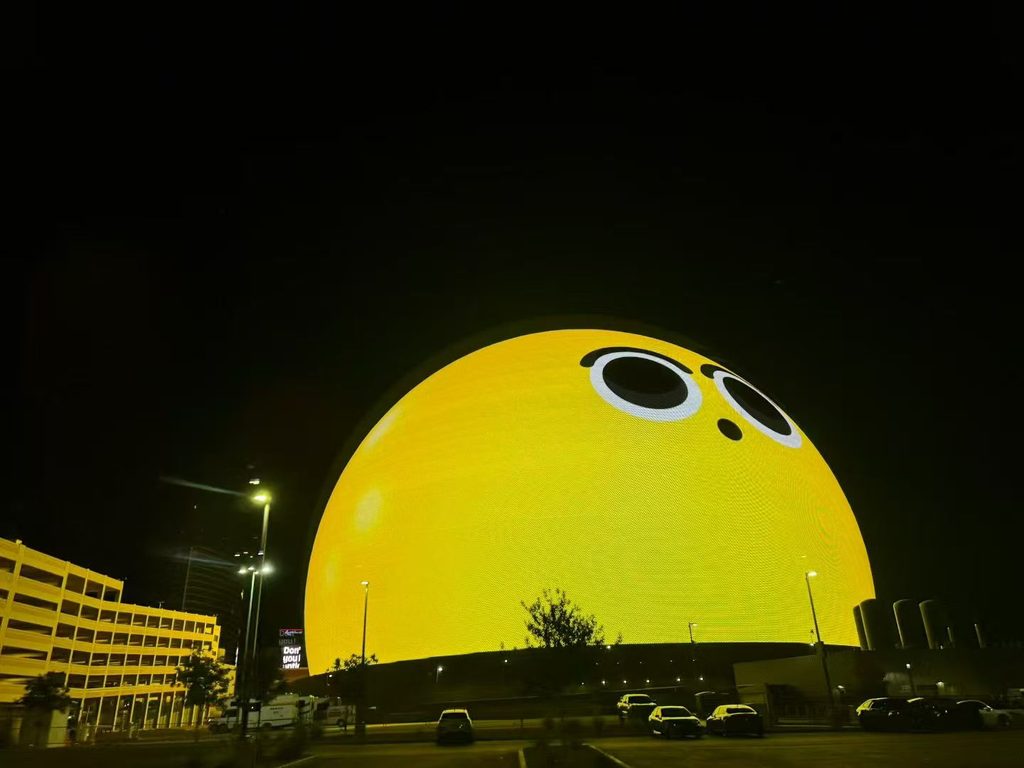
External Sphere Display
An external sphere display refers to a configuration in which the LED chips and display surface face outwards from the sphere, with viewers standing outside the sphere to view the images. Its key feature is a 360° surround display, allowing the entire spherical content to be viewed from all directions.
External sphere projects typically place greater emphasis on the overall design of the sphere, the precision of the panel assembly, visual effects at a distance, and structural safety. For large-scale outdoor spheres, further consideration must be given to engineering requirements such as wind resistance, waterproofing, lightning protection and the load-bearing capacity of the structure.
Internal Sphere Display
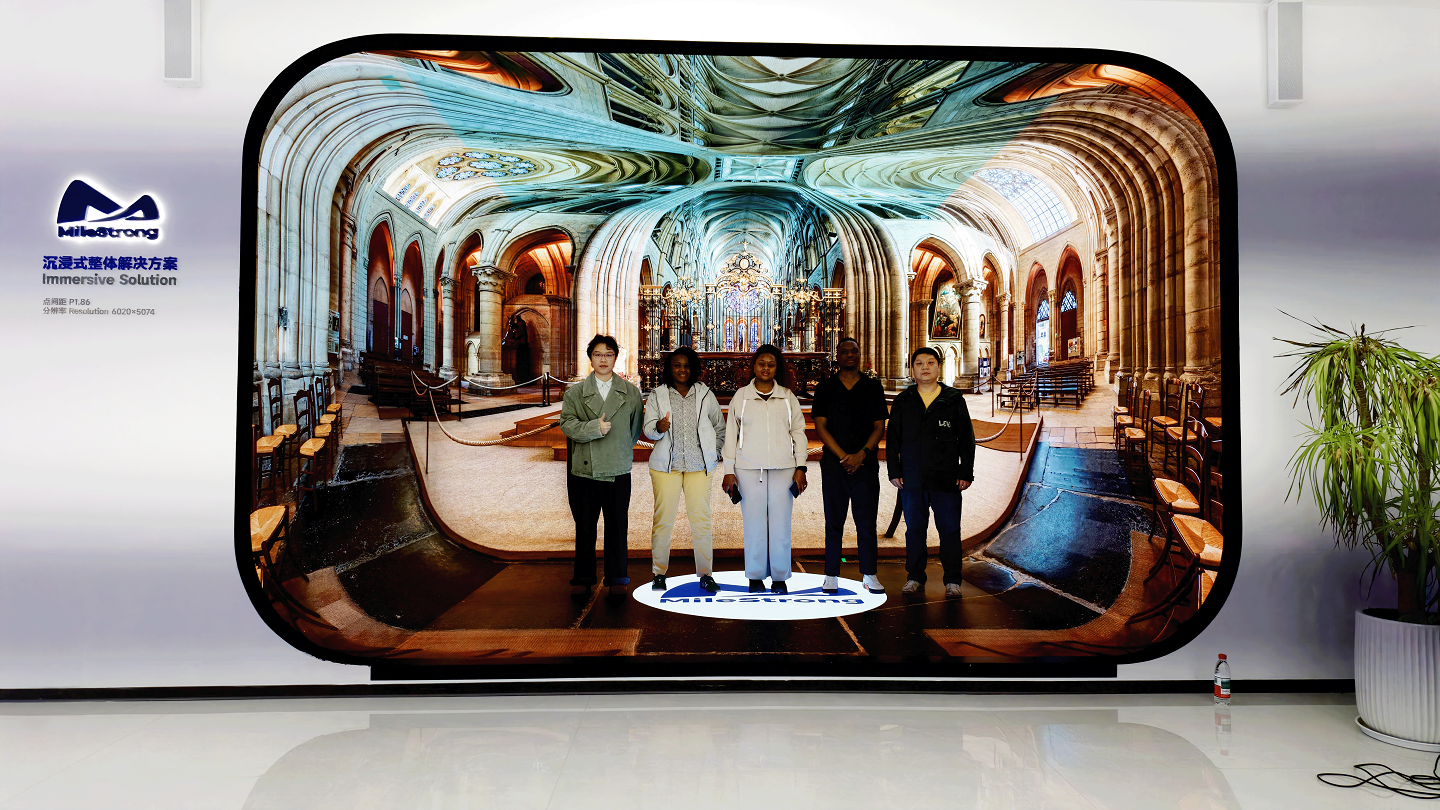
In contrast to an external sphere display, an internal sphere display features an LED screen facing inwards towards the interior of the sphere, with the audience entering the sphere to view the content. As the visual space is enclosed by the sphere, this creates a greater sense of immersion, and is therefore commonly used in flight simulators, immersive cinemas and large-scale science education projects.
Internal sphere displays place higher demands on display performance. As the audience is closer to the screen, spherical distortion, seam lines, brightness uniformity and image detail become much more noticeable. Furthermore, dome cinemas must address issues of audio-visual synchronization and sound transmission, meaning that the display structure cannot simply be designed as a standard LED sphere.
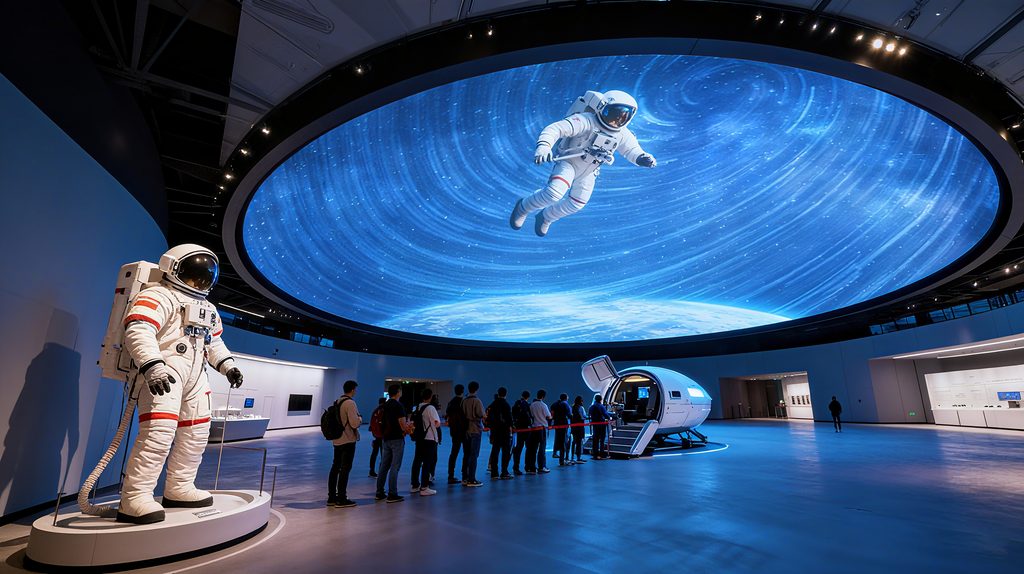
External vs. Internal Sphere Displays: Key Differences
In terms of product form, LED sphere screens are primarily divided into two types: external sphere displays and internal sphere displays. Although both are based on a spherical structure, their viewing methods and intended applications differ.
- In an external sphere display, the audience stands outside the sphere to view the screen, with the display surface facing outwards; the emphasis is on the visual form of the sphere itself and the 360° immersive display effect.
- In an internal sphere display, the LED display surface is positioned inside the sphere, and the audience enters the sphere to view the images from within. As the audience is closer to the screen, internal sphere displays place higher demands on image continuity, spherical calibration, brightness uniformity and audio-visual synchronization.
There are also marked differences between the two formats in terms of engineering design. External-surface projects typically place greater emphasis on the sphere’s exterior appearance, structural load-bearing capacity, wind resistance, waterproofing and viewing quality from a distance; internal-surface projects, on the other hand, require particular attention to be paid to the internal viewing space, the adaptation of immersive content, heat dissipation and the coordination of the acoustic systems.