
Key Technologies Behind Sphere, Wave-Shaped, and Custom-Shaped LED Displays
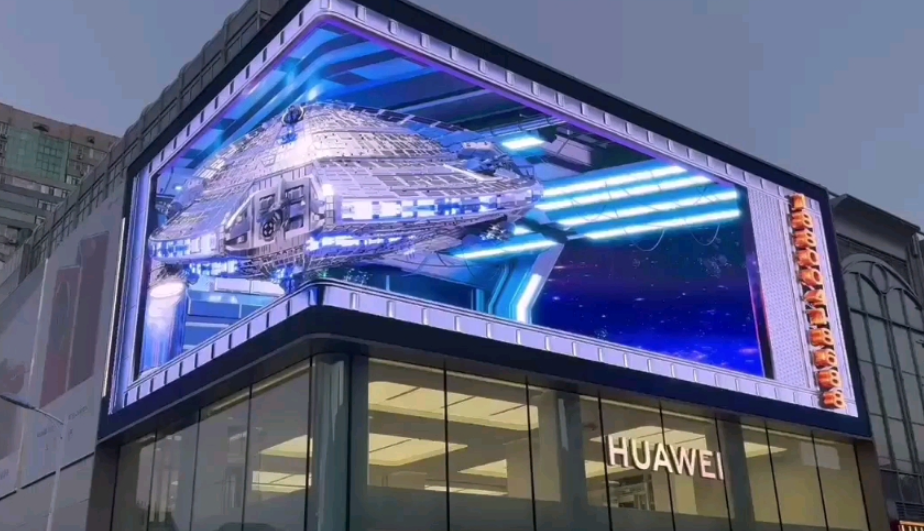
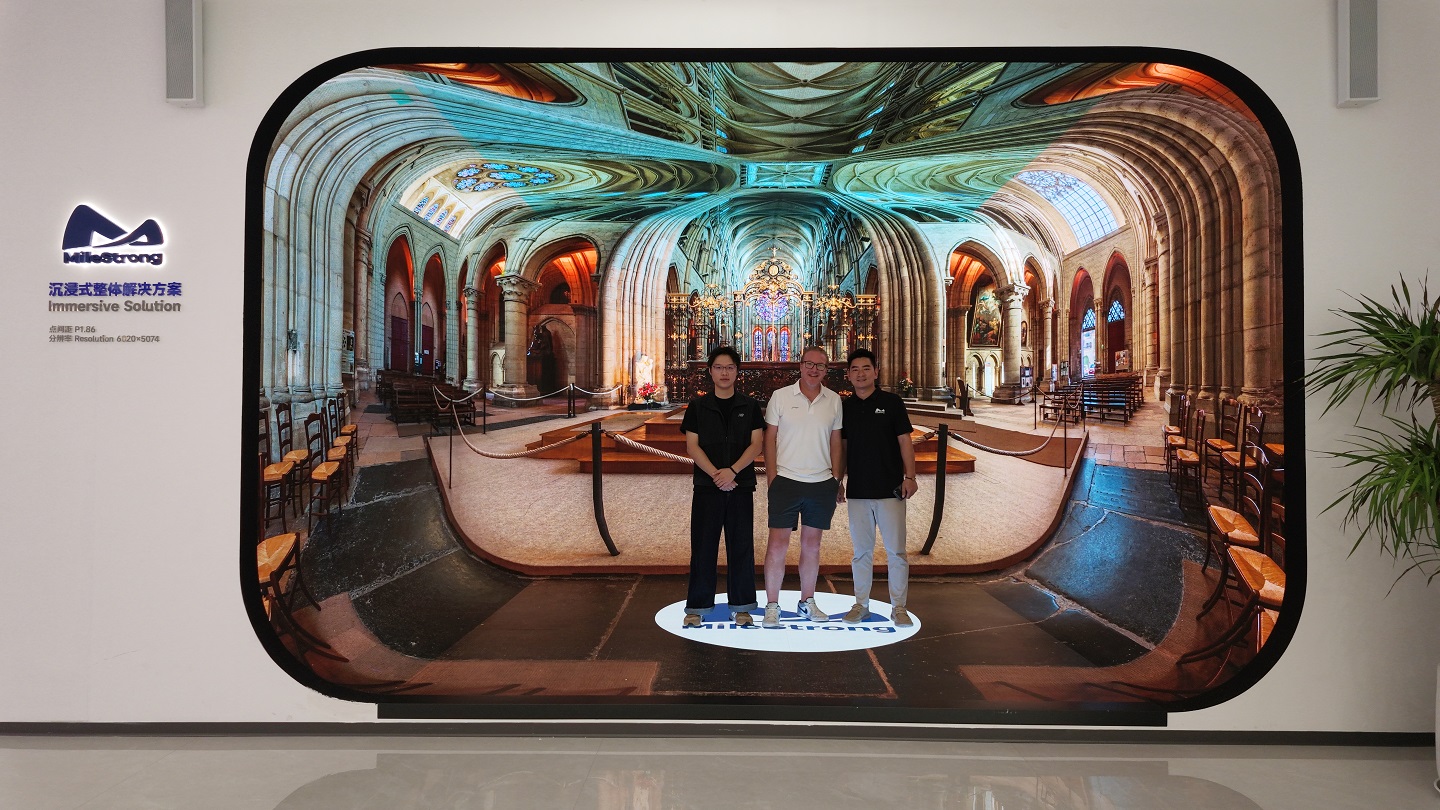
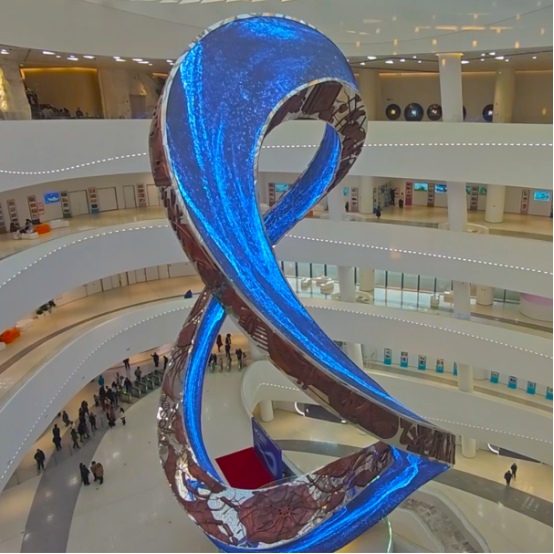
Breaking free from the confines of the flat rectangular screen, what other forms can LED screens take? Spherical, Möbius strip, ribbon and lotus-shaped designs have all made their appearance.However, whilst non-rectangular LED displays may appear to merely alter their outward appearance, they actually face more complex technical challenges than traditional LED screens—such as how to resolve issues like image distortion, missing pixels and visual discontinuities in curved displays.
Why Is It Difficult for Creative LED Displays to Achieve Perfect Image Quality?
In non-standard structures such as spheres, hemispheres and rings, LED modules must be arranged to conform to the curved surface. When the screen is unfolded, this results in varying degrees of physical gaps and pixel misalignment.
For example:
- When a sphere LED screen is unfolded, visual distortion occurs in both the horizontal and vertical directions;
- Ring-shaped LED screens are prone to image discontinuities at the start of the display;
- Irregularly shaped LED screens are prone to jagged edges and content misalignment.
If traditional control methods are still employed, issues such as image discontinuities, loss of detail and image distortion are likely to occur when playing standard video, thereby affecting the overall immersive experience. Consequently, non-standard LED displays require not only specialized structural design but also tailored display control algorithms.
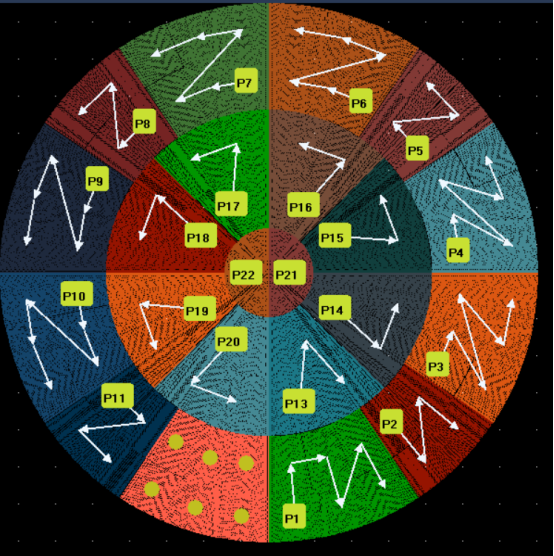
Sphere LED Displays: Achieving Seamless Image Mapping on Dome Screens
In sphere LED display applications, as the screen surface is curved, simply mapping standard two-dimensional video directly onto the spherical surface can easily result in pixel loss and image fragmentation.
To address this issue, specialized non-standard LED control systems employ algorithms to process the image in real time. Using dynamic line-by-line interpolation technology, the system analyses the original image data and intelligently compensates for missing areas based on information from neighbouring pixels, ensuring greater continuity in image detail and brightness.
Compared with traditional stretching and scaling methods, algorithm-optimized dome displays can:
- Reduce jagged edges along the vertical meridian;
- Compensate for pixel loss caused by the curved surface;
- Maintain image integrity and continuity;
- Enhance the overall sense of visual immersion.
Hemispherical and Circular LED Displays: Eliminating Edge Distortion and Image Breaks
In addition to full spheres, hemispherical screens, ring LED screens and dome LED screens are also popular formats in immersive display technology. When these screens are deployed, the physical spacing in the peripheral areas constantly changes. Without specialized algorithms to handle this, the following issues are likely to arise:
- Discontinuities in the outer-ring imagery;
- Visible seam lines at the starting point;
- Inability to play the image in a complete loop.
Through specialized mapping algorithms, the image can be recalculated according to the screen’s structure to enable display rotation at any angle, whilst interpolation technology is used to fill in missing pixels ring by ring. This ultimately achieves:
- Continuous presentation of spherical content;
- No noticeable visual breaks at the top, bottom, left or right;
- Natural transitions across the panoramic image.
Creative LED Displays Require Not Only Advanced Algorithms but Also Intelligent Calibration Systems
Compared to standard LED screens, one of the greatest challenges in installing custom-shaped screens is the commissioning process.
As the structure of each project varies, the module layout, cabinet connection methods and display coordinates may all differ. Relying on traditional manual adjustments is not only inefficient but also prone to inconsistencies in the display.
The new generation of custom-shaped LED control systems significantly reduces the difficulty of installation and commissioning through visualization software.
Key features include:
- Viewing the module layout from any angle;
- Customization of display areas;
- Unified control of multiple module types;
- Automatic detection of cable sequencing;
- Real-time display of module connection relationships.
The value of custom-shaped LED displays lies not merely in altering the screen’s shape, but in allowing the display to truly blend into the space. Through a combination of innovative hardware design and intelligent control algorithms, every LED screen can become a unique work of visual art, creating greater possibilities for commercial exhibitions, cultural tourism and technological experiences.