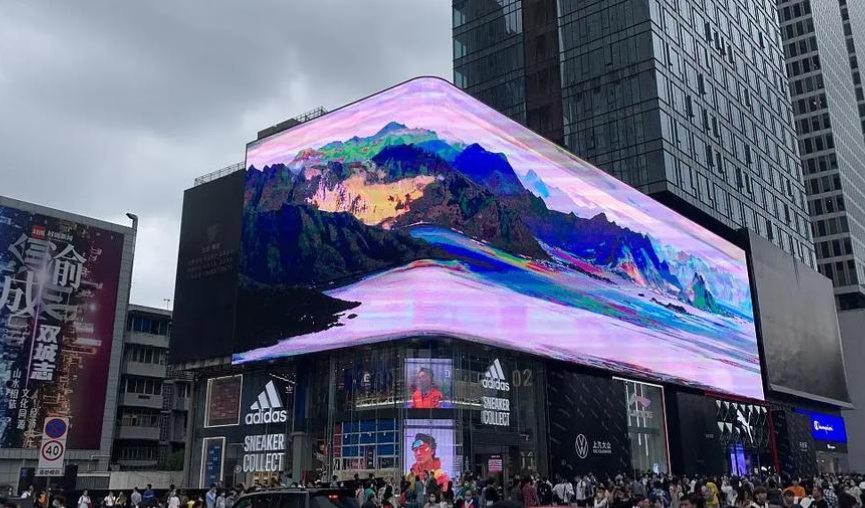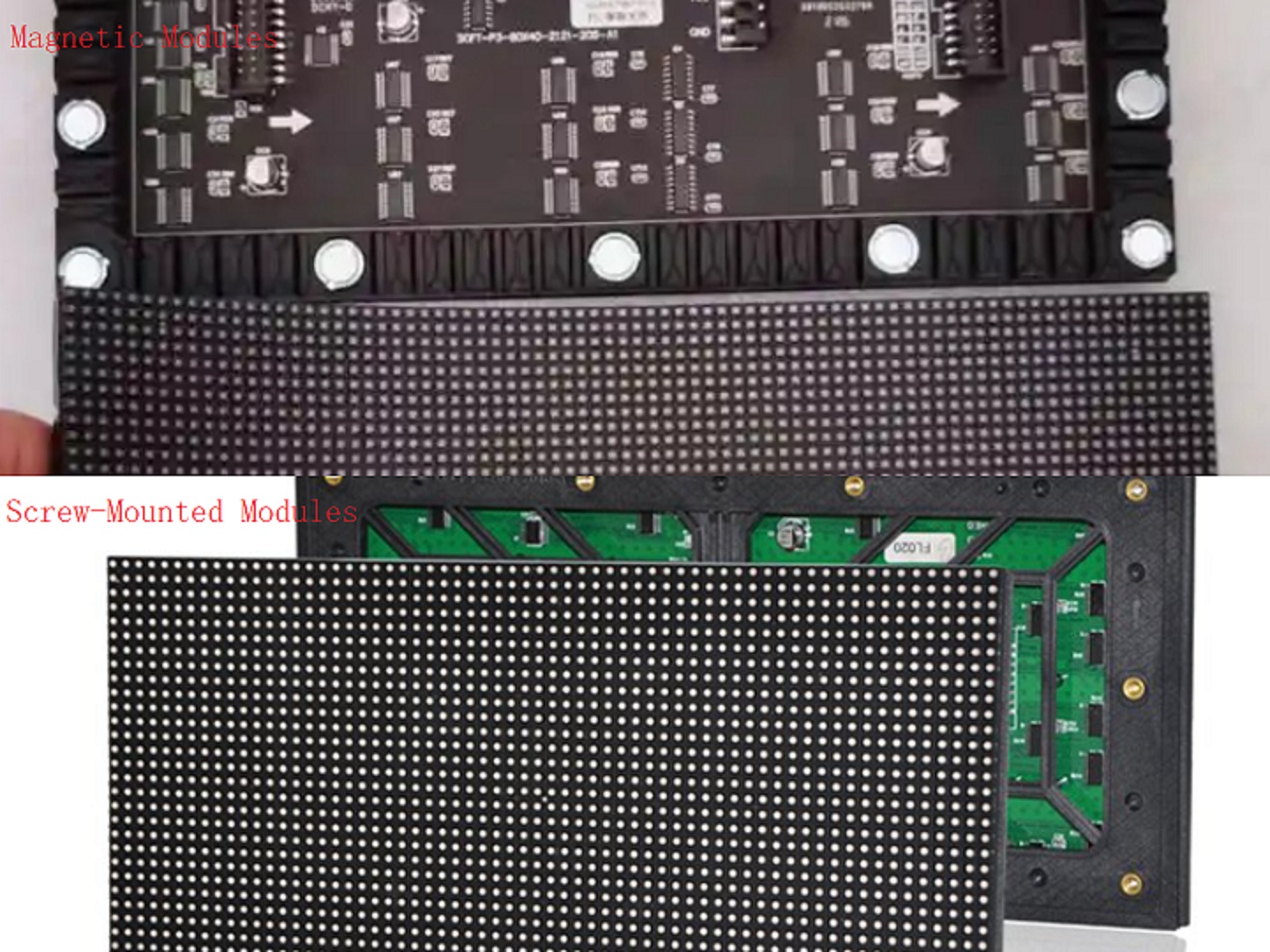


In curved LED display installations, as standard LED modules cannot be bent, there is a risk that they will not bend freely, leading to issues such as warping, deformation and insufficient screen flatness, which can adversely affect display quality. To address this issue, flexible LED modules were developed. Flexible LED modules utilize a flexible PCB substrate, offering a certain degree of resistance to compression and twisting. They support curved and irregular installations, and provide an excellent viewing experience from multiple angles once installed. Although LED flexible modules possess a level of flexibility and bendability that standard modules lack, there are still important considerations to bear in mind during installation.
However, whilst LED flexible modules are flexible, this does not mean they can be bent or stretched at will. Only standardized installation methods and proper construction practices can guarantee optimal display performance and service life.
Two Common Installation Methods for LED Flexible Modules
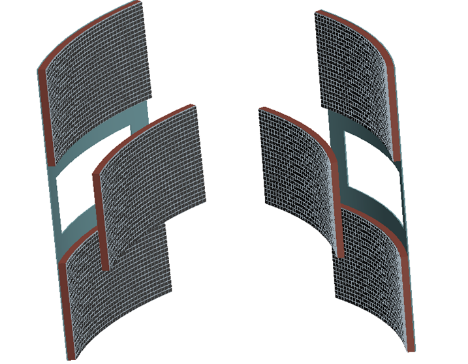
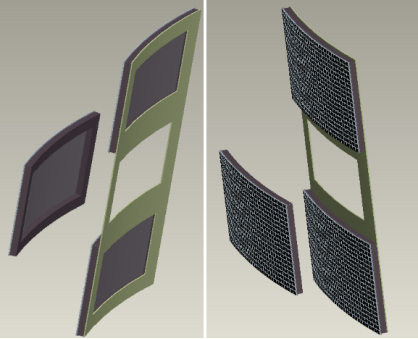
Depending on the curved structure of the LED display, there are two main types of magnetic mounting for LED flexible modules:
- Outer-curve magnetic mounting
- Inner-curve magnetic mounting
What Should Be Noted When Installing Flexible LED Modules?
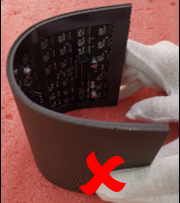
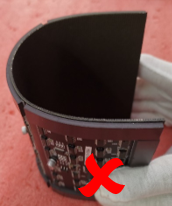
1. Do not bend the modules excessively
Although flexible LED modules utilize flexible PCBs, they still contain internal metal traces, copper foil, pads and electronic components. Excessive bending, folding or pulling may cause issues such as broken internal circuits, damage to the copper foil, detached pads or poor solder joints.
2. Control the installation curvature
Different LED flexible modules have varying bending capabilities. Before installation, confirm the product’s specified bending range or minimum bending radius, and design an appropriate installation curvature based on the actual screen structure. The installation structure should also align with the screen’s curvature to prevent the modules from being subjected to excessive tension or experiencing folding or warping.
3. Prevent short circuits caused by metal debris
LED flexible modules are frequently used in curved installation scenarios. To ensure the modules adhere securely to the steel structure and to prevent warping or flatness issues, they are often designed with numerous magnetic mounting posts, all of which are strong magnets that readily attract metal debris. Therefore, welding, metal grinding or cutting must not be carried out near the equipment. If such work is necessary, appropriate protective measures must be taken to prevent metal debris—such as iron filings or welding slag—from adhering to the LED beads or chip leads, which could cause short circuits and damage the equipment. If metal debris is already present, it can be removed using a cold air gun.
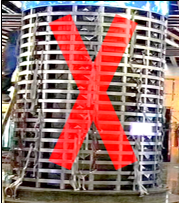
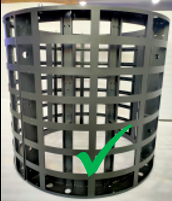
4. Direct installation using galvanized square tubing is not recommended
For curved LED displays, using galvanized square tubing directly as the module mounting surface may make it difficult to ensure the flatness of the curved surface. A better approach is to add a sheet of iron approximately 1.0 mm thick to the structural surface and apply a coat of paint to prevent rust. For creative LED displays such as curved or cylindrical designs, simple curved or cylindrical sheet metal structures may also be used. (Sheet metal spray-painted enclosures are recommended; galvanized square tube structures are not recommended)
5. Avoid using excessive force when connecting or disconnecting cables
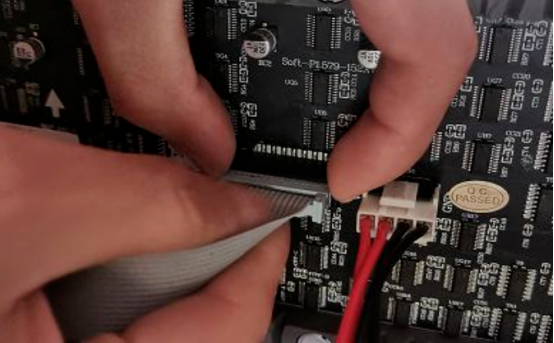
The flexible PCBs of flexible modules are relatively thin; therefore, when removing modules or connecting/disconnecting power cables and signal cables, do not use brute force or apply excessive force. Power cables and signal ribbon cables must be inserted and removed carefully and gently; otherwise, excessive force may easily tear off the connector sockets along with the solder pads.
Correct procedure: hold both ends of the horn-shaped connector with one hand (to avoid stress on the solder pads), whilst using the other hand to insert or remove the ribbon cable, as shown in the figure below:
6. Ensure proper moisture-proof and dust-proof maintenance of LED flexible modules
Apart from the use of a flexible substrate for the PCB, LED flexible modules share many similarities with conventional indoor LED modules in terms of use and maintenance. Once installation is complete, ensure adequate protection against moisture, damp and dust, and regularly inspect the condition of the modules, cables and connection points.
Summary
LED flexible modules offer more flexible installation solutions for curved, cylindrical and irregularly shaped LED displays. However, during actual installation, particular attention should be paid to avoiding excessive bending, controlling the installation curvature, preventing metal debris, selecting suitable mounting structures and handling cables gently when connecting or disconnecting them. Only by paying attention to these details can the advantages of LED flexible modules in creative LED displays be fully utilized.