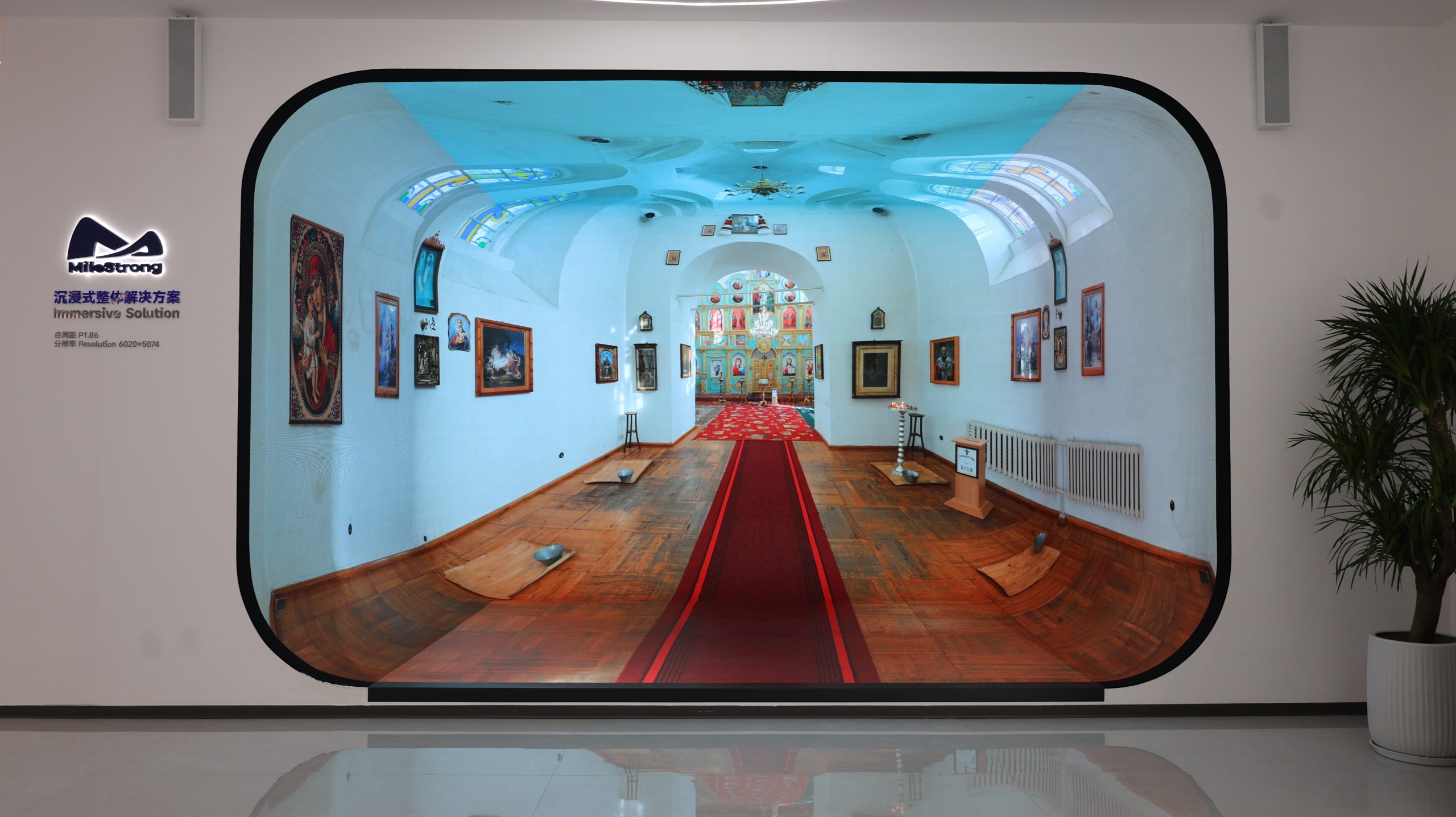
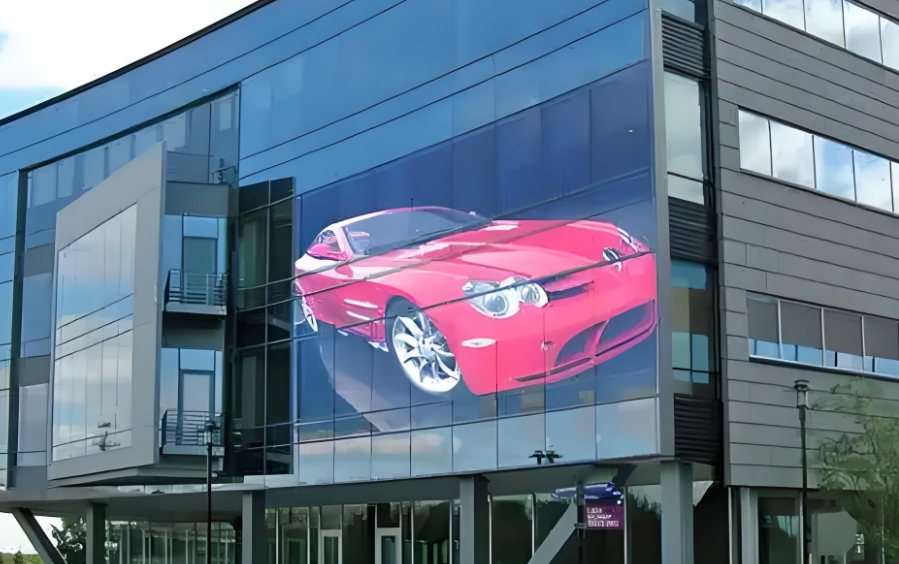
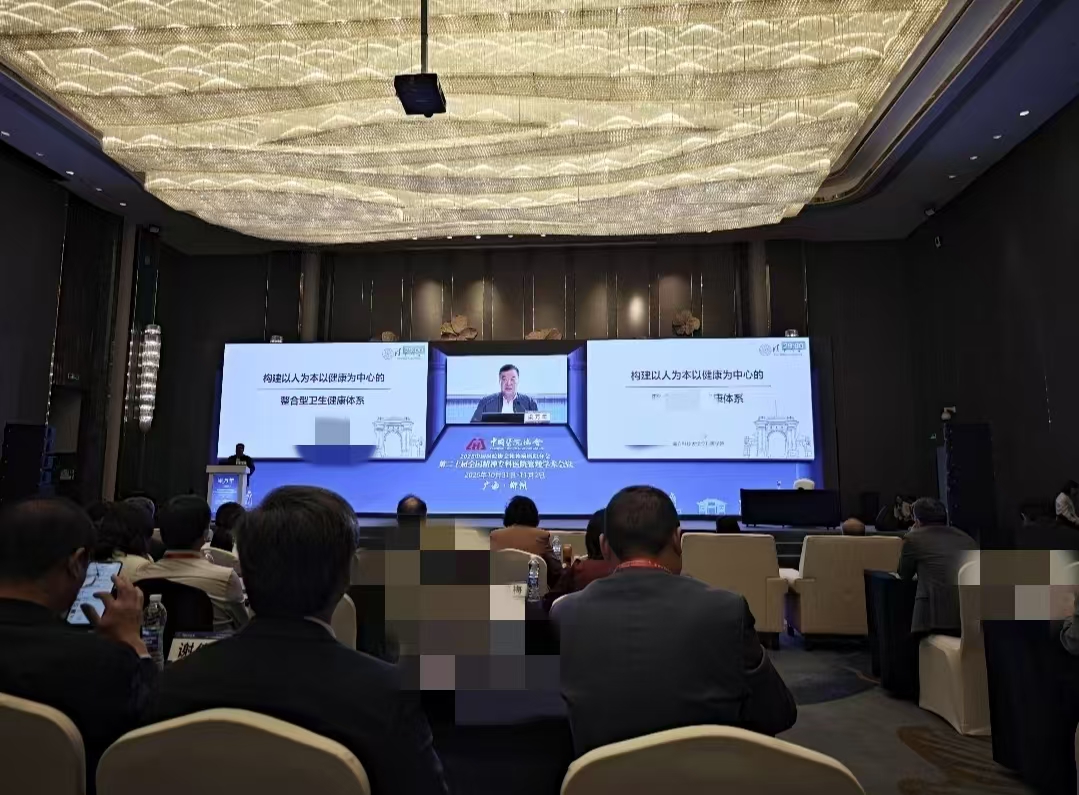
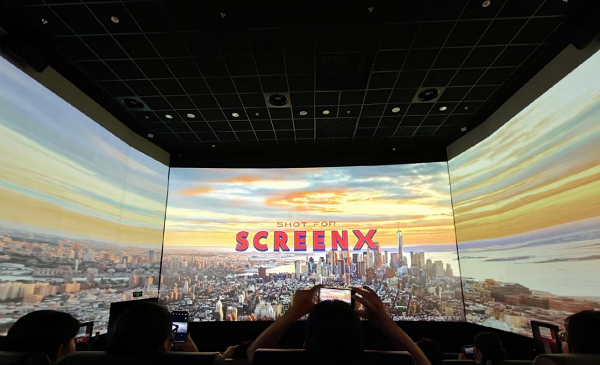
Immersive LED solutions are used in nearly every industry worldwide.
Application Scenarios | Specific Use Cases | Key Benefits |
Virtual Production Studios | LED volume walls for film/TV (e.g., The Mandalorian) | Real-time backgrounds, no green screen |
Museums or Science Centers | Immersive history exhibits, planetariums, digital art shows | More engaging and more memorable |
Luxury Retail or Flagship Stores | Brand story walls, virtual mannequins | More dwell time and higher sales |
Corporate Experience Centers | Product launch events, company showrooms | Stronger brand image and investor confidence |
Theme Parks or Attractions | Immersive tunnels, 4D immersive areas | Stunning visitor experience and higher revisit rate |
Hotel or Casino | Immersive bars, displays for lobby customer greeting | Unique atmosphere that stands out |
Trade Shows or Events | Booth Backdrop LED Walls, immersive brand pavilions | More potential customers and stronger on-site engagement |
In short, immersive LED displays suit various scenarios for displaying dynamic content, engaging audiences and enhancing interaction.
Types of Immersive LED Displays
Factors Affecting Immersive LED Screen Pricing
The cost of immersive LED displays depends on three main categories:
(1) Hardware Specifications
Pixel pitch means the distance between two adjacent LED lamp beads.
It decides screen clarity and viewing distance.
Smaller pitch = sharper image = higher cost
An LED screen is made up of LED modules.
Larger screen = more modules = higher cost
If you want curves, tunnels, ceilings, or anything custom, expect to pay more for design and installation.
custom structures = higher cost
- Cabinet material (standard vs. die-cast aluminum)
Standard iron: heavier, rust-prone, lower cost
Die-cast aluminum: lighter, thinner, better cooling, rust-proof, longer life, higher cost
- Refresh rate and gray scale
High refresh rate eliminates flicker; high gray scale eliminates banding.
Refresh Rate (Hz) : How smoothly the screen shows motion.
Standard: 1920Hz (general use)
High-end: 3840Hz – 7680Hz (virtual production, fast action)
Gray Scale (bit) : How smooth color transitions are.
Standard: 14-bit (general use)
High-end: 16-bit – 22-bit (dark scenes, gradients, pro video)
Higher refresh rate/Higher gray scale = higher cost
(2)Installation & Engineering
Complex curved or CAVE configurations, custom structures, and longer installation times can increase total cost compared to standard flat screens.
- Complexity of curved or CAVE configurations
- Structural support requirements
- On-site assembly time and labor
(3) Software & Support
Advanced XR controllers, professional rendering software, front-access cabinets, and extended warranties can add 10-50% to the total cost.
- Control system and XR-ready controllers
- Real-time rendering software (e.g., Unreal Engine)
- Maintenance access (front vs. rear)
- Warranty and technical support
Get your free customized quote – contact us now.
Non-Immersive LED Displays vs. Immersive LED Displays
All kinds of professional immersive LED displays, such as XR virtual filming screens, complete CAVE systems, curved panoramic screens, arc screens, bowl-shaped screens, hemispherical screens and 360° panoramic dome displays, is available on the market. Each configuration features distinct structural layouts, splendid visual performance and realistic strengths. What’s more, they are well-suited for virtual production, exhibition showcases, academic education, flight simulation, cultural exhibitions, and high-end immersive entertainment.
(1)Virtual Filming XR Screen
With real-time rendering and seamless splicing, virtual filming XR screens can replace traditional green screens. Users can shoot real scenes and get visual effects directly on set. This not only reduces post-production time but also makes the filming process more creative.

Key Features are as follows:
- Real-time rendering
- Seamless splicing
- Ideal for film and advertising
- Greater creativity andtime efficiency
(2) Angled Three-Sided Immersive Screen
The screen consists of three flat panels arranged at right angles, creating a semi-enclosed immersive space that delivers realistic 3D effects without the need for a full CAVE system. It is suitable for use in exhibitions and retail display settings.

Its key features are as follows:
- Three-sided, right-angle design
- Immersive 3D effect
- Highly adaptable to different spaces
(3) Five-Sided Angled CAVE Screen
The screen forms four walls and the floor, fully immersing you in digital content. The system is ideal for scientific visualization, education, and high-end entertainment and other fields where fully immersive experiences are central.

Its key features are as follows:
- Enclosure with five screens (walls + floor)
- Deep immersion
- Great for science and education
(4) Five-Sided Curved CAVE Screen
The five-sided curved CAVE screen consists of five curved screens seamlessly joined together and can remove all harsh visual edges to bring viewers ultra-smooth and incredibly natural viewing effects. What’s more, it presents vivid, true-to-life visuals that fully wrap around your field of vision, letting audiences effortlessly step into the immersive digital scene. 
Its key features are as follows:
- Integrated curved panoramic layout
- Smoothwrap-around visual effect
- Highly realistic visual experience
(5) Arc-Shaped CAVE Screen
This type is a single continuous arc-shaped screen that wraps around the viewer at a wide angle, and this layout provides an expansive field of view. Therefore, it is prefect for flight simulations, immersive presentations, and brand pavilions.

Its key features are as follows:
- Continuous arc design
- Wide viewing angle
- Perfect for simulationsand presentations
(6) Bowl-Shaped CAVE Screen
This screen features a deep, upward-curving design that envelops viewers from multiple angles, creating an incredibly immersive experience that feels like being in the midst of a visual spectacle. It is well-suited for cultural exhibitions, art installations, VR projects, and scientific simulations.

Its key features are as follows:
- Deep upward curve
- Multi-angle coverage
- Ultra-immersive, great for cultural applications
(7) Hemispherical CAVE Screen
With a half-dome enclosure that covers viewers from above at a 180-degree angle, this screen creates a sky-like immersive environment. It is a popular choice for planetariums, educational content, and immersive theaters.

Its key features are as follows:
- Half-dome enclosure
- 180° overhead coverage
- Popular for planetariums and education
(8) 360° Panoramic Dome CAVE Screen
With a full sphere enclosure offering a complete 360° view in every direction, this screen achieves total immersion with no blind spots. It is ideal for VR experiences, high-end digital art spaces, and premium immersive attractions.

Its key features are as follows:
- Full sphere, 360° view
- Total immersion
- Ideal for VR experiences
With so many options available, MileStrong can customize the perfect immersive LED solution based on your needs. Our displays seamlessly integrate holographic projection and VR technologies to elevate your experience to new heights.
By the way, contact us for your free customized solution.
The key difference is simple: Immersive LED displays put you inside the experience, while non-immersive LED displays don’t.
(1) Viewing Experience
- Non-Immersive: Single-direction(viewer stands outside the screen)
- Immersive: Multi-surface surround(viewer stands inside the experience)
(2) Interaction
- Non-Immersive: Passive viewing only
- Immersive: Real-time interaction, camera tracking, XR-ready
(3) Configuration
- Non-Immersive: Single screen (flat or curved)
- Immersive: CAVE (multi-screen enclosure), dome, sphere, 360° panoramic
(4) Calibration
- Non-Immersive: Standard splicing
- Immersive: Geometric calibration & content mapping
(5) Typical Applications
- Non-Immersive: Billboards, signage, scoreboards, basic displays
- Immersive: Virtual production, CAVE systems, experience centers
In short, non-immersive LED is a screen you watch, while immersive LED is a world you step into.
How to Choose the Right Immersive LED Displays for Your Project?
Choosing the right immersive LED displays depends on your application, space, interaction needs, environment, and budget. Here are the key questions to guide your decision.
(1) What is your primary application?
- For a virtual production studio, choose an XR LEDdisplaywith a refresh rate of 3840Hz or higher.
- For a museum or science center, consider a CAVE or dome configuration.
- For luxury retail or brand engagement, a three-sided or floor display works best.
- For a theme park or attraction, a bowl-shaped screen or 360° dome is ideal.
(2) How much space do you have?
- For a small room such as a showroom, a three-sided or arc-shaped screen is suitable.
- For a large hall like a museum, a five-sided CAVE or dome is recommended.
- For outdoor or temporary events, choose a high-brightness, weatherproof design that allows quick assembly.
(3) Do you need camera tracking or real-time interaction?
- If yes, select an XR-ready controller with high refresh rate (3840Hz+) and high gray scale (16-bit or higher).
- If no, a standard controller is enough.
(4) What is your budget?
- For a tight budget, start with a three-sided configuration and upgrade later.
- For a mid-range budget, choose a five-sided CAVE with standard specifications.
- For a high-end project, invest in a full dome with XR-ready features, front-access cabinets, and premium cooling.
Choose your immersive LED displays based on your application first, then consider space, interaction needs, and budget.
Not sure which solution fits your project? Contact MileStrong for a free customized consultation.
FAQs
Q1: Is 3840Hz refresh rate really necessary? Isn’t 1920Hz enough?
It depends on your application. For regular video content like ads or promotional videos, 1920Hz is perfectly fine. But for virtual production (camera capture) or fast-motion content like racing or sports, 3840Hz or higher is necessary. Otherwise, you will see scanning lines or flicker on camera, and fast motion may look choppy to the naked eye.
Q2: Why is grayscale important?
Grayscale determines how smoothly an image transitions from black to white. With low grayscale (e.g., 14-bit), you will see visible banding (layers of color blocks) in dark scenes or gradient skies. High grayscale (16-bit or higher) delivers smooth, natural transitions and more realistic images. Many manufacturers don’t mention it because it’s difficult to do well, and improving grayscale requires better driver ICs and control systems, which increases cost.
Q3:Can immersive LED displays be installed without damaging the existing renovation?
Yes, you can install it, and it doesn’t necessarily require damaging the renovation. The key factor is maintenance access. Front access allows modules to be removed and replaced from the front, so the screen can be mounted directly against the wall with almost no damage to existing renovation. Front-access cabinets are recommended for already-renovated spaces. For curved or CAVE configurations, minor structural adjustments may be needed. MileStrong can provide an on-site assessment.
Q4: Will viewers see different colors and brightness from different angles?
Yes, that’s why wide viewing angle matters. Standard LED screens lose brightness and color accuracy when viewed from the side. Immersive LED displays are designed with wide viewing angles (170°-170° horizontal and vertical), so colors and brightness remain consistent from any position. This is especially critical for CAVE or dome installations where viewers walk around.
Q5: What software is required for real-time interaction? Are there any extra fees?
Professional dedicated software is required to support real-time interactive functions such as camera tracking, real-time rendering and XR control. Apart from the software, compatible XR control hardware is also needed, which involves extra costs.
Q6: How to build immersive visual experiences on a limited budget?
We recommend starting with 3-sided U-shaped screens or curved LED screens, which strike the perfect balance between immersive effect and cost control.
3-sided U-shaped screen: Features three display panels in U layout, delivering strong surrounding visual immersion with easy installation and favorable cost performance.
Curved LED screen: Creates an ultra-wide viewing field at a far lower cost than full 5-sided CAVE solutions.
To further cut expenses, opt for mainstream pixel pitches ranging from P2.5 to P3 and industry-standard high refresh rate instead of ultra-high refresh specifications. All our solutions adopt modular structure and scalable control systems. You can smoothly upgrade to 5-sided CAVE or dome immersive systems anytime when your budget permits.
Conclusion
Immersive LED displays are transforming how brands, creators, and institutions engage with their audiences. From virtual production studios and museums to retail spaces and theme parks, this technology turns passive viewers into active participants.
Choosing the right solution depends on your application, space, viewing distance, and budget. Start by defining your goals, then select the configuration, pixel pitch, and features that match your needs. Remember: the smallest pixel pitch or highest spec is not always the right choice. Real-world performance, long-term reliability, and total cost of ownership matter more than numbers on a datasheet.
Key takeaways:
- Immersive LED visuals fully engage audiences within the scene, instead of just passive viewing.
- High refresh rate and grayscale matter for camera capture and smooth visuals.
- Ultra-wide viewing angle ensures consistent image quality from every position.
- Efficient heat dissipation reduces long-term costs and ensures quiet operation.
- Modular design allows you to start small and scale up over time.
- Plan content early – it drives your technical decisions.
- Prioritize practical application performance rather than blind pursuit of excessive parameters.
At MileStrong, we provide customized immersive LED solutions that combine high performance with favorable prices. Whether you need a three-sided display for a showroom or a full 360° dome for a landmark attraction, we can deliver.