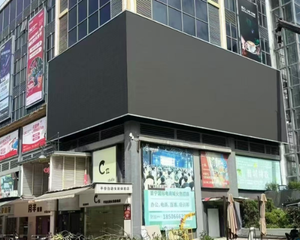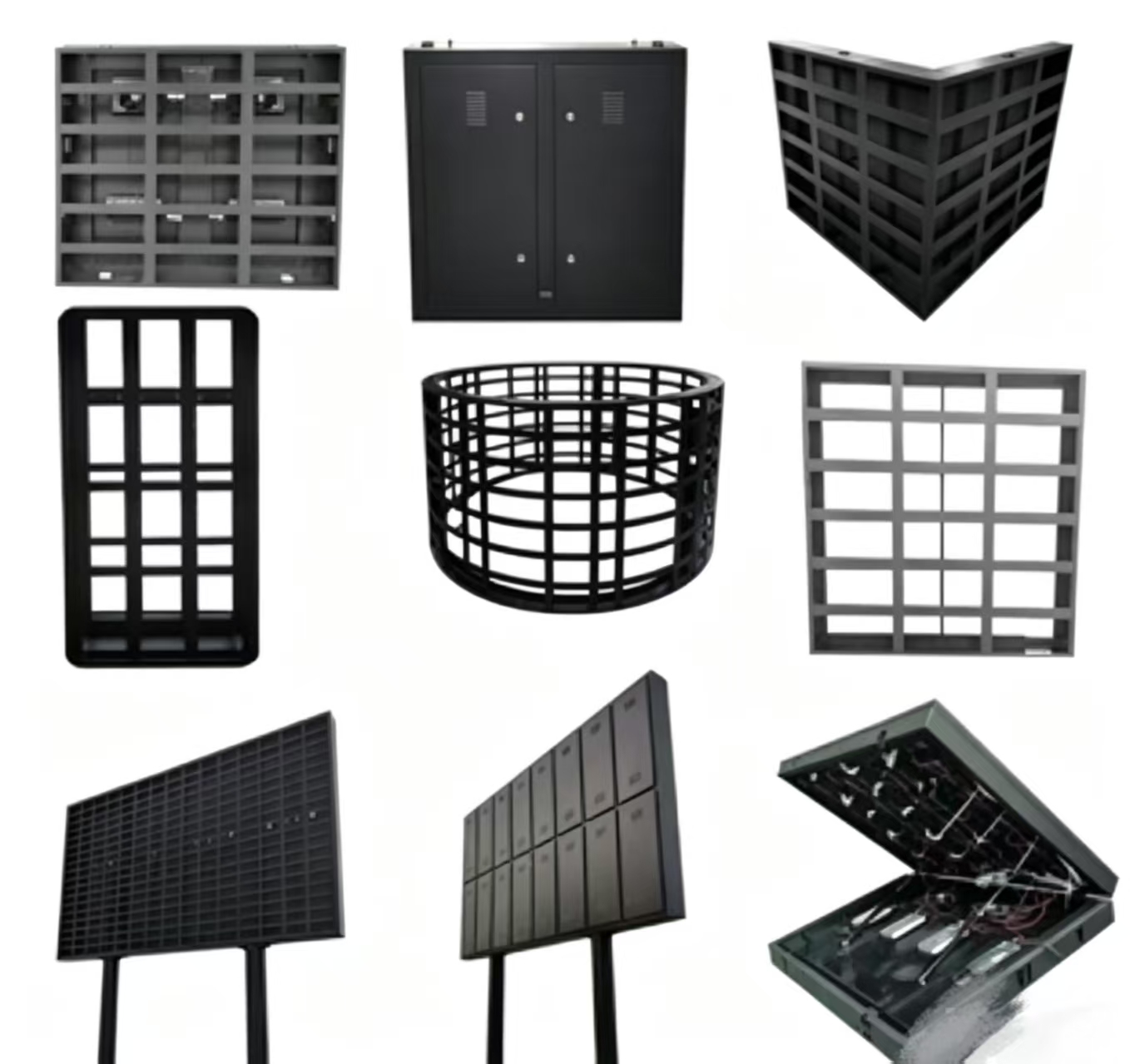


Packaging technology is a critical intermediate process between the LED chip and the finished display. Without packaging, bare chips cannot be powered on for use and are vulnerable to moisture and impact. Packaging directly determines the display’s image quality, lifespan, stability, and cost. COB and SMD are different packaging technologies in LED displays.
The COB Technology
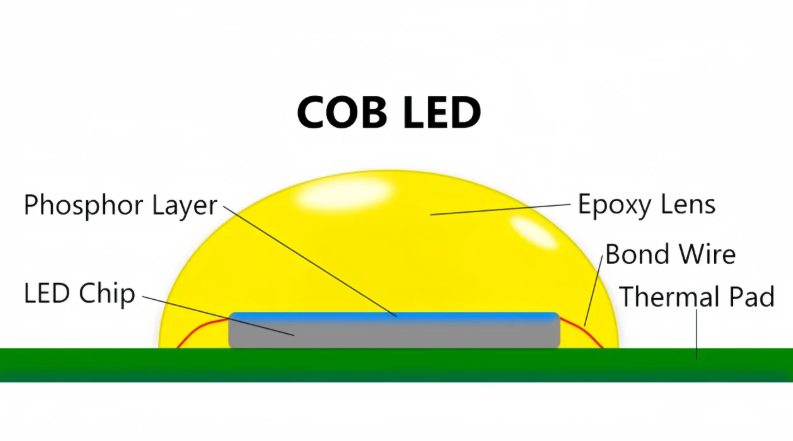
COB (Chip-on-Board) packaging technology involves directly chip onto the PCB board and then forming a module through gel packaging.
- Advantages: excellent heat dissipation, high-quality image display, lightweight display panel.
- Disadvantages: High repair costs, high technical requirements.
The SMD Technology
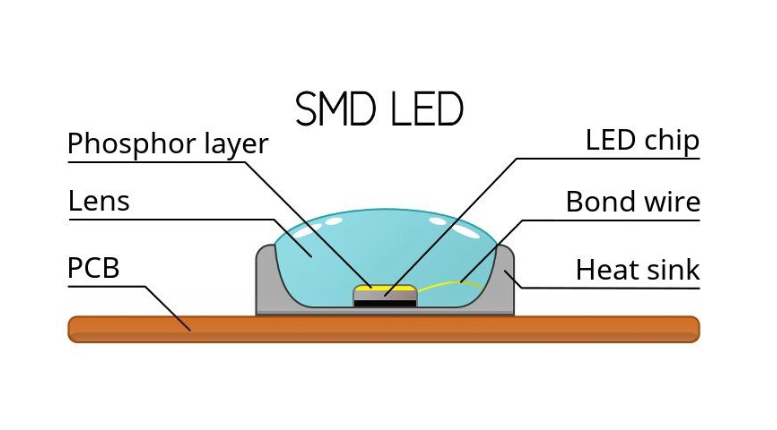
SMD is means surface mount device. The LED chip is first encapsulated within a metal-plastic housing to form a discrete LED chip, which is then mounted onto a PCB via reflow soldering using solder paste.
- Advantages: Easy to repair, low cost, mature supply chain.
- Disadvantages: Poor heat dissipation, low protection rating.
Differences
Light Source Types:
- SMD point light sources
- COB area light sources
Water Resistance Ratings:
- Standard SMD packaging: IP30 or similar,
- Integrated COB packaging: IP65,
Application Scenarios:
- SMD for dry indoor environments;
- COB for outdoor use, kitchens, and dusty or humid spaces;
How to choose?
COB: Small-pitch displays; Humid and dusty environments; Long-term usage
CMD: Medium/large-pitch displays; Low-cost budget