

The installation method of transparent LED displays directly affects their performance and safety, making it a key consideration during project implementation.
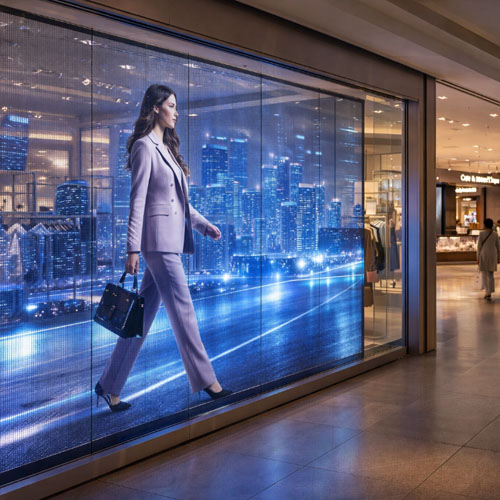
Common installation methods mainly include suspended mounting, surface mounting, and frame mounting.
- Suspended mounting is suitable for large glass curtain walls or atrium spaces in shopping malls, where the screen is suspended in place using steel cables or structural components, achieving a more visually lightweight effect.
- Surface mounting involves directly attaching the screen to the glass surface, making it ideal for window displays. This method is simple to implement and has minimal impact on the building structure, making it the most widely used approach.
- Frame mounting is suitable for projects requiring long-term fixation, such as exhibition halls or stage backdrops. The screen is secured using an aluminum alloy structure, enhancing overall stability and facilitating maintenance.
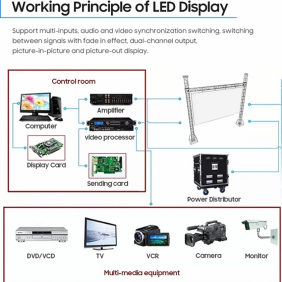
During installation, attention must also be paid to power and signal wiring. Due to the unique structure of transparent screens, wiring must be concealed to maintain aesthetics. Additionally, waterproof, dustproof, and heat dissipation designs should be implemented to ensure long-term stable operation of the equipment.
Furthermore, the site environment should be assessed before installation, including factors such as glass load-bearing capacity, installation space, and lighting conditions, to ensure smooth project execution.
A well-planned installation approach not only enhances display performance but also extends the service life of the equipment.